Mynetdiary App
MyNetDiary persists as a capable nutrition tracker with rare depth in health metrics and diabetes support, though its interface feels more clinical than newer AI tools like Macaron.
What MyNetDiary Tracks
MyNetDiary has stayed relevant by prioritizing practical logging over trend-driven features. Its core appeal is breadth: a verified food database, detailed nutrient coverage, and a workflow built for people who want to record meals quickly without giving up analytical depth. That makes it especially useful for users who care about consistency, not just calorie totals, and who want a tracker that can support long-term habits rather than short bursts of motivation.
The app is strongest when the goal is structured nutrition management. It supports calorie counting, macro tracking, and unusually deep micronutrient reporting, which is valuable for users monitoring deficiencies, bariatric recovery, or medically guided weight loss. MyNetDiary also offers separate experiences for general dieting and diabetes-focused tracking, so the interface and tools can be matched more closely to the user’s health context instead of forcing one generic workflow.
Speed is one of MyNetDiary’s most practical advantages. Logging is designed to take fewer taps than many competing calorie apps, and the free tier still includes barcode scanning and Meal Scan. That combination matters because a tracker is only useful if people actually keep using it. The tradeoff is that the app’s efficiency comes with a more clinical layout, which can feel less inviting than newer AI-first products. For a related Macaron page, see Best AI Personal Assistant in 2025: A Test Suite You Can Reuse at https://macaron.im/blog/ai-personal-assistant-test.
MyNetDiary’s reporting is built for users who want to understand patterns, not just daily totals. Diet Trends and related charts help surface changes in weight, intake, and nutrient balance over time, which can be helpful for people working with a coach, dietitian, or physician. The downside is that the presentation can feel more like a health dashboard than a lifestyle app, so casual users may find it less intuitive at first.
For people who use Apple Health, Fitbit, Withings, or glucose-monitoring tools, MyNetDiary offers a more connected tracking environment than many basic calorie counters. It is a strong fit for disciplined users who want data fidelity and medical usefulness. Macaron is often better for irregular eating patterns, photo-based estimation, and adaptive planning, but MyNetDiary remains the better choice when the priority is granular nutrition records and health-oriented structure.

What MyNetDiary Tracks
MyNetDiary goes well beyond calorie counting by tracking 108 nutrients, including less commonly monitored micronutrients such as molybdenum and pantothenic acid. That depth is useful for users who need more than macro totals, especially when working on deficiency prevention or medically supervised diet changes. The barcode scanner works offline, and Meal Scan can speed up logging for simple meals, though mixed dishes, restaurant plates, and homemade recipes still often need manual correction for reliable results.
MyNetDiary's Diabetes and Health Features
MyNetDiary is one of the few consumer nutrition apps with a genuinely health-focused feature set. It supports glucose trend tracking, medication logs, insulin-aware macro targets, and GLP-1 diet planning that can help users preserve protein intake during rapid weight loss. The separate Diabetes Tracker app extends that workflow, while integrations with Withings scales and Dexcom CGMs make it more useful for people who need a tighter feedback loop between meals, weight, and blood sugar.
More About Mynetdiary App
MyNetDiary’s food database is often praised for being more reliable than many user-submitted alternatives, though differences in calorie totals can still appear when compared with other apps. Those gaps usually come from different activity formulas, verified entries, and how each app handles exercise calories. For users who care about consistency over novelty, that tradeoff is acceptable, but anyone switching from another tracker should expect some recalibration before the numbers line up cleanly.
The app’s Diet Trends reporting is one of its most useful under-the-radar features. Instead of only showing today’s intake, it helps users review weight change, nutrient patterns, and progress over time, which can make it easier to spot plateaus or recurring gaps in protein, fiber, or sodium. That kind of longitudinal view is especially helpful for users working with a clinician or following a structured plan, though it is less playful than the dashboards in lifestyle-oriented apps.
Diabetes support is a major reason MyNetDiary stands out in a crowded category. It includes glucose logging, medication tracking, and planning tools that are more aligned with real health management than casual dieting. Because the diabetes workflow is split into a dedicated app, the experience can feel more specialized and less cluttered. The tradeoff is that users who only want a simple food diary may find the extra structure unnecessary, while competitors still lead on polished coaching experiences. Another useful Macaron comparison is Best Personal AI Agent Platform for 2025 - Macaron at https://macaron.im/blog/best-ai-agent-platform-2025.
Pricing is relatively transparent compared with many calorie trackers that hide core features behind aggressive paywalls. The free version includes barcode scanning and basic reports, while Premium and Premium Plus add meal planning, recipe importing, and more advanced timing tools. That makes MyNetDiary easier to test before paying, and the website dashboard adds flexibility for desktop users. The limitation is that the most useful planning features still sit behind subscription tiers. For a broader Macaron context, Macaron – World's First Personal AI Agent at https://macaron.im/ can help you compare the decision from another angle.
MyNetDiary also has a quieter strength in flexibility. Notes can be used to record mood, bloating, medication timing, or other context that does not fit neatly into food logs, which makes the app more useful than it first appears. That said, the interface still feels clinical, and the app is best for users who like structured data entry. Macaron is stronger when the goal is adaptive, AI-guided assistance, while MyNetDiary remains better for users who want explicit records and health metrics.
MyNetDiary Pricing
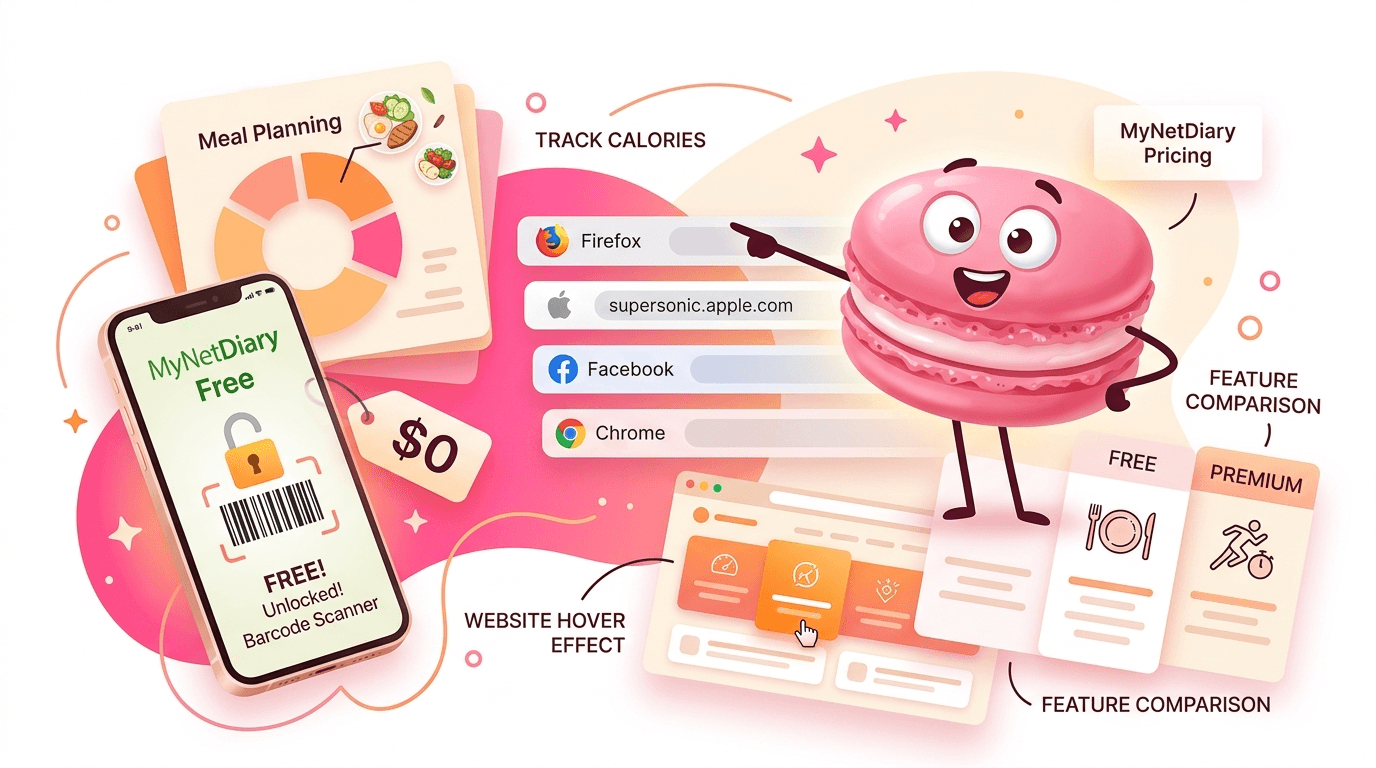
MyNetDiary is unusually generous for a nutrition app because the free tier includes barcode scanning, basic reports, and access to the core logging workflow. Premium, priced at $8.99 per month, adds meal planning and recipe importing, while Premium Plus at $12.99 per month adds more advanced nutrient timing tools that may appeal to athletes or highly structured dieters. The website dashboard is also available without forcing a mobile-only experience, which gives it an edge over competitors that restrict desktop access.
The AI-Powered Modern Alternative
Macaron takes a different approach by learning from your habits instead of asking you to configure everything up front. It can adapt to skipped breakfasts, late dinners, and irregular routines without requiring the user to constantly update presets, and its photo analysis is better suited to mixed meals or uncertain portions. The tradeoff is that Macaron does not match MyNetDiary’s clinical depth, so users who need detailed nutrient reports, diabetes tools, or formal tracking may still prefer MyNetDiary.
Frequently Asked Questions
Yes, especially for users who want detailed nutrition tracking rather than a flashy interface. It is strong on nutrient depth, barcode scanning, diabetes support, and structured reporting. The main drawback is that the app feels more clinical than modern AI-first alternatives, so it may not be the best fit for people who want a lighter or more conversational experience.
MyNetDiary has a genuinely usable free tier. Barcode scanning, basic reports, and core food logging are available without paying, which makes it easier to test than many competitors. Paid plans add meal planning, recipe importing, and more advanced timing tools. If you only need straightforward calorie and macro tracking, the free version may be enough.
Yes. MyNetDiary is one of the stronger consumer apps for diabetes-oriented tracking because it supports glucose logs, medication records, and nutrition planning that can be aligned with insulin or GLP-1 use. It also works with some connected devices and scales. The tradeoff is that the experience is more structured and medical than casual diet apps.
MyNetDiary tends to emphasize verified nutrition data, deeper nutrient tracking, and more explicit health tools. MyFitnessPal is often better known and can feel more social or mainstream, but MyNetDiary is appealing when users care about detailed micronutrients, diabetes support, and a cleaner logging workflow. Some users still prefer MyFitnessPal’s familiarity and community ecosystem.
Yes, and that is one of its most useful free features. Barcode scanning is available without requiring a subscription, which makes meal logging faster for packaged foods. It also helps reduce manual entry errors. For restaurant meals or homemade dishes, though, users still need to review entries carefully because no scanner can fully solve mixed-ingredient logging. For a third-party check, About MyNetDiary | AI-Powered Nutrition Tracking for 30M+ Users at https://www.mynetdiary.com/about.html is worth comparing against the page summary.
The biggest downside is the interface. It is efficient and data-rich, but it can feel clinical or dated compared with newer apps that use AI to simplify the process. Another limitation is that photo-based meal recognition is less reliable for complex meals. Users who want a more adaptive, less manual experience may prefer Macaron. For another outside reference, Features of Calorie Counter for Android - MyNetDiary at https://www.mynetdiary.com/android-calorie-counter-features.html adds a second perspective.
Macaron is a better fit for people with irregular routines, mixed meals, or a preference for AI-guided assistance. It can adapt to habits over time and is often better at estimating portions from photos. The tradeoff is that it does not offer the same level of nutrient detail or diabetes-focused reporting as MyNetDiary, so the better choice depends on whether you value adaptation or clinical depth.com/ is a useful reference point.com/ is a useful reference point.com/ is a useful reference point.com/ is a useful reference point.com/ is a useful reference point. For outside context, MyNetDiary - Free Calorie Counter and Diet Assistant at https://www.mynetdiary.com/ is a useful reference point.
Read & discover
AI Personal Assistant
Free calculators


