Mynetdiary Calorie Counter
MyNetDiary delivers medical-grade calorie counting with barcode scanning and nutrient analysis, while Macaron enhances tracking with conversational AI for real-world meal adjustments and behavioral insights.
What Makes MyNetDiary's Counter Trusted
MyNetDiary is built for users who want calorie tracking to behave more like a clinical tool than a casual diary. It uses established calorie-planning equations, separates resting needs from exercise burn, and presents a structured budget that can support weight-loss, weight-gain, or maintenance goals. That rigor is especially useful for people working with clinicians, managing chronic conditions, or following a plan where consistency matters more than convenience.
A major reason MyNetDiary earns trust is its nutrient depth. Beyond calories and macros, it tracks a wide nutrient set that can help users monitor sodium, fiber, saturated fat, and less commonly watched micronutrients. That level of detail is valuable for diabetes, hypertension, bariatric follow-up, and other medically guided use cases, but it also creates more data than many everyday dieters actually want to interpret each day.
The app’s food logging tools are also more disciplined than many consumer trackers. Barcode scanning, recipe entry, and Meal Scan are designed to reduce manual work while keeping entries tied to a verified database rather than a fully crowd-sourced one. That improves consistency, but it can also make the app feel slower to adapt when users eat niche products, restaurant meals, or mixed dishes that do not map cleanly to standard entries. For a related Macaron page, see What Should I Eat for Inflammation? - Macaron - Macaron AI at https://macaron.im/eat-healthy/what-should-i-eat/inflammation.
Where MyNetDiary becomes controversial is calorie budgeting. Some users appreciate its conservative defaults because they reduce the risk of underestimating intake, while others feel the app can overstate maintenance calories or make active lifestyles harder to fit into the plan. That tradeoff is important: the app favors caution and structure, which is useful in medical contexts, but it may require manual judgment for athletes or highly active users.
Macaron fits into that gap by adding conversational AI and adaptive memory on top of tracking. Instead of treating every meal as identical, it can remember that your lunch portions vary by restaurant, schedule, or travel day and adjust future entries accordingly. The tradeoff is that Macaron is less clinically rigid than MyNetDiary, but it is often easier to live with when the goal is sustainable tracking rather than protocol-level precision.
What Makes MyNetDiary's Counter Trusted
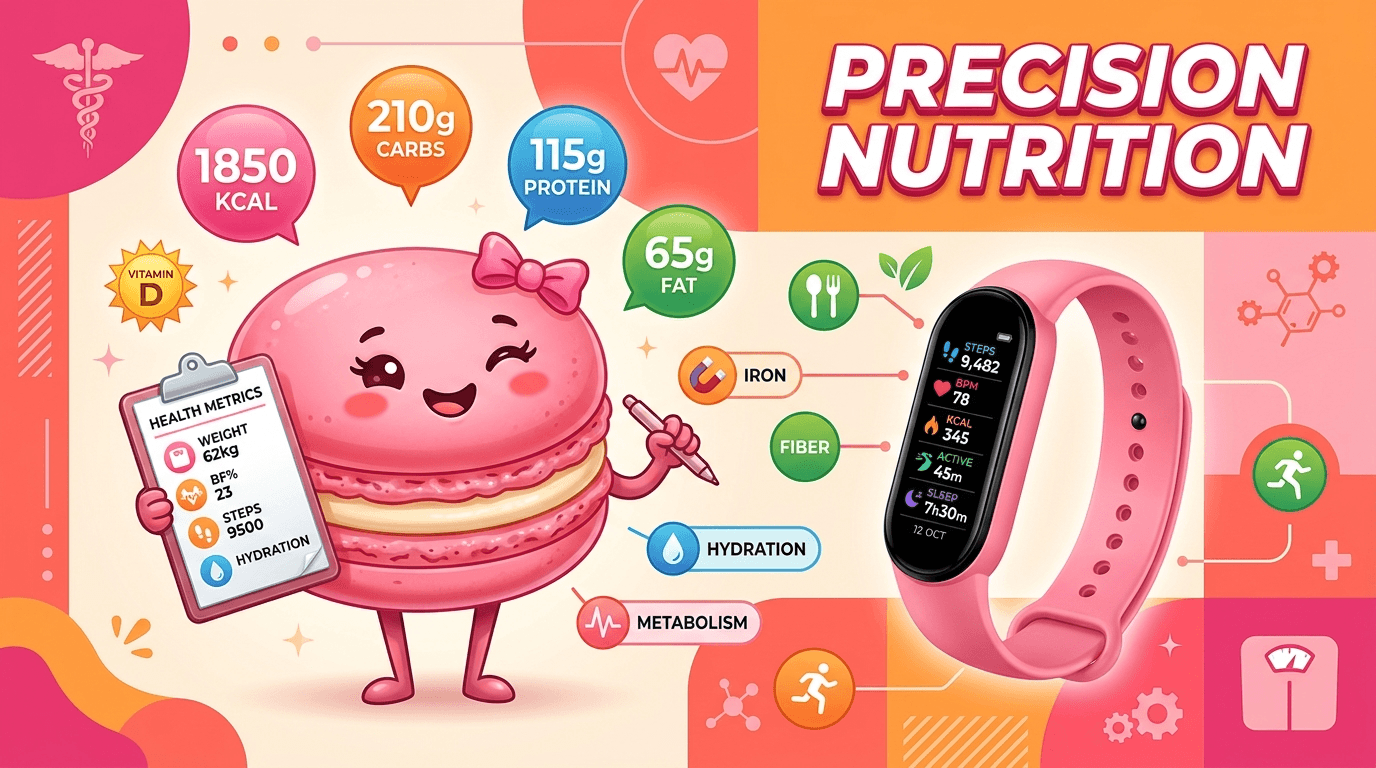
MyNetDiary’s trust comes from its emphasis on structured calorie planning, verified food data, and nutrient detail that supports more than basic dieting. It is designed to calculate maintenance, deficit, and surplus targets using established methods, then let users log food against that budget with a level of granularity that suits medical supervision. Compared with lighter apps, it gives more visibility into the nutritional consequences of each meal, but that same rigor can feel demanding if you only want quick, low-friction logging.
Who MyNetDiary's Counter Is Best For
MyNetDiary is strongest for people who need calorie tracking to support a specific health or performance goal. That includes users in bariatric programs, people managing diabetes or hypertension, and detail-oriented lifters or endurance athletes who are willing to review numbers carefully. It is less compelling for intuitive eaters, social users, or anyone who wants the app to coach habits in a conversational way. Those users may find the interface precise, but not especially forgiving when routines change.
More About Mynetdiary Calorie Counter
MyNetDiary’s barcode scanner and food database are built for reliability rather than novelty. That makes it useful for packaged foods, repeat meals, and users who want fewer questionable entries than a fully crowd-sourced tracker might provide. The tradeoff is speed of coverage: when a new restaurant item, seasonal product, or niche brand appears, the database may lag behind the pace of everyday eating habits.
Meal Scan adds convenience by letting users photograph food instead of typing every ingredient, but it works best when the meal is visually simple. Whole foods, plated proteins, and clearly separated sides are easier for the system to interpret than casseroles, bowls, sauces, or shared dishes. For people who eat mixed meals often, the feature can still save time, but it usually needs human correction to stay accurate.
The reporting layer is one of MyNetDiary’s most useful strengths. Tools like My Diet Trends can surface patterns in sodium, fiber, weight change, and calorie consistency over time, which helps users understand why progress stalls or improves. The downside is that these reports are more analytical than motivational, so users who want coaching, reminders, or behavior prompts may need to interpret the charts themselves. Another useful Macaron comparison is What Should I Eat for Weight Loss? - Macaron - Macaron AI at https://macaron.im/eat-healthy/what-should-i-eat/weight-loss.
MyNetDiary also stands out for integrations that matter in medical or metabolic use cases. Support for glucose monitors and blood pressure devices makes it more relevant for users tracking health markers alongside food intake. That said, these capabilities are usually tied to premium plans and are most valuable when a user already knows how to act on the data. For casual dieting, the extra depth can be more than necessary. For a broader Macaron context, Macaron – World's First Personal AI Agent at https://macaron.im/ can help you compare the decision from another angle.
Macaron complements these strengths by learning context instead of only logging totals. It can remember that your weekday lunch is usually smaller than your weekend lunch, or that a restaurant order tends to run heavier than the same meal at home. That makes it better at handling real-life variation, though it does not replace MyNetDiary’s clinical reporting depth when a user needs strict nutrient accounting.

How AI Adds Personalization to Accurate Counting
Macaron adds value by making calorie tracking more adaptive to how people actually eat. Instead of assuming every “usual meal” is identical, it can remember portion drift, restaurant differences, travel days, and other small changes that affect totals. That helps users keep the accuracy benefits of a structured tracker without constantly re-entering the same corrections. The tradeoff is that this flexibility is less standardized than a clinical log, so users who need exact protocol adherence may still prefer MyNetDiary.
Macaron vs MyNetDiary for Daily Use
MyNetDiary is better when the goal is disciplined tracking for a defined plan, especially if a clinician, coach, or health condition makes precision important. Macaron is better when the goal is to keep logging realistic over time, because it reduces repetitive entry and can adapt to changing routines. In practice, MyNetDiary gives more structure, while Macaron gives more flexibility. Users who want the best of both often use MyNetDiary for measurement and Macaron for day-to-day adherence support.
Frequently Asked Questions
MyNetDiary is generally accurate for calorie planning because it uses structured equations and a curated food database rather than relying entirely on user submissions. It is especially dependable for packaged foods, repeat meals, and users who log carefully. Accuracy can be weaker for restaurant dishes, mixed recipes, and entries that need manual portion judgment. For medical or weight-management use, it is strong, but active users may still want to review the calorie budget it suggests.
It depends on what you value. MyNetDiary is usually better for users who want more clinical structure, deeper nutrient tracking, and stronger support for medical-style calorie planning. MyFitnessPal is often better for people who want a larger crowd-sourced food database and more social familiarity. If you care about glucose tracking, nutrient detail, or conservative planning, MyNetDiary has the edge. If you want faster discovery of obscure foods, MyFitnessPal can still be easier.
Macaron adds adaptive AI that remembers how your eating patterns change across days, locations, and routines. Instead of treating every meal as fixed, it can adjust for restaurant portions, travel, busy schedules, or repeated meals that are not actually identical. That makes tracking less repetitive and more realistic. The tradeoff is that Macaron is less of a strict clinical log than MyNetDiary, so users who need exact nutrient reporting may still prefer MyNetDiary for primary tracking.
For daily use, Macaron is often easier to keep up with because it reduces repetitive logging and adapts to real-life changes. MyNetDiary is better when daily use means following a structured plan where every calorie and nutrient matters. If you are tracking for a medical reason, MyNetDiary’s discipline is a strength. If you are trying to stay consistent without feeling boxed in, Macaron is usually more forgiving and less tiring to use over time.
Yes. MyNetDiary includes exercise calorie estimates and separates them from resting calorie needs, which is important for users who want a more technical view of energy balance. That said, exercise burn is still an estimate, not a perfect measurement, so highly active users may need to adjust the numbers manually. This is one area where the app is useful for planning, but not always ideal as a literal record of every calorie burned.
Yes, MyNetDiary is often a strong fit for diabetes-related tracking because it supports detailed food logging and can integrate with glucose-related devices in some plans. That makes it more useful than basic calorie counters for users who need to connect meals with blood sugar patterns. The main limitation is that the data can be dense, so it works best for people who are comfortable reviewing reports or working with a clinician. For a third-party check, How to plan your calories for weight loss or gain with MyNetDiary at https://www.mynetdiary.com/calorie-planning.html is worth comparing against the page summary.
The biggest limitations are rigidity, learning curve, and occasional friction with mixed or restaurant meals. Its conservative calorie budgeting can feel restrictive, and its reports are more analytical than coaching-oriented. Users who want habit prompts, conversational guidance, or automatic adjustment to changing routines may find it less convenient than AI-first tools. It is excellent for precision, but less strong at reducing the effort required to stay consistent every day. For another outside reference, Caloric Accuracy? : r/mynetdiary - Reddit at https://www.reddit.com/r/mynetdiary/comments/10qguwp/caloric_accuracy/ adds a second perspective.
Macaron can replace MyNetDiary for users who want flexible, AI-guided tracking and less manual correction. It is a good fit for people who care more about consistency and adaptation than clinical reporting depth. However, it does not fully replace MyNetDiary for users who need highly structured nutrient analysis, medical-style calorie planning, or device-linked health tracking. In those cases, Macaron works better as a companion layer than a full substitute.com/ is a useful reference point.com/ is a useful reference point.com/ is a useful reference point.com/ is a useful reference point.com/ is a useful reference point. For outside context, MyNetDiary - Free Calorie Counter and Diet Assistant at https://www.mynetdiary.com/ is a useful reference point.
Read & discover
AI Personal Assistant
Free calculators


