Noom App
Noom has evolved from a psychology-focused weight loss app to a comprehensive health platform with AI features, coaching, and habit-building tools. But its structured approach isn't for everyone.
What the Noom App Includes
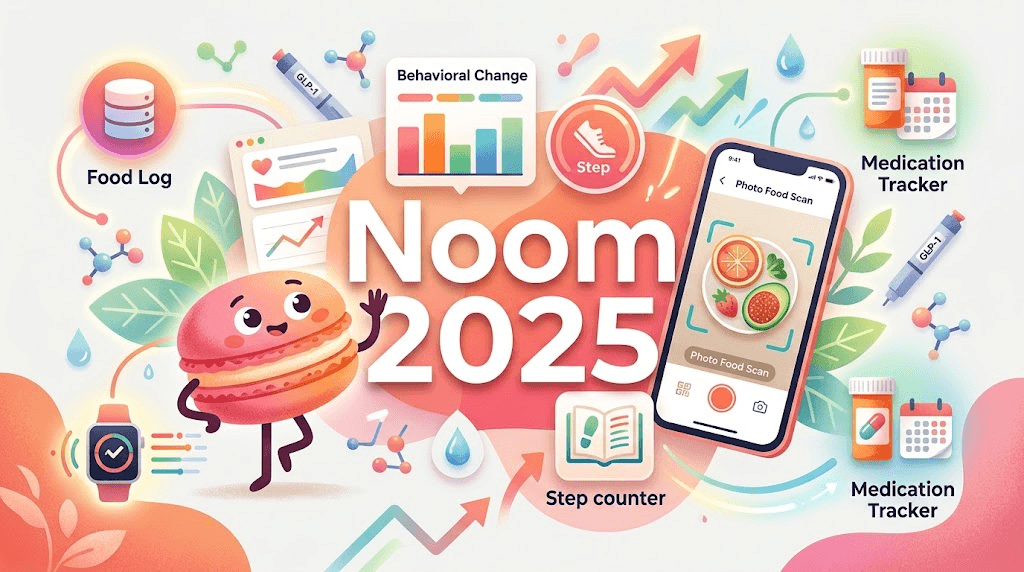
Noom in 2025 is still built around behavior change, but the app now combines that original psychology-first framework with more automated tracking tools. Users can log meals, monitor weight trends, sync activity from wearables, and use newer AI-assisted features that reduce some manual entry. The result is a hybrid product: part coaching program, part food tracker, and part health dashboard for people who want structure rather than a blank slate.
The core experience is intentionally guided. Noom pushes daily lessons, weigh-ins, meal logging, and coach interaction so users stay engaged with the program instead of treating it like a passive calculator. That can be useful for people who need accountability and a clear routine, but it also means the app asks for more effort than simpler trackers. If you want to log quickly and move on, the cadence can feel demanding.
Noom’s color system remains one of its most recognizable features. Foods are grouped into green, yellow, and red categories to help users think about calorie density and portion choices without counting every macro. That approach is easy to understand, especially for beginners, but it can also feel blunt compared with apps that show protein, fiber, and macro breakdowns in more detail. Users who want nuance may find the system too simplified. For a related Macaron page, see Best AI Personal Assistant in 2025: A Test Suite You Can Reuse at https://macaron.im/blog/ai-personal-assistant-test.
The app’s food logging and recipe tools are where many users feel the tradeoffs most clearly. Noom has improved visibility into nutrition data and added more automation, but people still report friction with barcode scanning, recipe entry, and database accuracy. For users who log the same meals repeatedly, those issues can slow the experience. Competitors with larger databases or more flexible manual entry still have an edge here.
A major 2025 shift is Noom’s stronger focus on GLP-1 medication support and related weight-management tools. That makes the platform more relevant for users combining lifestyle change with clinical treatment, but it also changes the product’s identity. People looking for a purely educational weight-loss app may not need those features, while users on medication may appreciate the added tracking. The tradeoff is a more specialized product with a narrower fit.
What the Noom App Includes
Noom’s current feature set mixes habit coaching, food tracking, and health monitoring in one guided workflow. Users can log meals with AI-assisted tools, sync steps and activity from wearables, track weight and other biometrics, and use the app’s color-coded food database to make daily choices. It also now supports GLP-1-related tracking and medication management. The upside is convenience for users who want one system; the downside is that logging can still feel inconsistent when recipes, custom foods, or barcode scans do not match expectations.
Noom's Coaching and Curriculum
Noom’s coaching is designed to make the app feel more accountable than a standard calorie counter. Users are guided through lessons on emotional eating, portion control, routines, and habit formation, with check-ins that encourage daily participation. That structure helps beginners who want a plan and some outside pressure, but it can feel repetitive for experienced trackers. Compared with self-directed apps like MyFitnessPal, Noom offers more education and less freedom, which is useful for some users and frustrating for others.
More About Noom App
Noom’s biggest differentiator is that it tries to change behavior, not just record food. The app uses lessons, prompts, and coach interaction to keep users focused on routines, triggers, and decision-making patterns. That can be valuable for people who have tried and abandoned simpler trackers because they needed more accountability. The tradeoff is that the experience is more prescriptive, so users who want a fast, low-friction logbook may feel boxed in by the program design.
The app’s calorie budget is meant to adapt as you log meals, weigh-ins, and activity, giving users a moving target rather than a fixed daily number. That can help people who want a structured plan with some flexibility, but Noom does not fully explain how every adjustment is calculated. For users who like transparency, that lack of detail can be frustrating. Competitors with more visible macro targets or simpler calorie math may feel easier to trust.
Pricing is another major part of the Noom decision. The app sits above free trackers and below full medical weight-loss programs, which makes it a middle-ground option rather than a budget choice. That can be reasonable if you value coaching and curriculum, but it is harder to justify if you only need food logging. Users comparing alternatives often decide based on whether they want ongoing guidance or a cheaper tool they can use on their own terms. Another useful Macaron comparison is Best Personal AI Agent Platform for 2025 - Macaron at https://macaron.im/blog/best-ai-agent-platform-2025.
Noom has expanded beyond general weight loss into medication-aware support, especially for people using GLP-1 treatments. That makes it more relevant for users who want to coordinate food logging, habits, and medication routines in one place. At the same time, the broader the platform becomes, the more it risks feeling less focused. People who only want a clean nutrition tracker may not benefit from the added clinical layer, even if others find it useful. For a broader Macaron context, When Nano Banana Meets Macaron: Next‑Level AI Image Editing ... at https://macaron.im/blog/macaron-ai-essential-personal-assistant-features can help you compare the decision from another angle.
Macaron is a lighter alternative for people who want AI help without committing to a structured subscription program. It is better suited to users who prefer quick prompts, photo-based logging, and flexible meal planning over lessons and coaching check-ins. The tradeoff is that Macaron does not replace Noom’s accountability model or curriculum depth. In practice, Noom is stronger for users who need a guided behavior-change system, while Macaron is better for users who want speed and simplicity.
Noom App Pricing
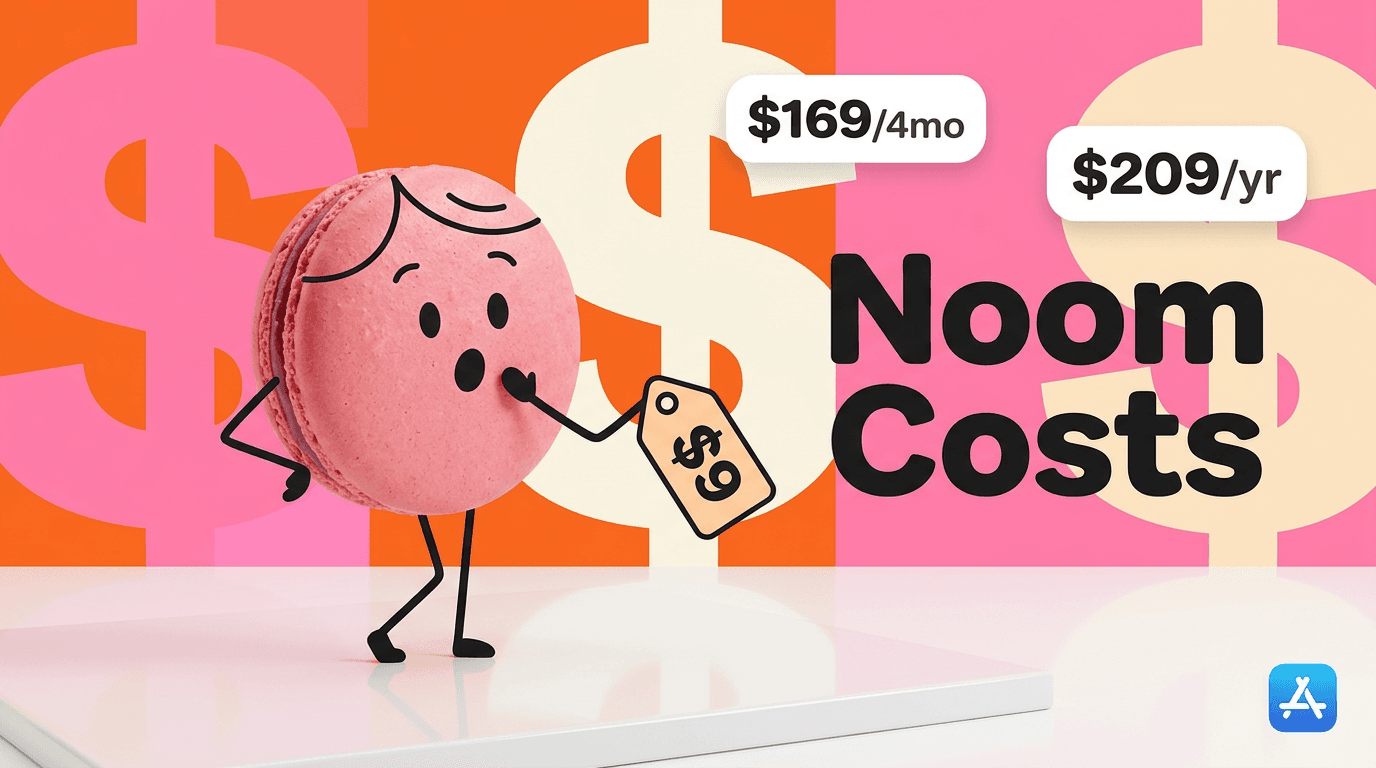
Noom uses an auto-renewing subscription model, with pricing that typically lands around $42 per month on shorter plans and about $35 per month on annual billing. The 7-day trial gives users a brief look at the system, but core features are paywalled after that period. For people comparing it with free apps, the value question is whether coaching and curriculum justify the cost. If you only need logging, the subscription can feel expensive; if you want structure, it may be easier to defend.
A Free-to-Download AI Alternative Worth Trying
Macaron takes a different approach by focusing on lightweight AI assistance instead of a fixed behavior-change program. Users can generate meal ideas from voice prompts or photos, get quick suggestions, and use photo-based calorie estimation without signing up for a long-term subscription. That makes it appealing for people who want convenience and flexibility. It is not as strong as Noom for coaching or accountability, but it is often a better fit for users who dislike rigid curricula or recurring commitments.
Frequently Asked Questions
Noom is free to download, but the experience is limited. After a 7-day trial, most core features require a paid subscription, so it is not a freemium tracker in the way some competitors are. That makes it harder to test casually over time. If you only want basic food logging, the paywall may feel steep. If you want coaching, lessons, and a structured program, the subscription is part of what you are paying for.
Yes. Noom still centers its program on behavior change, habit formation, and cognitive behavioral techniques. The app tries to help users understand why they eat the way they do, not just what they eat. That said, the product has expanded into more clinical and medication-aware features, so it is no longer only a psychology app. Users who want a pure mindset program may notice the broader health-platform direction.
It depends on what you need. Noom is stronger if you want coaching, lessons, and a guided program that pushes daily engagement. MyFitnessPal is usually better for users who want a larger food database, more flexible logging, and easier macro tracking. Noom’s structure can help beginners stay consistent, but experienced trackers often prefer the speed and detail of MyFitnessPal. The better app is the one that matches your logging style.
The main downsides are cost, rigidity, and occasional logging friction. Noom asks for daily participation, which helps some users but feels demanding to others. Its food database and recipe tools can also be less smooth than those of more established trackers. If you want a simple app that disappears into the background, Noom may feel like too much process. If you want accountability, those same constraints can be the point.
Noom is not a general prescription service, and medication support depends on the specific program or clinical offering you are using. Its newer weight-management products may include medication-related guidance or tracking, but that is different from simply prescribing a drug through the standard app. If medication is part of your plan, you should review the exact program details carefully and confirm what is included before subscribing.
Macaron is a better fit for users who want AI help without a structured curriculum or recurring coaching model. It is useful if you prefer quick meal ideas, photo-based logging, and a lighter workflow that does not require daily lessons. The tradeoff is that Macaron does not offer the same accountability or behavior-change framework as Noom. People who need a guided program will usually get more from Noom. For a third-party check, Noom Diet Review: Follow Our Tester's 12-Month Journey - Healthline at https://www.healthline.com/nutrition/noom-diet-review is worth comparing against the page summary.
Noom can be useful for people who want to improve eating habits, portion awareness, and consistency, which may support broader health goals. But it is not a substitute for medical care or a condition-specific treatment plan. Users managing diabetes, cholesterol, or medication changes should make sure the app’s approach fits their clinician’s guidance. In those cases, Noom may be helpful as a support tool, but not as the primary source of advice. For another outside reference, Noom for Weight Loss: Review - WebMD at https://www.webmd.com/diet/noom-diet adds a second perspective.
Noom tends to work best for people who want structure, reminders, and a program that explains the reasoning behind food choices. Beginners, people restarting after failed attempts, and users who like accountability often benefit most. It is less ideal for experienced trackers who already know how to log efficiently or who want full control over macros and meal planning. The app is strongest when the user wants coaching, not just data entry.com/?srsltid=AfmBOooZ-wrGWvIXNalX4f9HfJtX3cyvgG1UAMNsSvlb82j7kERt-qBR is a useful reference point.com/?srsltid=AfmBOooZ-wrGWvIXNalX4f9HfJtX3cyvgG1UAMNsSvlb82j7kERt-qBR is a useful reference point.com/?srsltid=AfmBOooZ-wrGWvIXNalX4f9HfJtX3cyvgG1UAMNsSvlb82j7kERt-qBR is a useful reference point.com/?srsltid=AfmBOooZ-wrGWvIXNalX4f9HfJtX3cyvgG1UAMNsSvlb82j7kERt-qBR is a useful reference point.com/?srsltid=AfmBOooZ-wrGWvIXNalX4f9HfJtX3cyvgG1UAMNsSvlb82j7kERt-qBR is a useful reference point. For outside context, Noom: Lose weight and keep it off. at https://www.noom.com/?srsltid=AfmBOooZ-wrGWvIXNalX4f9HfJtX3cyvgG1UAMNsSvlb82j7kERt-qBR is a useful reference point.
Read & discover
AI Personal Assistant
Free calculators


