Noom Pricing
Noom's pricing reflects its position as a behavior-change program rather than a simple tracker, with costs ranging from $17.42/month for annual plans to $42.25/month for shorter commitments.
Noom's Monthly and Annual Costs
Noom positions itself as a guided weight-loss program, so its pricing is built around commitment rather than casual month-to-month use. That matters because the cheapest rate is only available on longer plans, while short access is priced much higher. If you are comparing Noom to a simple calorie counter, the sticker price can look steep, but the product includes lessons, habit coaching, and a structured curriculum.
The current public pricing is straightforward on paper: $209 for 12 months, $179 for 6 months, $169 for 4 months, and $70 for a single month. The monthly equivalent drops as the term gets longer, which is why Noom often looks affordable in annual form but expensive if you only want to try it briefly. That gap is intentional and pushes users toward longer engagement.
Noom's cost structure also reflects the difference between tracking and coaching. Apps like MyFitnessPal or Cronometer mainly help you log food, while Noom tries to change the behaviors behind eating patterns. That extra layer can be useful for beginners, people restarting after repeated diet attempts, or users who want more structure than a standard food diary provides. It is less compelling if you already know what to eat. For a related Macaron page, see AI Personal Assistant - Macaron AI at https://macaron.im/ai-personal-assistant.
Pricing confusion is common because Noom uses auto-renewing subscriptions, promotional offers, and signup-specific discounts. Some users report seeing different prices depending on whether they subscribe through the app, the website, or a retention offer after canceling. That means the listed rate is a starting point, not always the final amount. Anyone considering Noom should check renewal terms carefully before the trial ends.
The real question is not whether Noom is cheap, but whether its behavior-change framework is worth more to you than a lower-cost tracker. If you want accountability, lessons, and a more guided experience, Noom can justify its premium. If you mainly want food logging, macro tracking, or a flexible AI assistant, cheaper tools may cover most of the same ground with less commitment and fewer billing surprises.
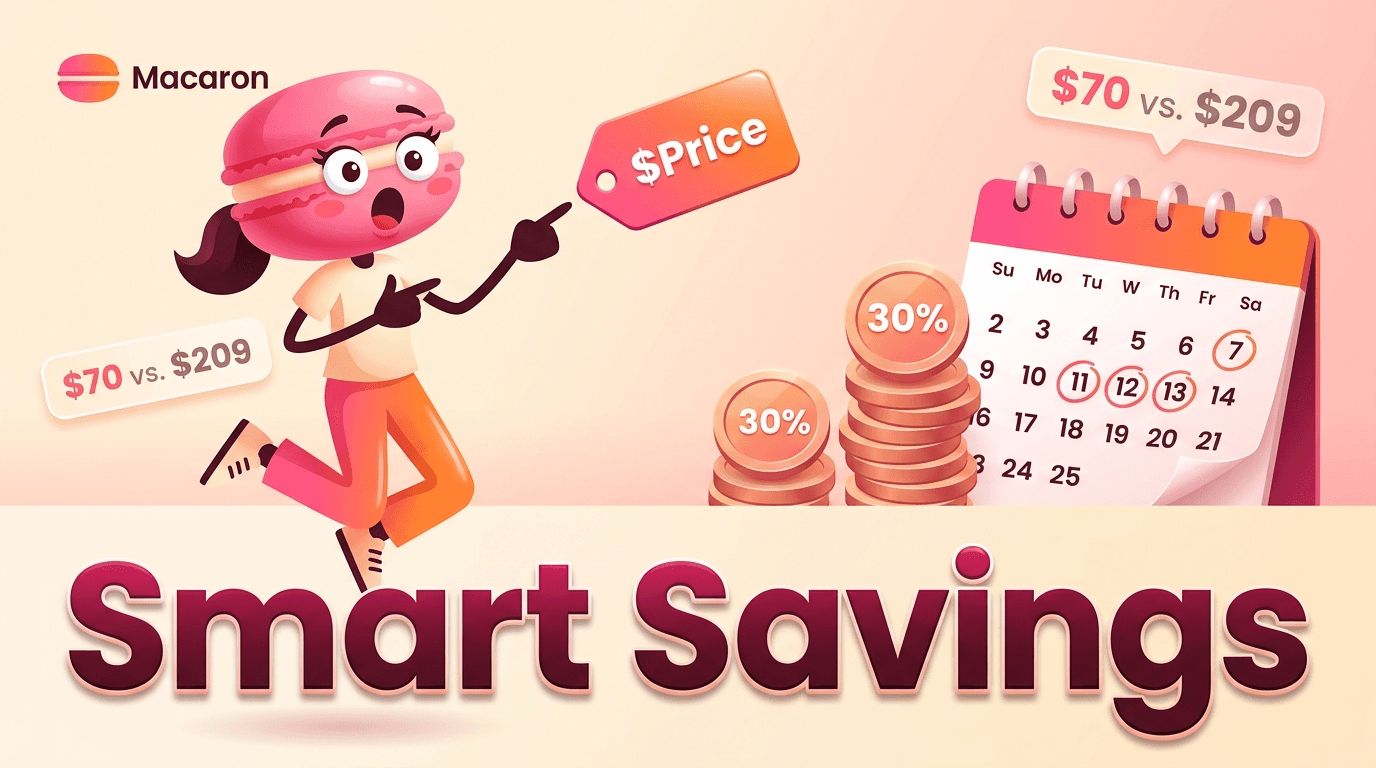
Noom's Monthly and Annual Costs
Noom uses a commitment-based pricing model that rewards longer subscriptions with lower monthly equivalents. The 12-month plan costs $209, which works out to $17.42 per month, while the 6-month plan is $179 and the 4-month plan is $169. A single month costs $70, making short-term access much more expensive. This structure is designed to encourage sustained use, but it also means the best value only appears if you are ready to stay for several months. All plans auto-renew unless canceled, and promotional pricing can differ by region, device, or signup path.
What Noom's Premium Experience Includes
Noom is priced above basic trackers because it packages food logging with a behavior-change curriculum. Users get daily lessons, habit-building prompts, weight tracking, and educational material based on psychology and cognitive behavioral principles. Depending on the plan and market, coaching or support features may also be included. That makes Noom more like a guided program than a utility app. The tradeoff is that people who only need a food database or macro tracker may pay for content they never use, while users who want structure may find the added guidance worth the premium.
Is Noom Worth the Price?
Noom tends to make the most sense for users who want external structure, not just a place to record meals. Beginners, people who struggle with consistency, and users who like step-by-step education often benefit from the program's pacing and accountability. It is less compelling for experienced dieters, athletes, or anyone who already tracks nutrition confidently. In those cases, the curriculum can feel repetitive and the price hard to justify. The value depends on whether Noom changes your behavior enough to outperform a cheaper app you would actually keep using.
More About Noom Pricing
Noom's pricing is built to make long-term subscriptions look attractive and short-term access look expensive. That is a common software strategy, but it matters more here because weight-loss programs depend on sustained use. The annual plan gives the lowest monthly equivalent, while the one-month option is priced high enough to discourage casual trial behavior. For users who only want a short experiment, the economics are not especially friendly.
The product itself helps explain the premium. Noom combines logging, lessons, and behavioral prompts in a single workflow, so the app is not just selling database access. That can be useful for people who want a more guided path and do not want to assemble their own routine from separate tools. The downside is that the curriculum adds cost without helping users who already know how to track food or manage calories.
A recurring issue is pricing variability. Users often see different offers depending on when they sign up, whether they are on a trial, and whether they respond to a cancellation flow. That means the public rate is not always the rate a customer pays. This can benefit bargain hunters who are willing to compare offers, but it also creates uncertainty for anyone who wants a simple, transparent subscription. Another useful Macaron comparison is AI Story App - Macaron at https://macaron.im/ai-story-app.
Noom Med follows a separate pricing model from Noom Weight, starting with telehealth access and adding medication costs on top. That makes it a different category entirely, closer to a care pathway than a self-guided app. People comparing the two should not assume the weight program and the medication program are interchangeable. The medical offering may be more appropriate for some users, but it also introduces eligibility checks, clinical oversight, and a much higher total cost. For a broader Macaron context, Best AI Personal Assistant in 2025: A Test Suite You Can Reuse at https://macaron.im/blog/ai-personal-assistant-test can help you compare the decision from another angle.
Compared with alternatives, Noom sits between simple trackers and more automated AI tools. MyFitnessPal and Cronometer are stronger if you want large food databases and detailed nutrition logging. Macaron is more useful if you want AI-generated meal planning, photo-based estimation, and a lighter planning workflow. Noom is strongest when the user wants behavior change support; it is weaker when the user wants speed, flexibility, or lower cost.
Free and Cheaper Alternatives to Noom
If Noom feels too expensive, the best alternative depends on what part of the experience you actually need. MyFitnessPal and Cronometer are the closest low-cost substitutes for food logging, with free tiers and paid upgrades for more advanced features. Rise Up is a better fit if you want a CBT-style mindset tool at a lower price. Macaron takes a different approach by using AI to help with meal planning and calorie estimation, which can reduce manual effort. The tradeoff is that none of these fully replicate Noom's structured curriculum, so you may need to combine tools if coaching is what you value most.

Quick Comparison
| Product | Pricing Style | Best For |
|---|---|---|
| Noom | $17.42-$70/month | Structured behavior change programs |
| MyFitnessPal | Free + $19.99/month Premium | Comprehensive food database users |
| Cronometer | Free + $9.99/month Gold | Micronutrient-focused trackers |
| Macaron | Free + in-app purchases | AI-powered personalized nutrition |
This comparison shows why Noom occupies a distinct niche. It is not trying to be the cheapest tracker or the most detailed nutrition database. Instead, it charges more for a guided behavior-change experience. That can be a good fit for users who need structure, but competitors are often better if your priority is logging speed, nutrition depth, or lower recurring cost.
Frequently Asked Questions
Noom's monthly cost depends on how long you commit. The annual plan averages $17.42 per month at $209 total, while the 6-month plan is $29.83 per month at $179 total and the 4-month plan is $42.25 per month at $169 total. A single month costs $70. The lower monthly rates are only available on longer plans, so the real price depends on whether you want short-term access or the best long-term value.
Noom feels expensive because it is not just a calorie tracker. You are paying for a behavior-change program that includes lessons, habit prompts, and a more structured experience than most free apps. That makes it more comparable to a coaching product than a utility app. If you only need logging, the price can seem high. If you want guided support and are likely to use the curriculum, the cost is easier to justify.
Yes. Noom's pricing is designed to reward longer commitments. The 12-month plan is the lowest monthly equivalent at $17.42, while shorter plans cost more per month. The 6-month and 4-month options sit in the middle, and the one-month plan is the most expensive. This structure helps users who are ready to stay consistent, but it is less attractive if you only want to test the app briefly.
For basic tracking, MyFitnessPal and Cronometer are cheaper alternatives because both offer free tiers and lower-cost premium plans. If you want more automation, Macaron can help with AI meal planning and photo-based calorie estimation. If you want a psychology-oriented approach, Rise Up may be closer to Noom at a lower price. The best choice depends on whether you care most about logging, coaching, or convenience.
Noom has offered trial periods and promotional entry offers, but the exact terms can change. Trial access is useful if you want to test the lessons and logging workflow before paying full price. The important part is checking when billing starts and whether the subscription renews automatically. Users sometimes miss the transition from trial to paid plan, so it is worth reviewing the cancellation deadline before you start.
Noom's price typically covers the app experience, including lessons, logging tools, weight tracking, and behavior-focused guidance. Depending on the plan, users may also get access to coaching or support features. What you are not paying for is a large food database in the same sense as a dedicated tracker, or the kind of AI planning tools found in newer apps. That is why Noom is best viewed as a guided program rather than a pure tracking tool. For a third-party check, Noom Pricing 2026: Weight vs Med Cost Breakdown | NutriScan App at https://nutriscan.app/blog/posts/noom-pricing-2026-weight-vs-med-cost-breakdown-7a43207a71 is worth comparing against the page summary.
Noom is stronger if you want a structured behavior-change program with lessons and a defined process. Macaron is better if you want a lighter, more flexible AI assistant for meal planning and nutrition support. Noom asks for more commitment and usually costs more, while Macaron is more useful for users who want quick help without a full curriculum. The tradeoff is that Macaron does not try to replace Noom's coaching-style framework. For another outside reference, Noom Diet App: Pros and Cons, Cost, Foods, More - Everyday Health at https://www.everydayhealth.com/diet-nutrition/diet/noom-guide-weight-watchers-millennials/ adds a second perspective.
No. Noom Med uses a separate pricing structure because it includes telehealth services and may involve medication costs on top of the program fee. That makes it more expensive and more medically involved than Noom Weight. If you are comparing options, do not assume the weight-loss app price applies to the medical program. The right choice depends on whether you want self-guided behavior change or a clinical treatment pathway.com/blog/weight-management/noom-cost/?srsltid=AfmBOoq3NHv32DPVsqGJqeQP73ADkqmL3H0w0RlTGxSauV5zFR-Hknag is a useful reference point.com/blog/weight-management/noom-cost/?srsltid=AfmBOoq3NHv32DPVsqGJqeQP73ADkqmL3H0w0RlTGxSauV5zFR-Hknag is a useful reference point.com/blog/weight-management/noom-cost/?srsltid=AfmBOoq3NHv32DPVsqGJqeQP73ADkqmL3H0w0RlTGxSauV5zFR-Hknag is a useful reference point.com/blog/weight-management/noom-cost/?srsltid=AfmBOoq3NHv32DPVsqGJqeQP73ADkqmL3H0w0RlTGxSauV5zFR-Hknag is a useful reference point.com/blog/weight-management/noom-cost/?srsltid=AfmBOoq3NHv32DPVsqGJqeQP73ADkqmL3H0w0RlTGxSauV5zFR-Hknag is a useful reference point. For outside context, Noom Program Cost in 2026: Explore Pricing & Benefits at https://www.noom.com/blog/weight-management/noom-cost/?srsltid=AfmBOoq3NHv32DPVsqGJqeQP73ADkqmL3H0w0RlTGxSauV5zFR-Hknag is a useful reference point.
Read & discover
AI Personal Assistant
Free calculators


