Noom Review
Noom blends calorie tracking with behavioral psychology, but our review finds its program-heavy approach works better for some users than others. See how it compares to AI alternatives.
What Noom Does Well
Noom stands out because it treats weight loss as a behavior problem, not just a logging problem. Its daily lessons use cognitive behavioral therapy ideas to help users notice triggers, emotional eating, and routine-driven snacking. That makes the app more structured than a basic calorie counter, and it can be especially useful for people who have tried simpler trackers without changing habits.
The app’s color system is one of its most recognizable features. By steering users toward green, yellow, and red foods, Noom tries to make calorie density easier to understand without forcing strict food bans. That can help people build a more filling diet, although the categories can feel too blunt for users with cultural diets, mixed meals, or nutrition knowledge already in place.
Noom also adds accountability through coaching, goal setting, and a guided program flow. For users who need external structure, that can be more effective than an app that only records meals. The tradeoff is time: Noom asks for regular engagement, and the lessons, logging, and check-ins can feel like a second routine rather than a lightweight tool you open in seconds. For a related Macaron page, see Best AI Personal Assistant in 2025: A Test Suite You Can Reuse at https://macaron.im/blog/ai-personal-assistant-test.
Recent versions of Noom have expanded beyond standard weight loss into medication support and broader wellness features. That gives the platform more reach, but it also makes the product feel less focused than it once did. Users who want a single-purpose diet app may prefer a narrower tool, while people managing multiple health goals may appreciate the added coverage.
The biggest question is value. Noom can be useful if you want a guided system that changes how you think about food, but it is harder to justify if you only need fast logging or meal ideas. Its price sits above many simpler apps, so the best fit is someone who will actually use the curriculum rather than someone shopping for the cheapest tracker.
What Noom Does Well
Noom’s main strength is that it gives weight loss a framework. Instead of asking users to count calories in isolation, it combines daily lessons, food logging, and behavior prompts to explain why eating patterns repeat. The app’s color-coded food system helps users think in terms of calorie density and fullness, which can make everyday choices easier. For people who want structure, accountability, and a clearer path than a blank food diary, that approach can be genuinely helpful. The downside is that the system works best when you keep up with it consistently, so it rewards commitment more than casual use.
Where Noom Feels Weaker
Noom becomes less appealing when you want speed, flexibility, or low-friction tracking. The daily lessons can feel repetitive if you already understand nutrition basics, and coaching quality is uneven enough that some users feel they are paying for support that arrives too slowly to matter. The app has also broadened into adjacent health programs, which can make the experience feel less focused than a dedicated diet tracker. For users who mainly want to log meals and move on, the subscription cost and required engagement can feel harder to defend than the app’s benefits.
More About Noom Review
Noom’s curriculum is built around habit change, not just calorie math. The app uses short lessons to explain emotional eating, portion awareness, and decision-making patterns, which gives it a more educational feel than most diet apps. That can help users who need to understand why they overeat, but it also means the product asks for attention every day instead of working quietly in the background.
The coaching layer is one of the most debated parts of the experience. Some users like having a human check-in and a sense of accountability, while others say the support feels generic or delayed. That split matters because coaching is part of what justifies the subscription price. If you respond well to encouragement, it can help; if you want immediate, practical answers, it may feel underpowered.
Food logging is functional but not especially fast. Manual entry can be tedious, and the base experience is less convenient than apps that lean heavily on barcode scanning or broader database shortcuts. Noom’s defenders argue that the extra effort makes users more mindful, but that benefit comes with friction. People who want a low-effort diary often prefer tools that reduce taps and decisions. Another useful Macaron comparison is AI Diet Tracker: Best Apps to Help You Eat Better - Macaron at https://macaron.im/blog/ai-diet-tracker.
Pricing is another major factor in the review. Noom’s monthly cost is high enough that users usually need to believe in the full program, not just the tracker. Longer commitments lower the effective monthly rate, but that only helps if you stay engaged. The app is therefore easier to recommend to users who want a guided intervention than to people comparing it against free or cheaper logging apps. For a broader Macaron context, 20 AI Tools to Upgrade Your Daily Life - Macaron - Macaron App at https://macaron.im/blog/macaron-app-ai-tools-daily-life can help you compare the decision from another angle.
Macaron takes a different path by using AI to reduce the amount of structure users have to follow. Instead of lessons and color rules, it focuses on conversational meal planning and lighter logging. That makes it more approachable for people who want help without a curriculum. The tradeoff is that Macaron does not replace Noom’s behavior-change system or its clinical reputation, so the better choice depends on whether you want guidance or convenience.
Noom Pricing
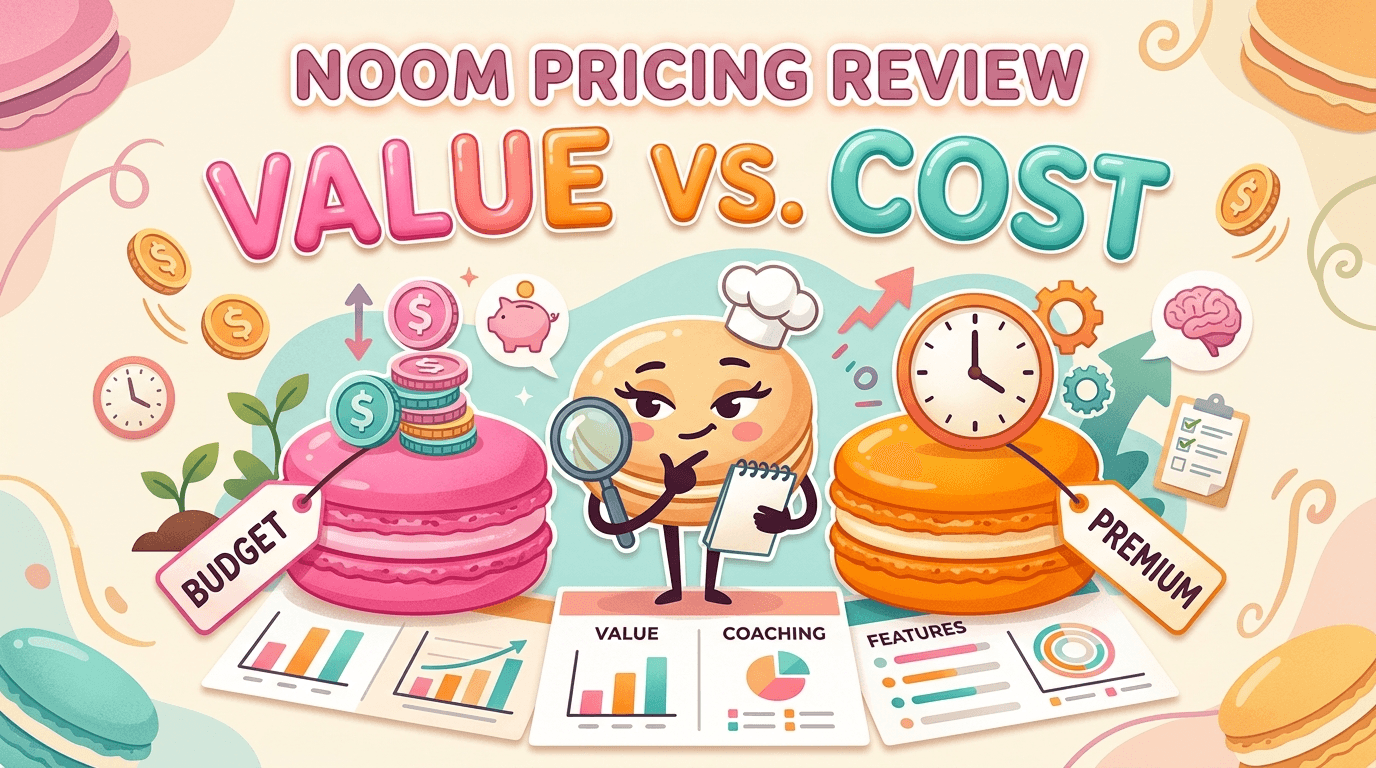
Noom’s pricing is designed to reward longer commitments, but the structure can be hard to evaluate if you are still deciding whether the program fits your habits. Shorter plans cost more per month, while annual billing lowers the effective rate, which makes the app look more competitive on paper. The catch is that Noom only makes sense if you actually use the lessons, coaching, and logging consistently. If you only want a food tracker, the subscription can feel expensive compared with free or lower-cost alternatives that do less but ask less in return.
A Simpler AI Alternative
Macaron is a better fit for users who want nutrition help without a structured curriculum. It uses AI to turn natural-language requests into meal ideas, which makes it easier to ask for things like quick lunches, high-protein dinners, or lower-effort meal plans. Photo-based logging also reduces the amount of manual work. The tradeoff is that Macaron is less prescriptive than Noom, so it may not help as much if you want a tightly guided behavior-change program or the reassurance of a more established weight-loss framework.
Frequently Asked Questions
Noom is worth it if you want a structured program that changes eating habits, not just a place to log meals. It can be a good fit for people who benefit from daily accountability and behavioral coaching. If you already know how to track food or you mainly want a fast, low-cost app, the subscription can feel hard to justify. The value depends on whether you will actually use the lessons and coaching consistently.
Noom is not free in any long-term sense. It typically offers a short trial, but the core experience is subscription-based. That is different from freemium apps that let you keep using basic features indefinitely. If you want a permanently free tracker, Noom is not the right fit. Its pricing only makes sense if you see value in the guided curriculum, coaching, and habit-change structure.
Noom is built around behavior change, while MyFitnessPal is built around food logging. Noom adds daily lessons, coaching, and a color-based food framework to help users think differently about eating. MyFitnessPal is usually faster for barcode scanning and routine tracking, and it is better for users who already know what they want to eat. Noom is more guided; MyFitnessPal is more flexible and lighter.
Macaron is a lighter alternative for people who want AI help without mandatory lessons. It can generate meal ideas from plain-language requests and reduce logging friction with photo-based tools. That makes it easier to use day to day. The tradeoff is that it does not offer Noom’s same behavior-change curriculum or clinical weight-loss framing. It is better for convenience and personalization than for a highly structured program.
Noom is specifically designed to address emotional eating patterns. Its lessons focus on triggers, habits, and the reasons people reach for food outside of hunger. That can be useful if your eating is tied to stress, boredom, or routine. It is less useful if you already understand those patterns and just need a practical way to plan meals. In that case, the educational content may feel repetitive rather than helpful.
Complaints usually center on response speed and consistency. Some users like the accountability, but others say coaching feels generic, delayed, or too limited to solve real problems in the moment. That matters because coaching is part of what Noom uses to justify its price. If you want immediate, hands-on support, a coach-based app may disappoint. If you mainly want a nudge and a check-in, it may still be enough. For a third-party check, Read Customer Service Reviews of noom.com - Trustpilot at https://www.trustpilot.com/review/noom.com is worth comparing against the page summary.
Noom is usually better for beginners or for people who feel stuck after trying other diets. The app’s lessons can help explain why previous attempts failed and give users a more structured starting point. Experienced dieters may find the content too basic, especially if they already understand calorie balance and portion control. For them, a simpler tracker or a more customizable app may be a better fit. For another outside reference, Noom Review (2026): A 9-Month Test Trial | Fortune at https://fortune.com/article/noom-review/ adds a second perspective.
The biggest downsides are cost, time commitment, and friction. Noom asks users to complete lessons, log food, and stay engaged with the program, which is more demanding than many alternatives. Some users also dislike the coaching experience or the way the app has expanded into broader health features. It can work well, but only if you are comfortable paying more for a guided system instead of a simple tracker.com/nutrition/noom-diet-review is a useful reference point.com/nutrition/noom-diet-review is a useful reference point.com/nutrition/noom-diet-review is a useful reference point.com/nutrition/noom-diet-review is a useful reference point.com/nutrition/noom-diet-review is a useful reference point. For outside context, Noom Diet Review: Follow Our Tester's 12-Month Journey - Healthline at https://www.healthline.com/nutrition/noom-diet-review is a useful reference point.
Read & discover
AI Personal Assistant
Free calculators


