Noom vs Weightwatchers
Comparing Noom's behavior-focused approach with Weight Watchers' points system reveals two distinct diet philosophies. For those seeking a middle path, Macaron provides AI-powered nutrition guidance without rigid program structures.
Noom vs Weight Watchers: Core Approach
The Noom vs Weight Watchers comparison is really a choice between two behavior models. Noom tries to change how you think about food through lessons, reflection, and habit tracking, while Weight Watchers gives you a simpler rule set built around points and food categories. Both can help with structure, but they ask users to engage in different ways and tolerate different kinds of friction.
Noom is built for people who want context, coaching, and a reason behind each recommendation. Its daily lessons and color-coded food system can make healthy choices feel more intentional, but they also add time and mental overhead. That tradeoff matters for users who want guidance without feeling like they are taking a class every day or logging every decision in detail.
Weight Watchers is easier to understand at a glance because the points system turns food choices into a practical budget. That clarity helps users who prefer rules over reflection, especially when eating out or planning familiar meals. The downside is that points can feel restrictive or tedious when recipes are complex, home cooking is frequent, or the system changes enough to require relearning. For a related Macaron page, see How Macaron AI Tackles the Problem with Traditional Task Lists at https://macaron.im/blog/macaron-ai-daily-planning-guide.
Both programs have expanded beyond their original models as weight management has become more clinical and medication-assisted. Noom now offers medical support through Noom Med, while Weight Watchers has moved deeper into clinical care through its WW Clinic and Sequence offerings. That shift gives users more options, but it also means the real cost and experience can be more complicated than the headline subscription price suggests.
For people who want support without committing to a fixed program style, Macaron offers a different path. It focuses on adaptive nutrition guidance, photo-based logging, and flexible planning instead of lessons or points. The tradeoff is less built-in community structure than Weight Watchers and less formal behavior curriculum than Noom, but the benefit is lower friction for users who want practical help that fits their routine.
Noom vs Weight Watchers: Core Approach
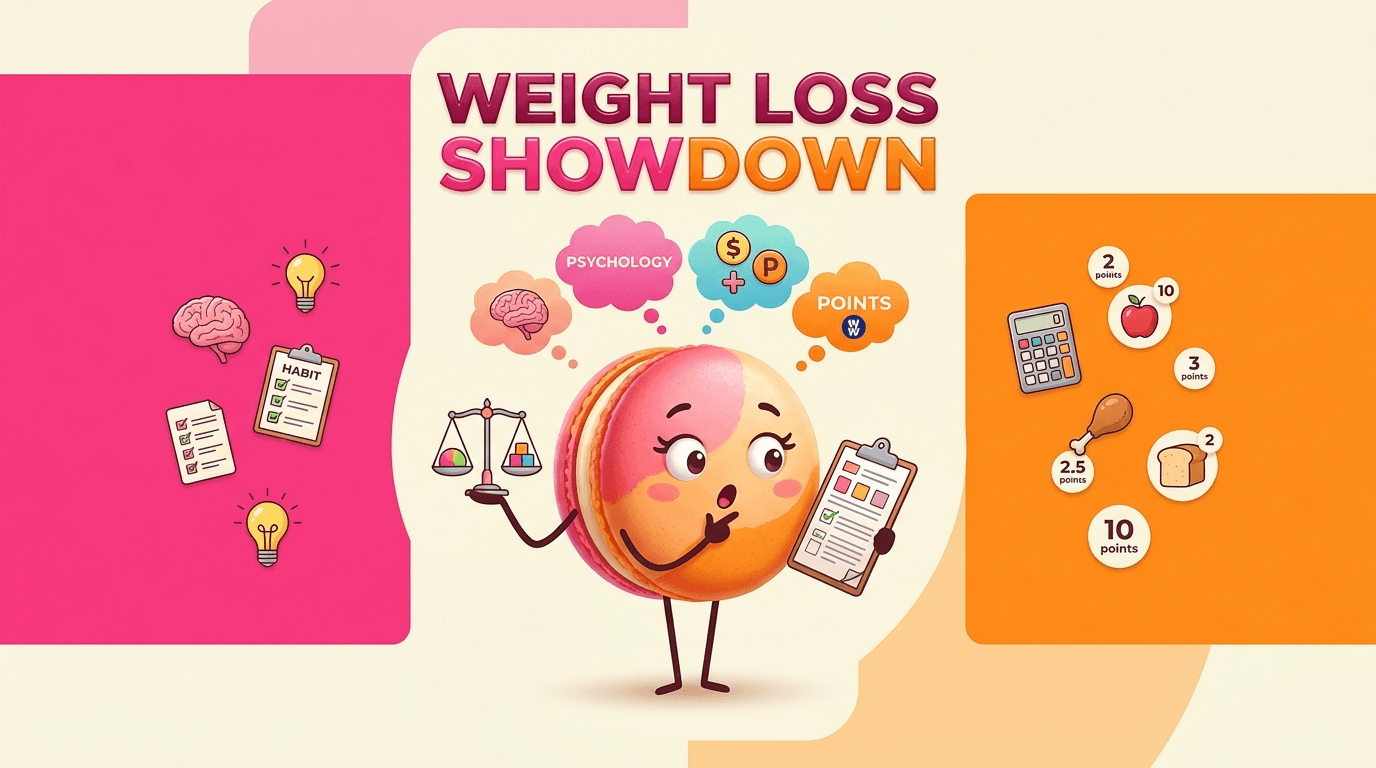
Noom uses a psychology-first framework built around daily lessons, habit reflection, and a green-yellow-red food system that encourages users to think about why they eat as much as what they eat. Weight Watchers takes a more rules-based approach, assigning foods SmartPoints or PersonalPoints values and using zero-point foods to simplify decisions. Noom is better for users who want mindset change and coaching language; Weight Watchers is better for users who want a straightforward system they can follow quickly. The tradeoff is that Noom asks for more daily attention, while Weight Watchers can become repetitive or confusing when the rules shift or meals are hard to calculate.
Pricing Comparison
Noom’s pricing is easier to read upfront because it typically sells fixed-duration plans, but the base subscription does not always include the level of coaching or medical support users expect. Weight Watchers often starts with a lower monthly entry point, yet the final cost can rise once workshops, premium features, or clinical services are added. That makes the real comparison less about the advertised price and more about how much support you actually need. Users who only want basic tracking may find Weight Watchers cheaper at first, while users who want coaching or medical care may discover that both programs move into a higher-cost tier quickly.
Results and User Experience
Noom tends to appeal to users who want to understand emotional eating, trigger patterns, and long-term habit change. Weight Watchers often feels easier to start because the points system gives immediate structure and a clear daily framework. In practice, both programs can work when users stay engaged, but the reasons people quit are different: Noom can feel time-intensive, while Weight Watchers can feel repetitive or overly dependent on tracking. That makes adherence the real deciding factor. Users who enjoy learning and self-analysis may prefer Noom, while users who want a lighter mental load may prefer Weight Watchers.
More About Noom vs Weightwatchers
Noom’s biggest strength is that it treats weight loss as a behavior problem, not just a food problem. That can help users who snack from stress, eat on autopilot, or need a framework for understanding habits. The downside is that the program asks for regular attention, and users who want quick answers may find the lessons slow or repetitive. It is strongest when the user is willing to learn, reflect, and keep showing up.
Weight Watchers is built for people who want a simpler decision system. Points make it easier to compare foods, plan meals, and stay within a daily budget without reading long lessons. That simplicity is useful, but it can also create friction when users cook from scratch, eat mixed meals, or feel pressured to optimize every choice. The system is practical, yet it can become mentally tiring over time.
Cost is not just about the monthly fee. Noom’s fixed plans can look predictable, but coaching and medical add-ons change the total quickly. Weight Watchers often appears cheaper at the entry level, yet workshops, premium tiers, and clinical services can raise the bill. Users comparing the two should think in terms of total support, not just the advertised subscription, because the cheapest plan is not always the cheapest path to the help they want. Another useful Macaron comparison is 20 AI Tools to Upgrade Your Daily Life - Macaron - Macaron App at https://macaron.im/blog/macaron-app-ai-tools-daily-life.
User feedback often splits along the same lines as the product design. Noom users like the mindset shift but dislike the amount of reading and logging. Weight Watchers users appreciate the community and structure but may get tired of recalculating points or adapting to new rules. That makes the best choice less about which app is objectively better and more about which kind of friction you can tolerate consistently. For a broader Macaron context, What Should I Eat Today? AI Tools That Help You Decide - Macaron at https://macaron.im/blog/what-should-i-eat-today can help you compare the decision from another angle.
Macaron is competitive because it removes the most common pain points from both models. Instead of forcing lessons or points, it uses AI to adapt to the user’s habits, suggest meals, and simplify logging through photos and natural language input. The tradeoff is that it does not offer the same built-in group accountability as Weight Watchers or the same formal behavior curriculum as Noom. For users who value flexibility over structure, that is often the better fit.
Why Macaron Is the Smarter Choice for Personalization
Macaron is designed for users who want guidance without being locked into a diet program’s rules. It learns from preferences, routine, and past choices to offer meal ideas and nutrition support that feel more adaptive than a fixed points system or a lesson-based curriculum. Food logging is also less tedious because users can rely on photos and conversational input instead of manually translating every meal into categories or points. The tradeoff is that Macaron offers less of the social accountability and formal coaching that make Noom and Weight Watchers appealing to some users, but it is often easier to sustain for people who want practical help without program fatigue.
Three-Way Comparison Table
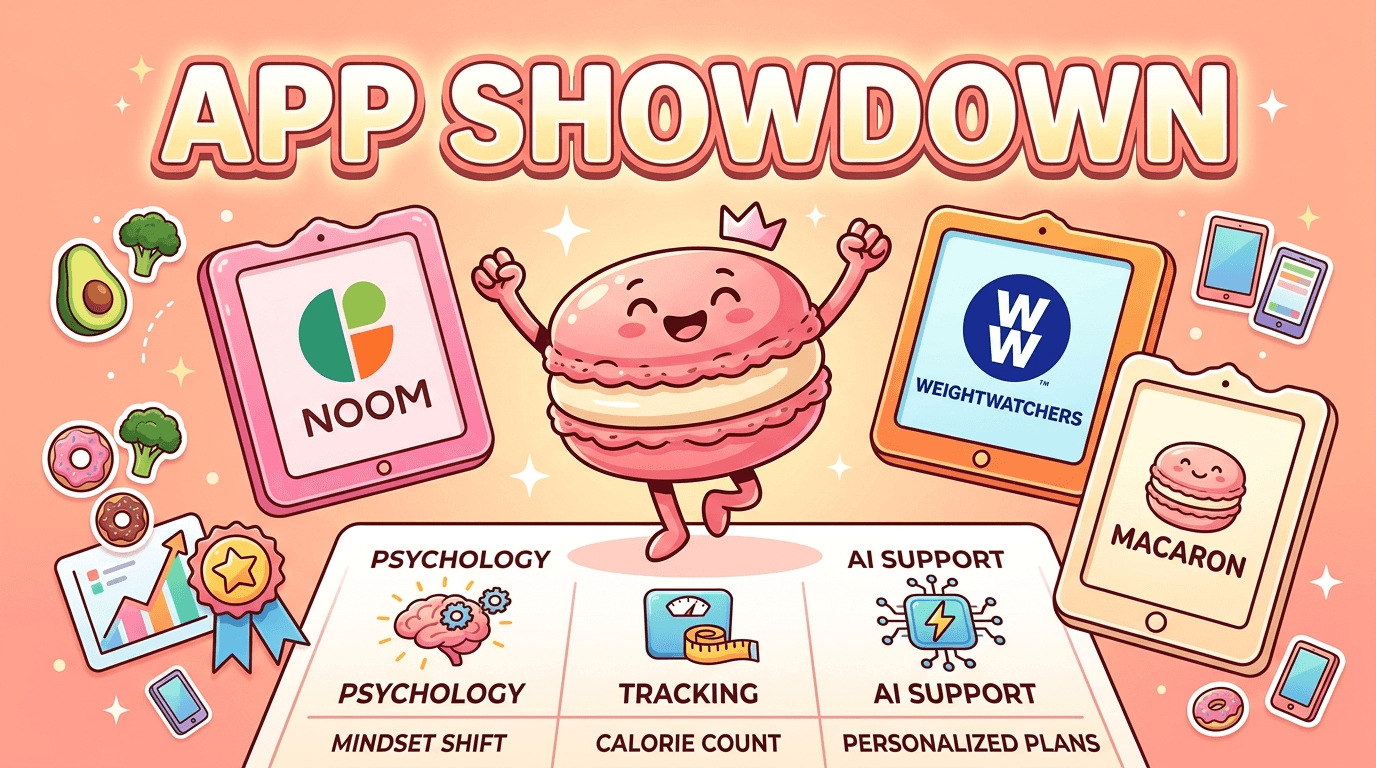
This comparison highlights the practical differences that matter after the marketing headlines fade. Noom is strongest when a user wants education, reflection, and a behavior-change framework. Weight Watchers is strongest when a user wants a familiar structure, community support, and a clear food budget. Macaron is strongest when a user wants flexible, AI-guided support that adapts to real life instead of asking the user to adapt to a rigid system. The main tradeoff is that Macaron is less prescriptive, so users who want a strict external framework may prefer Noom or Weight Watchers. For users who want lower friction and more personalization, the AI approach is often easier to keep using.
Frequently Asked Questions
Neither is universally better; they solve the same problem in different ways. Noom is usually a better fit for people who want to understand habits, emotional eating, and the psychology behind food choices. Weight Watchers is often better for people who want a simpler, more rule-based system with community support. The main tradeoff is time versus structure: Noom asks for more reflection, while Weight Watchers asks for more tracking.
The cheaper option depends on how much support you need beyond the base plan. Noom often has a more predictable upfront price, but add-ons can raise the total. Weight Watchers may start lower, yet workshops, premium tiers, and clinical services can increase the monthly cost. If you only want basic tracking, Weight Watchers can look cheaper. If you want coaching or medical support, both can become more expensive than their entry pricing suggests.
Macaron is best thought of as an alternative rather than a direct clone of either program. It replaces Noom’s lesson-heavy structure and Weight Watchers’ points tracking with AI-guided nutrition support, photo-based logging, and flexible planning. That makes it useful for people who want less friction and more personalization. However, users who value formal coaching, workshops, or a strong community layer may still prefer parts of Noom or Weight Watchers.
That is exactly the kind of user Macaron is meant to help. Instead of asking you to follow a rigid diet system, it adapts to your existing habits and gives support when you need it. You can use it lightly for logging and meal ideas or more actively for planning and guidance. The benefit is flexibility; the tradeoff is that it does not impose the same strict external structure that some people find motivating.
The easier program to stick with is usually the one that creates the least daily friction for you. Noom can be sustainable if you like learning and reflection, but the lesson load can become tiring. Weight Watchers can be easier if you prefer simple rules, but points fatigue can build over time. Long-term success often comes down to whether you prefer education, structure, or a more flexible tool like Macaron.
Yes, Weight Watchers is often stronger for users who want accountability from workshops, group settings, or a familiar brand community. That social layer can help people stay engaged when motivation drops. The tradeoff is that community support does not remove the need to track points or adapt to system changes. Users who want social accountability plus less manual tracking may find the balance less ideal. For a third-party check, WW vs Noom | Compare Plans at https://www.weightwatchers.com/uk/noom-vs-ww-compare-weight-loss-plans?srsltid=AfmBOooK8WH5iTOZ4OfJsmubPJb_dPAQ0RBctYV3qhH3CgcDo_Co-BoS is worth comparing against the page summary.
It can be, especially if you do not enjoy reading lessons or checking in every day. Noom’s structure is useful for people who want to learn while they lose weight, but that same structure can feel like homework for busy users. If your schedule is unpredictable, the daily commitment may be the main drawback. In that case, a lighter tool like Macaron may be easier to maintain because it does not require the same lesson routine. For another outside reference, Noom vs. Weight Watchers: GLP-1 Medications, Cost, and Care ... at https://www.noom.com/blog/weight-management/noom-vs-weight-watchers/?srsltid=AfmBOorPEqVNu8tobdkTmLTt2F66Wy-74gt3hrSbPBUHOQVB20Z97J5B adds a second perspective.
GLP-1 offerings make both programs more than just diet apps, because they now overlap with clinical weight management. That can be helpful for users who want medication support alongside behavior change or tracking. The downside is that the experience becomes more complex and often more expensive. If you are comparing Noom Med and Weight Watchers Clinic, the real question is whether you want a lifestyle program with medical support or a simpler nutrition tool.com/nutrition/noom-vs-weight-watchers%23noom is a useful reference point.com/nutrition/noom-vs-weight-watchers%23noom is a useful reference point.com/nutrition/noom-vs-weight-watchers%23noom is a useful reference point.com/nutrition/noom-vs-weight-watchers%23noom is a useful reference point.com/nutrition/noom-vs-weight-watchers%23noom is a useful reference point. For outside context, Noom vs. Weight Watchers: Reviews - Healthline at https://www.healthline.com/nutrition/noom-vs-weight-watchers%23noom is a useful reference point.
Read & discover
AI Personal Assistant
Free calculators


