Nourish Review
Nourish connects users with registered dietitians via telehealth, with 94% paying $0 through insurance. But is the clinical approach right for you compared to flexible AI tools?
What Nourish's Dietitian Model Offers
Nourish is built around one core promise: connect people with registered dietitians through telehealth instead of asking them to rely on generic meal plans or automated coaching. That makes it more clinically grounded than most nutrition apps, especially for users who want advice tied to medical history, lab work, symptoms, or long-term behavior change rather than simple calorie tracking.
The experience is still highly dependent on the individual dietitian you get matched with. Some users describe supportive, knowledgeable care that feels collaborative and practical, while others mention awkward first sessions, communication mismatches, or a style that feels too formal for their expectations. That variability is the tradeoff for working with a human professional instead of software.
Nourish is most compelling for people who need medical nutrition therapy, not just general wellness tips. Users managing diabetes, PCOS, digestive issues, eating disorders, or cholesterol concerns may benefit from a dietitian who can build a plan around health goals and constraints. For those situations, the platform offers more depth than a typical habit tracker or AI prompt-based tool. For a related Macaron page, see Best AI Personal Assistant in 2025: A Test Suite You Can Reuse at https://macaron.im/blog/ai-personal-assistant-test.
Cost is where the value equation changes quickly. If your insurance is compatible, Nourish can be unusually affordable and sometimes effectively free at the point of care. If you are paying out of pocket, the per-session price is much harder to justify unless you specifically want licensed clinical guidance and are comfortable scheduling appointments around it.
Compared with Macaron, Nourish is more structured, more personal, and more clinically oriented, but also less flexible. Macaron is better for users who want immediate nutrition help, ongoing habit support, and no appointment friction. Nourish is better when the goal is professional oversight; Macaron is better when the goal is everyday convenience.
What Nourish's Dietitian Model Offers
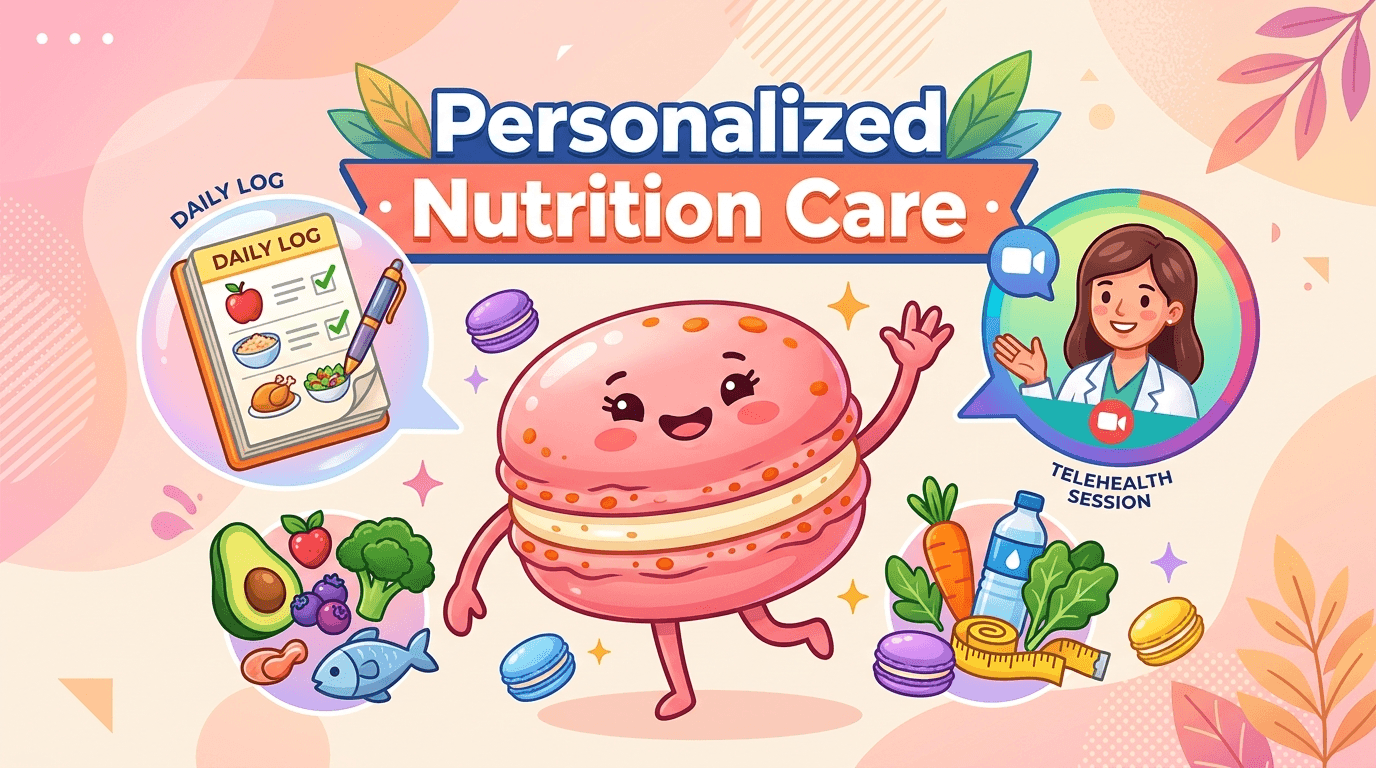
Nourish centers the experience on one-on-one care with a registered dietitian, which gives it a different feel from most nutrition apps. Instead of asking users to interpret dashboards alone, the platform pairs them with a professional who can review goals, eating patterns, symptoms, and lifestyle constraints. Typical features include initial matching, video visits, session summaries, secure messaging, and lightweight food logging. The main advantage is accountability with a real clinician; the main limitation is that the experience depends heavily on provider fit and availability.
Who Nourish Is Best For
Nourish is a strong fit for people who want medical nutrition therapy, especially if they are managing diabetes, PCOS, high cholesterol, GI concerns, or disordered eating patterns and want guidance from a licensed professional. It also works well for users who prefer scheduled accountability and are comfortable discussing food in a clinical setting. It is less useful for people who want instant answers, anonymous self-tracking, or casual meal inspiration without appointments. If your insurance is compatible, the platform becomes much easier to recommend; if not, the value drops quickly.
More About Nourish Review
Nourish’s biggest differentiator is that it does not try to replace a dietitian with automation. The platform is designed to make licensed nutrition care easier to access, which is useful for people who want more than generic advice but do not want to navigate traditional clinic scheduling. That clinical framing is a strength for medically relevant goals, but it also means the service can feel more formal and less spontaneous than consumer wellness apps.
The matching process is important because the quality of the experience depends on communication style as much as credentials. Some users want a direct, evidence-based coach; others want a gentler, more intuitive-eating-friendly approach. Nourish can support both in theory, but the fit is not guaranteed. That makes it more personal than an app, yet also more variable than software that behaves the same way for everyone.
Telehealth adds convenience, especially for users who live far from specialists or prefer remote care. Still, video visits are not ideal for everyone, and some people find it easier to talk about eating habits in person. Technical issues, awkward first conversations, or a sense of distance can reduce the value of the service. The platform works best when users are already comfortable with virtual healthcare and know what kind of support they want. Another useful Macaron comparison is How Macaron AI Tackles the Problem with Traditional Task Lists at https://macaron.im/blog/macaron-ai-daily-planning-guide.
Insurance is the most important practical factor in deciding whether Nourish makes sense. For users with compatible plans, the service can be far more affordable than expected, but coverage should be verified before booking because benefits vary and self-pay pricing is high. That makes Nourish a good example of a service where the headline value depends less on the app itself and more on the user’s insurance situation. For a broader Macaron context, Macaron App Download (iOS & Android): Official, Safe, and Fast Install at https://macaron.im/blog/macaron-app-download can help you compare the decision from another angle.
Macaron occupies the opposite end of the spectrum: it is built for fast, flexible nutrition support without appointments, claims, or provider matching. That makes it better for daily habit-building, quick meal planning, and low-friction experimentation. The tradeoff is that it does not replace a clinician for medical nutrition therapy. Users who need diagnosis-aware guidance may prefer Nourish; users who want convenience and privacy may prefer Macaron.

Nourish Pricing and Insurance Coverage
Nourish’s pricing is simple on paper but highly dependent on insurance. Users with eligible in-network plans may pay little or nothing for sessions, which is the main reason the platform gets strong reviews from people who can use coverage. Self-pay users face a much steeper cost at $145 per 50-minute session, and there is no low-cost subscription tier to soften that expense. Coverage should be checked in advance because plan rules, claim approvals, and network status can change the real cost quickly. For some users, Nourish is a bargain; for others, it is too expensive to use regularly.
Macaron: A More Flexible AI Alternative
Macaron takes a different approach by using AI to support nutrition habits without requiring appointments or insurance. Users can ask for meal ideas in natural language, generate plans around preferences, and identify foods from photos instead of manually logging every detail. That makes it useful for people who want immediate feedback and a lighter workflow. The tradeoff is that it does not provide clinical oversight, diagnosis-aware care, or the accountability of a licensed dietitian. Macaron is strongest for everyday support, while Nourish is stronger for medically informed nutrition guidance.
Frequently Asked Questions
Nourish is worth it mainly when you can use insurance and you want help from a licensed dietitian for a real health concern. In that case, the platform can offer strong value because the care is personalized and clinically informed. If you are paying out of pocket, the price is much harder to justify unless you specifically need medical nutrition therapy and prefer scheduled human support over a lower-cost app.
It depends on your goal. Nourish is better if you want a registered dietitian to review your history, symptoms, and habits and help you build a care plan. A nutrition app is usually better if you want speed, convenience, and lower cost. Nourish adds professional oversight, but it also adds scheduling, provider fit, and insurance complexity that app-based tools do not have.
Yes, but the experience changes a lot without coverage. Self-pay pricing is high enough that many users will only find it worthwhile if they need ongoing clinical nutrition support. If your goal is general meal planning, habit tracking, or everyday accountability, a lower-cost app or AI tool will usually be easier to sustain. Without insurance, the value depends on how much you need the dietitian’s expertise.
Macaron is a lighter alternative for people who want nutrition help without appointments or insurance checks. It can generate meal ideas, adapt to preferences, and support daily tracking in a more flexible way. The tradeoff is that it does not replace a clinician for medical nutrition therapy. It is best for users who want practical guidance and habit support rather than formal dietitian care.
Sometimes, but not for everyone. Nourish can be $0 out of pocket for users whose plans cover the service and whose claims are processed in network. That said, coverage depends on the specific insurance plan, and users should verify benefits before booking. If a claim is denied or the provider is out of network, the cost can be much higher than expected.
Nourish is most useful for people who want help with conditions that benefit from medical nutrition therapy, such as diabetes, PCOS, high cholesterol, digestive concerns, or eating-disorder-related support. It can also help users who want accountability for weight-related or habit-change goals. It is less suited to people who only want quick recipe ideas or casual wellness tips without a clinical framework. For a third-party check, I Tried Nourish, the Virtual Nutrition Platform All Over TikTok—Here's ... at https://www.theskimm.com/health/nutrition/nourish-virtual-nutrition-platform-review is worth comparing against the page summary.
The biggest downside is that the experience depends on both insurance and provider fit. If your plan is not compatible, the service can become expensive quickly. Even with coverage, some users may not click with the assigned dietitian or may find the clinical style more formal than they expected. That makes Nourish strong for the right user, but not universally convenient. For another outside reference, A 2026 Nourish Brand Review: Our Tester Shares Her Experience at https://www.healthline.com/nutrition/nourish-brand-review adds a second perspective.
Nourish is better for users who need licensed, medically informed nutrition care and are comfortable with scheduled telehealth visits. Macaron is better for users who want immediate, flexible support without appointments, claims, or provider matching. The tradeoff is depth versus convenience: Nourish offers human expertise, while Macaron offers faster everyday help and more freedom to use it on your own schedule.com/nourish-reviews is a useful reference point.com/nourish-reviews is a useful reference point.com/nourish-reviews is a useful reference point.com/nourish-reviews is a useful reference point.com/nourish-reviews is a useful reference point. For outside context, Nourish Reviews | A Dietitian Telemed Platform [2026] - Innerbody at https://www.innerbody.com/nourish-reviews is a useful reference point.
Read & discover
AI Personal Assistant
Free calculators


