Self Care Tracker
A self care tracker is most useful when you want everyday care to feel easier to notice and repeat, not just something you remember after burnout sets in. Macaron turns that idea into guided reflection so you can track routines, spot patterns, and keep self-care realistic without treating it like a diagnosis or medical tool.
Self Care Tracker
This self care tracker reflection helps you notice what supports your daily wellbeing and what tends to get skipped when life gets busy. It is designed to highlight patterns in routines, energy, and recovery so you can make self-care feel more realistic and easier to repeat.
This is a self-reflection tool, not a diagnosis or medical assessment.
Please answer every question before viewing your result.
This reflection is for personal insight only and does not diagnose mental health, burnout, or any other condition. If self-care feels impossible, or if you are worried about your mood, sleep, eating, or safety, consider reaching out to a qualified professional or trusted support person.
Build Self-Care Habits That Actually Stick
A self care tracker is helpful when self-care feels important in theory but hard to sustain in real life. Many people search for one because they want a simple way to keep up with the basics, especially during stressful weeks when sleep, meals, and rest are the first things to slip. The best tools make those basics visible without turning them into a performance.
Macaron approaches self-care tracking as a reflection tool, not a scorecard. Instead of asking you to perform perfect routines, it helps you notice what you actually do, what tends to get skipped, and which small actions make the biggest difference in how your day feels. That makes it easier to learn from your own patterns instead of comparing yourself to an ideal routine.
This matters because self-care is often broader than a standard habit tracker. People use the term to mean recovery, emotional reset time, hydration, movement, better sleep, or just a few stabilizing routines that make difficult days more manageable. A good tracker should leave room for that flexibility, since the right routine on a low-energy day may look very different from the one on a good day. For a related Macaron page, see AI Meal Planner Free: Best Free Options That Are Actually Useful at https://macaron.im/blog/ai-meal-planner-free.
Search intent around self care tracker often includes printable planners, journal pages, app-based trackers, and mood or symptom logs. That mix suggests people want something practical, visually clear, and easy to keep up with, not another system that creates pressure. For many users, the real need is a lightweight way to notice what helps and what gets in the way.
Macaron is designed to support that kind of use. It helps you build awareness over time, compare patterns across days or weeks, and keep the focus on steadier care rather than perfection. It is not a medical assessment, diagnostic instrument, or substitute for professional care, which makes it better suited to everyday reflection than clinical tracking.
Build Self-Care Habits That Actually Stick
A self care tracker is most useful when it turns broad intentions into routines you can actually repeat. People often start with good intentions, then lose momentum because the plan is too ambitious or too vague. Macaron helps you focus on the habits that matter most in daily life, such as rest, hydration, meals, movement, recovery, and short emotional resets. That makes it easier to see what supports your wellbeing and what tends to fall away when life gets busy.
How Macaron Structures This Reflection
Macaron keeps the reflection process simple enough to use consistently. Instead of asking for long entries, it organizes self-care tracking around daily check-ins, flexible routine logging, reminders for basic care, and quick reflection on what helped most. This is useful if you want a tracker that can adapt to different days, since self-care does not always look the same on a productive day, a low-energy day, or a stressful week.
Celebrate Small Wins and See Real Progress
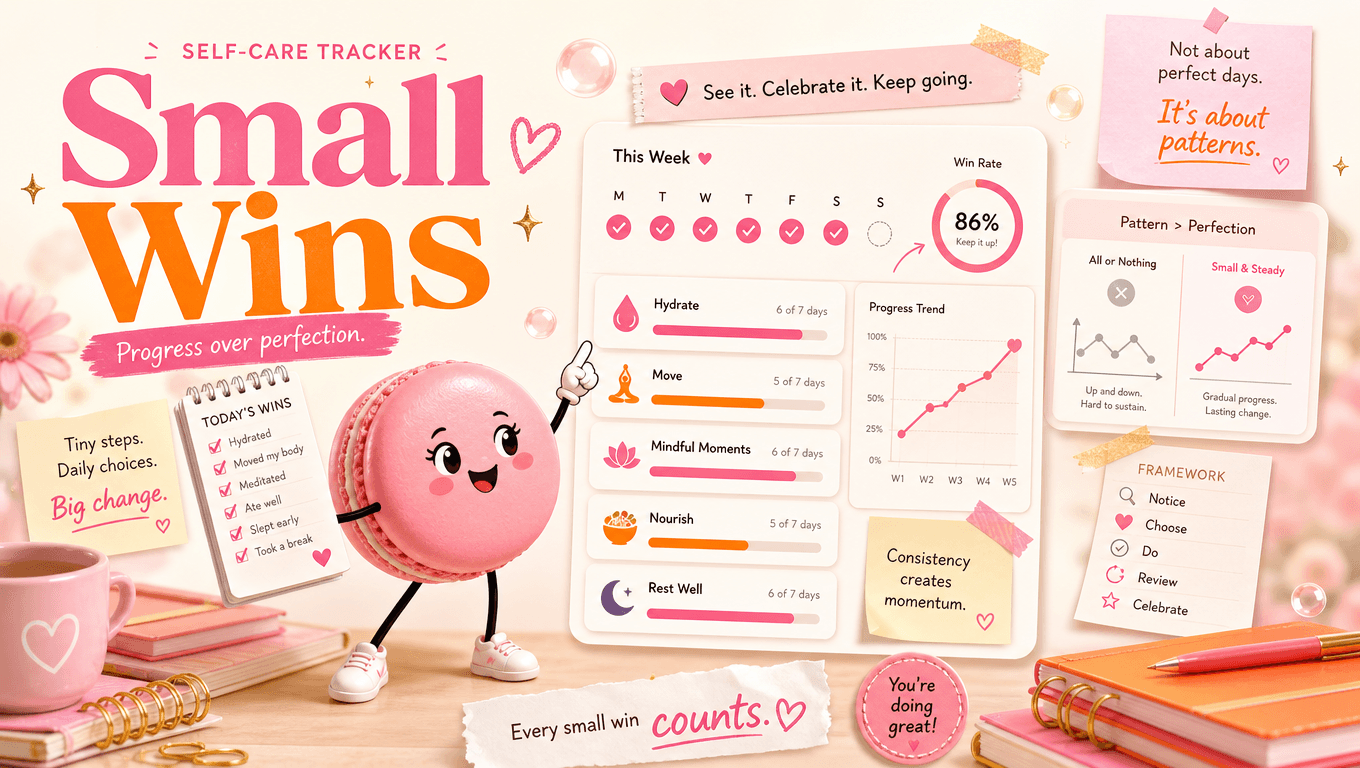
Progress in self-care is often subtle, which is why tracking can be valuable. Over time, your entries can reveal which habits you return to most easily, where routines break down under stress, and what helps you feel steadier. That kind of pattern visibility can be more meaningful than a perfect streak because it shows how small actions add up and which supports make consistency more realistic.
More About Self Care Tracker
A self care tracker works best when the habits are specific enough to notice. Vague goals like “take better care of myself” are hard to maintain, while concrete items such as sleep, hydration, meals, movement, and recovery time are easier to check in on and learn from over time. That specificity also makes it easier to decide what to keep, what to simplify, and what may not be worth tracking at all.
Macaron structures the experience around short daily check-ins and flexible routine tracking. That makes it easier to use whether you prefer a simple checklist, a reflective journal style, or a more open-ended way to record what helped, what was hard, and what you want to repeat tomorrow. The tradeoff is that it is less rigid than a highly structured planner, which some users may prefer if they want more control over the format.
The real value of tracking is pattern recognition. Over time, entries can show where self-care tends to break down, which routines return most naturally, and what kinds of support matter most during stress, low energy, or busy periods. That is often more useful than trying to maintain a perfect streak, especially for people whose routines change from week to week or who need a system that can recover after missed days. Another useful Macaron comparison is AI Calorie Tracker - Macaron at https://macaron.im/ai-calorie-tracker.
Many people look for self care tracker ideas because they want something that feels encouraging rather than punishing. Gentle reminders, progress check-ins, and small wins can make the process feel more sustainable, especially for users who get discouraged by rigid habit systems or overly ambitious wellness plans. Macaron is a good fit if you want a softer, more reflective approach; apps with stronger gamification or more visual journaling templates may still be better for users who want a highly aesthetic or reward-driven experience. For a broader Macaron context, Best AI Personal Assistant in 2025: A Test Suite You Can Reuse at https://macaron.im/blog/ai-personal-assistant-test can help you compare the decision from another angle.
Because self-care and wellbeing tracking can involve sensitive personal information, privacy matters too. Macaron is provided by MINDAI PTE. LTD., and users can review the official Privacy Policy for details. If you want a tracker that supports realistic care without overcomplicating the process, this is a practical place to start, especially if you value a tool that keeps the focus on daily reflection rather than clinical interpretation.
Make Self-Care Feel More Natural
A self care tracker should reduce friction, not add another chore. Macaron supports follow-through with daily prompts, progress check-ins, gentle reminders, and routine reflection that keeps the focus on realistic care patterns. This is especially helpful if you prefer a softer approach to habit building, where the goal is to stay connected to your needs and keep returning to the basics without feeling judged. The main tradeoff is that users who want a strict streak system or a highly gamified experience may find it less motivating than apps built around points, pets, or competitive progress.

Your Entries and Privacy
Self-care and wellbeing tracking can include personal details about routines, mood, recovery, and daily functioning, so privacy is an important part of the experience. Macaron is provided by MINDAI PTE. LTD., and the official Privacy Policy explains how information is handled. If you have questions about privacy or data use, you can also contact `contact@macaron.im` for support. That said, users who want fully offline paper tracking or a printable planner may still prefer a non-digital option for maximum control over where their notes live.
Frequently Asked Questions
A self care tracker helps you keep an eye on the routines that support daily wellbeing, such as sleep, hydration, meals, movement, rest, emotional resets, and other small actions that help you recover and stay steady. Some people also use it to notice patterns in energy or stress, which can make it easier to understand what kind of care is most helpful.
The easiest way is to keep the tracker small and realistic. Choose only a few habits that matter most, then use the tracker to build awareness instead of chasing perfection. Many people find it helps to treat the tracker as a quick check-in or reflection tool rather than a long daily assignment, especially on days when energy is already limited.
That usually means the routine is too hard to sustain in its current form, not that you failed. A tracker can help you see when the breakdown happens, what gets in the way, and whether the routine needs to be smaller, simpler, or tied to a different part of the day. The goal is to make self-care easier to return to, not harder to maintain.
A habit tracker can cover almost anything, from chores to work goals to personal projects. A self care tracker is narrower and more intentional because it focuses on routines that support recovery, energy, and wellbeing. That difference matters when you want the tracker to feel supportive rather than productivity-driven, especially if your main goal is steadier daily care.
The best items are the ones that actually affect how you feel day to day. Common choices include sleep, hydration, meals, movement, time outside, rest breaks, and a few emotional or mental reset habits. It is usually better to track a small set of meaningful actions than to build a long list that becomes hard to maintain. That keeps the tracker useful instead of overwhelming.
Yes, if it is designed to stay flexible. Low-energy periods are often when a self care tracker is most useful because it can show which basics are slipping and which small actions still feel doable. The key is to lower the bar when needed and track what is realistic for that season, rather than using the same standard every day. That makes the tracker more sustainable. For a third-party check, Self Care Tracker - Amazon.com at https://www.amazon.com/self-care-tracker/s?k=self+care+tracker is worth comparing against the page summary.
It depends on how you like to work. A printable planner can be great if you want something tactile, visual, and easy to customize by hand. An app-based tracker is better if you want reminders, quick logging, and the ability to review patterns over time. Macaron is a good fit if you want digital reflection with gentle structure, while paper tools can still be better for users who prefer offline planning. For another outside reference, Self Care Tracker Free Printable - Pinterest at https://www.pinterest.com/ideas/self-care-tracker-free-printable/951949005633/ adds a second perspective.
It can help you notice patterns, but it is not a medical tool. Many people use self care tracking alongside mood or symptom notes to understand what routines seem to support better days and what tends to make things harder. That kind of awareness can be useful for personal reflection, but it should not replace professional guidance if you are dealing with health concerns. For outside context, Customize 506+ Self Care Planner Templates Online - Canva at https://www.canva.com/planners/templates/self-care/ is a useful reference point.
Read & discover
AI Personal Assistant
Free calculators


