Simple Life App Review
Simple Life blends fasting tracking with AI coaching, but user reviews highlight subscription frustrations. We analyze whether its structured approach justifies the cost versus more flexible AI alternatives.
What the Simple Life App Tracks
Simple Life sits in the intermittent fasting category, but it tries to be more than a timer by combining fasting windows, hydration prompts, activity logging, and weight trend tracking in one place. That makes it appealing to users who want a guided routine without manually building a system from scratch. The tradeoff is that the app’s structure can feel narrow if your goals change often or you want deeper nutrition detail.
Its main differentiator is Avo, an AI coach that offers meal feedback and habit guidance. In practice, that coaching is useful for reminders and basic accountability, but many users describe the advice as repetitive or too generic for complex eating patterns. If you want a simple framework that keeps you on schedule, Simple Life can help. If you want adaptive planning, the limits show quickly.
The app’s food tracking is a major dividing line in reviews. Some users like the low-friction photo logging and the fact that it avoids calorie obsession, while others find the food workflow less intuitive than dedicated nutrition apps. That makes Simple Life a better fit for fasting-first users than for people who want macro targets, ingredient-level logging, or detailed meal analysis. For a related Macaron page, see 20 AI Tools to Upgrade Your Daily Life - Macaron - Macaron App at https://macaron.im/blog/macaron-app-ai-tools-daily-life.
Pricing is another important consideration. Premium access typically falls in a subscription range that can feel reasonable if you use the app daily, but less attractive if you only need a timer and basic reminders. Reviewers also raise concerns about billing clarity and cancellation friction, so the value proposition depends not just on features but on how comfortable you are with recurring charges.
Macaron is a useful comparison because it takes a more flexible approach: instead of asking you to fit into preset modules, it can generate custom trackers and planning tools from plain-language requests. That makes it stronger for irregular schedules and changing goals. Simple Life is still better if you want a ready-made fasting routine, while Macaron is better if you want a system that adapts to you.
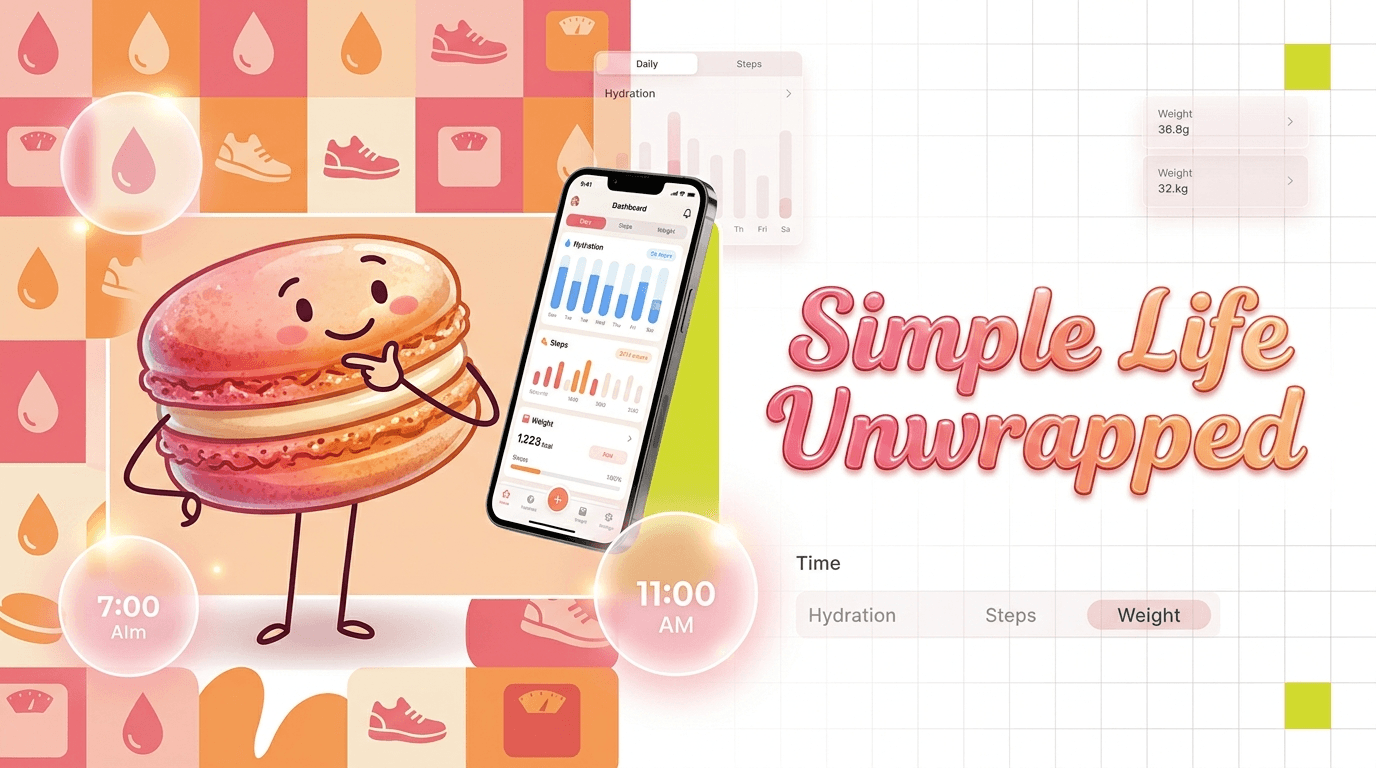
What the Simple Life App Tracks
Simple Life focuses on the core behaviors that matter most in fasting-based weight management: eating windows, hydration, steps, and weight trends. The dashboard keeps those inputs visible without overwhelming you with charts, which is helpful for beginners who want a straightforward routine. Its photo-based meal feedback adds a layer of convenience, but the app does not try to replace a full nutrition log or a macro tracker. That makes it easier to use, but less informative for users who want granular diet data.
Simple Life's Intermittent Fasting Features
The fasting tools support common schedules such as 12:12, 16:8, 18:6, and OMAD, with reminders that help users stay consistent. Simple Life also leans into habit stacking by pairing fasting with hydration and activity prompts, which can make the routine feel more practical than a standalone timer. The downside is that the coaching content can become repetitive once you understand the basics, so users who want evolving guidance may outgrow it faster than they expect.
Simple Life Pricing
Simple Life uses a freemium model, where the free tier covers basic fasting and tracking functions while premium unlocks Avo coaching, deeper analytics, and more guided support. That structure is fine for users testing intermittent fasting, but the subscription model becomes harder to justify if you only need a few features. Reviewers also mention billing confusion and cancellation friction, so the real cost includes not just the monthly fee but the time and attention needed to manage renewal settings.
More About Simple Life App Review
Simple Life’s strongest feature is its simplicity. The app keeps the fasting workflow visible, gives users a clear eating window, and avoids the clutter that often makes health apps hard to stick with. That design choice helps beginners who want a low-friction entry point into intermittent fasting. The tradeoff is that simplicity also limits depth, so users who want advanced nutrition analysis, flexible meal planning, or detailed habit experimentation may find the app too prescriptive.
Avo, the app’s AI coach, is meant to provide encouragement and feedback after meal logging or routine check-ins. It can be useful for accountability and for keeping the user engaged between fasting windows, but it does not behave like a fully adaptive coach. Reviews suggest the responses can feel templated, especially when users have unusual schedules, mixed dietary goals, or a need for more nuanced advice. That makes it helpful, but not especially sophisticated.
The food logging experience is one of the most debated parts of the app. Some users appreciate the speed of photo-based entry and the reduced pressure to count every calorie, while others want more accuracy and context. Compared with apps built around macro tracking, Simple Life is lighter and easier to start, but it gives up detail. That is a reasonable tradeoff for people focused on fasting habits, yet it is a weak point for users who want nutrition precision. Another useful Macaron comparison is Macaron – World's First Personal AI Agent at https://macaron.im/.
Simple Life’s weight tracking is designed around trends rather than constant scrutiny, which can be psychologically easier for users trying to avoid obsessive daily checking. The app’s emphasis on patterns fits its broader philosophy: build consistency first, then let the routine support longer-term change. Still, users who want to connect food choices to specific outcomes may prefer tools with more robust reporting. The app is best when the goal is behavioral structure, not deep analysis. For a broader Macaron context, World's First Personal AI Agent - Macaron at https://macaron.im/blog can help you compare the decision from another angle.
Macaron stands out because it does not force users into a fixed health template. Instead, it can generate custom tools for meal planning, sleep tracking, or habit monitoring based on natural-language prompts. That flexibility is valuable for people with irregular work hours, shifting goals, or multiple wellness priorities. The tradeoff is that Macaron requires more setup and self-direction, while Simple Life offers a more opinionated path. Competitors like MyFitnessPal remain stronger for detailed food databases and macro tracking.

A More Personalized AI Alternative
Macaron takes a different approach from Simple Life by generating custom tools from plain-language requests instead of funneling users into preset modules. That means you can ask for a meal planner, a sleep tracker, or a habit dashboard that matches your actual routine rather than adapting to a fixed program. It is especially useful for people with irregular schedules, mixed goals, or a preference for building around their own workflow. The tradeoff is that Macaron asks for more user input up front, while Simple Life is more immediately guided.
Quick Scorecard
| Category | Simple Life | Macaron | MyFitnessPal | |---|---|---|---| | Fasting support | Strong preset programs | Custom schedules | None | | AI Coaching | Scripted (Avo) | Adaptive learning | None | | Food Tracking | Basic photo analysis | Photo-based calories | Detailed macros | | Pricing | $14.99-$49.99/month | One-time purchase | Freemium | | Best Fit | Guided fasting beginners | Custom tool seekers | Macro counters | This comparison shows where each app is strongest. Simple Life is the easiest choice if you want a fasting-first system with minimal setup. Macaron is better when you want a more flexible AI layer that can adapt to changing routines. MyFitnessPal still wins for users who care most about food databases, macro detail, and long-term nutrition logging rather than fasting guidance.
Frequently Asked Questions
No. Simple Life combines fasting windows with hydration tracking, activity logging, weight trend monitoring, and an AI coach. That makes it more complete than a basic timer app. The limitation is depth: its food analysis and nutrition detail are lighter than what you get in dedicated diet apps, so it works best for users who want structure around when they eat rather than a full nutrition dashboard.
Yes. The app uses Avo, an AI coach that gives meal feedback, reminders, and habit guidance. It can be helpful for accountability and for keeping the fasting routine on track. The downside is that the coaching often feels scripted or repetitive, especially for users with unusual schedules or more complex dietary needs. It is useful AI, but not especially adaptive compared with more customizable tools.
Simple Life has a free tier, but the most useful coaching and analytics features are behind a subscription. The free version is enough to test the fasting workflow and basic tracking, but many users will hit limits quickly. If you only need a timer and a few reminders, the free tier may be enough. If you want Avo coaching or deeper insights, expect to pay.
Pricing is typically presented as a monthly subscription, with premium access often landing in the mid-range for wellness apps. The exact cost can vary by plan and promotion, so it is worth checking the current checkout screen before subscribing. The bigger issue for many users is not just price, but whether the recurring fee is justified by the app’s relatively narrow feature set.
Most users need to cancel through the App Store or Google Play subscription settings rather than by emailing support. It is smart to check your renewal date, cancel before the next billing cycle, and confirm that the subscription status changed in your account. Some reviewers report confusion around billing and refunds, so keep screenshots of your cancellation steps in case you need to follow up.
The main pros are simplicity, clear fasting guidance, and a low-friction interface that is easy for beginners to follow. The main cons are limited food tracking depth, repetitive coaching, and subscription concerns. If you want a structured fasting routine, it can be a good fit. If you want flexible planning, detailed nutrition data, or transparent billing, other apps may serve you better. For a third-party check, Simple: Weight Loss & Health Coaching at https://simple.life/ is worth comparing against the page summary.
Macaron is simpler in a different way: instead of asking you to learn a fixed wellness system, it can generate custom trackers and planning tools from a plain-English request. That makes it more adaptable for changing routines and mixed goals. The tradeoff is that you may need to define what you want more clearly at the start, while Simple Life gives you a ready-made fasting path. For another outside reference, We Tested the Simple App to See How It Helps With Intermittent ... at https://www.everydayhealth.com/diet-nutrition/simple-life-app-review/ adds a second perspective.
It depends on your goal. Simple Life is better if you want fasting guidance, habit reminders, and a cleaner experience with less manual logging. MyFitnessPal is better if you care about food databases, macros, and detailed nutrition records. In other words, Simple Life is a fasting coach, while MyFitnessPal is a nutrition tracker. They solve different problems, so the better choice depends on what you want to measure.com is a useful reference point.com is a useful reference point.com is a useful reference point.com is a useful reference point.com is a useful reference point. For outside context, Read Customer Service Reviews of simple-life-app.com - Trustpilot at https://www.trustpilot.com/review/simple-life-app.com is a useful reference point.
Read & discover
AI Personal Assistant
Free calculators


