Stress Calculator
A stress calculator is most useful when pressure has started to feel routine and you need a clearer way to sort mental overload, body tension, and recovery difficulty. Macaron turns that check-in into a guided reflection, not a diagnosis, so you can understand what is happening and decide what to do next.
Stress Calculator
This stress calculator is a guided self-reflection tool for noticing how pressure is showing up in your life right now. It helps you sort temporary strain, ongoing overload, and recovery difficulty so you can choose a practical next step.
This is a self-reflection module, not a diagnosis or medical assessment.
Please answer every question before viewing your result.
If stress is making it hard to function, sleep, eat, work, or feel safe, please seek support from a qualified professional or local crisis resource. If you are in immediate danger or thinking about harming yourself, call emergency services now.
What a Stress Check-In Can Help You Notice
A stress calculator is helpful when life feels crowded, deadlines stack up, and it becomes hard to tell whether you are simply busy or actually carrying more strain than you can recover from well. People often search for a stress calculator because stress can feel vague until it starts affecting sleep, focus, patience, or energy. Macaron makes that uncertainty easier to examine by turning a broad feeling into a structured self-check that is easier to interpret.
Macaron uses the stress calculator as a guided self-check that helps you separate pressure from overload, emotional strain from physical stress signals, and short-term tension from a pattern that may be building over time. That distinction matters because the same word, stress, can describe everything from a hectic day to a more persistent coping problem. A clearer read can help you respond to the right problem instead of treating every hard day the same way.
This page is intentionally not presenting a clinical score. It is designed for interpretation and reflection, which is useful when you want a practical read on what is happening without mistaking the result for a medical diagnosis, a fitness metric, or a formal mental health assessment. That tradeoff is deliberate: Macaron gives you a more usable self-check, while medical or therapeutic tools remain better for diagnosis and treatment planning. For a related Macaron page, see How to Use AI as a Personal Assistant: 30 Prompts That Actually Work at https://macaron.im/blog/ai-personal-assistant-prompts.
The most useful stress check-ins usually look beyond how busy you feel in the moment. They also consider whether you are getting enough recovery, whether your body feels keyed up or tense, and whether ordinary tasks are starting to feel harder than they should. That broader view can make the result more meaningful than a simple rating of a bad day, especially when stress is showing up as irritability, fatigue, or trouble settling down.
If you are trying to understand your stress level, the goal is not to label yourself. The goal is to notice patterns early enough to respond in a realistic way, whether that means reducing load, protecting rest, or asking for support. Macaron is strongest when you want a practical reflection tool that helps you decide what to change next, rather than a generic score that leaves the next step unclear.
What a Stress Check-In Can Help You Notice
A stress calculator is useful when stress has become so familiar that you stop registering how much it is affecting you. It can help you notice patterns that are easy to dismiss, such as mental clutter, a short fuse, tight muscles, or the feeling that even after resting you still do not feel fully reset. Those details matter because stress often shows up in small, repeated ways before it becomes obvious. Macaron helps you look for the difference between a rough moment and a pattern that is starting to shape your day, which is often the point where small changes still work well.
How Macaron Structures This Reflection
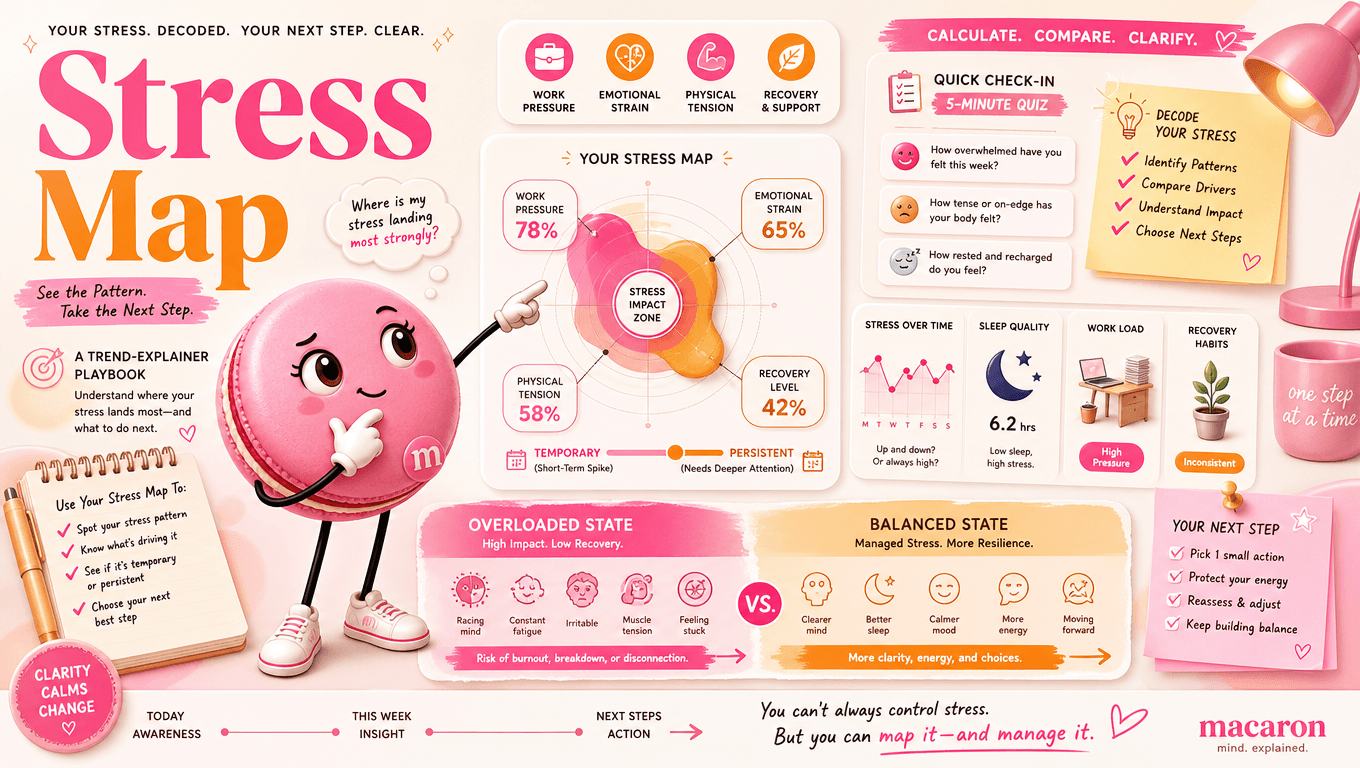
Macaron organizes the reflection around the parts of stress that usually interact with each other rather than treating stress as one flat feeling. It looks at current pressure, emotional strain, physical stress signals, recovery difficulty, and how much the strain is affecting routines or functioning. That structure helps when the source is not simple, such as when work pressure, family demands, and poor sleep are all feeding into the same sense of overload. The goal is to make the pattern easier to read so you can see whether one pressure point is driving most of the strain or whether several smaller issues are compounding together.
What Your Result Can Help You See
Your result is meant to clarify where stress is landing most strongly and whether it looks temporary or more persistent. That can help you compare what you feel with what is actually happening in daily life, such as whether the main issue is pressure at work, emotional strain, physical tension, or a lack of recovery. It can also help you decide what is realistic next, since the best response to stress is not always to do more, but sometimes to reduce demands, protect sleep, or get support sooner before the pattern becomes harder to unwind.
More About Stress Calculator
A stress calculator works best when it asks about the parts of stress people often overlook, not just whether they feel overwhelmed. That includes mental overload, irritability, body tension, trouble settling down, and the sense that rest is not fully restoring you. Those signals often show up before someone would describe themselves as burned out or unable to cope, which makes them useful early indicators. Macaron is built to surface those subtler signs so the result reflects lived experience, not just a single moment of frustration.
Macaron structures the check-in around current pressure, emotional strain, physical stress signals, recovery difficulty, and the effect stress is having on routines. That structure helps when your experience feels mixed, because many people are not dealing with one clean problem but with several smaller pressures that add up. The advantage is clarity: instead of asking only whether you feel stressed, the tool helps you see which part of the stress cycle is most active and where relief may be most realistic.
The result is meant to help you interpret what kind of strain is most active right now. For some people, the main issue is a temporary spike from work or family demands. For others, the bigger clue is persistence, such as ongoing tension, poor recovery after rest, or difficulty focusing even when the day should be calm. That makes Macaron more useful for pattern recognition than for one-off reassurance, while more formal assessments may still be better if you need a clinical evaluation. Another useful Macaron comparison is AI Personal Assistant: What to Look For in 2026 - Macaron at https://macaron.im/blog/ai-personal-assistant-what-to-look-for-2026.
Instead of stopping at a score, Macaron uses the stress calculator to support follow-through. That can mean reflection prompts, daily check-ins, or identifying one pressure point to reduce first. This is especially useful when the next step is not obvious and you need a smaller, more realistic action rather than a big lifestyle overhaul. The tradeoff is that the tool is intentionally lightweight, so it helps with awareness and next steps, but it does not replace therapy, medical care, or workplace interventions when those are needed. For a broader Macaron context, Best Meal Planning Apps in 2026 - Macaron at https://macaron.im/blog/best-meal-planning-apps can help you compare the decision from another angle.
If the result suggests stress is affecting safety, sleep, functioning, or your ability to cope, the page also points you toward immediate support. That keeps the tool grounded in real-world use, where the right response is sometimes self-care and sometimes reaching out for professional or crisis help. Macaron is strongest when you need a practical bridge from vague strain to action, but crisis resources and licensed care remain the better option when symptoms are severe or escalating.
Start Relief with One Clear Pattern
Macaron turns the stress calculator into something you can act on instead of just read. The follow-through is built around reflection prompts, repeated check-ins, and practical ideas for reducing overload or protecting recovery. That matters because stress relief often works better when it starts with one clear pattern, such as poor sleep, constant interruptions, or too many commitments, rather than trying to fix everything at once. The tool is designed to help you choose a next step that feels manageable, which is especially helpful if you are already mentally overloaded and do not have energy for a complicated plan.
If You Need Immediate Support
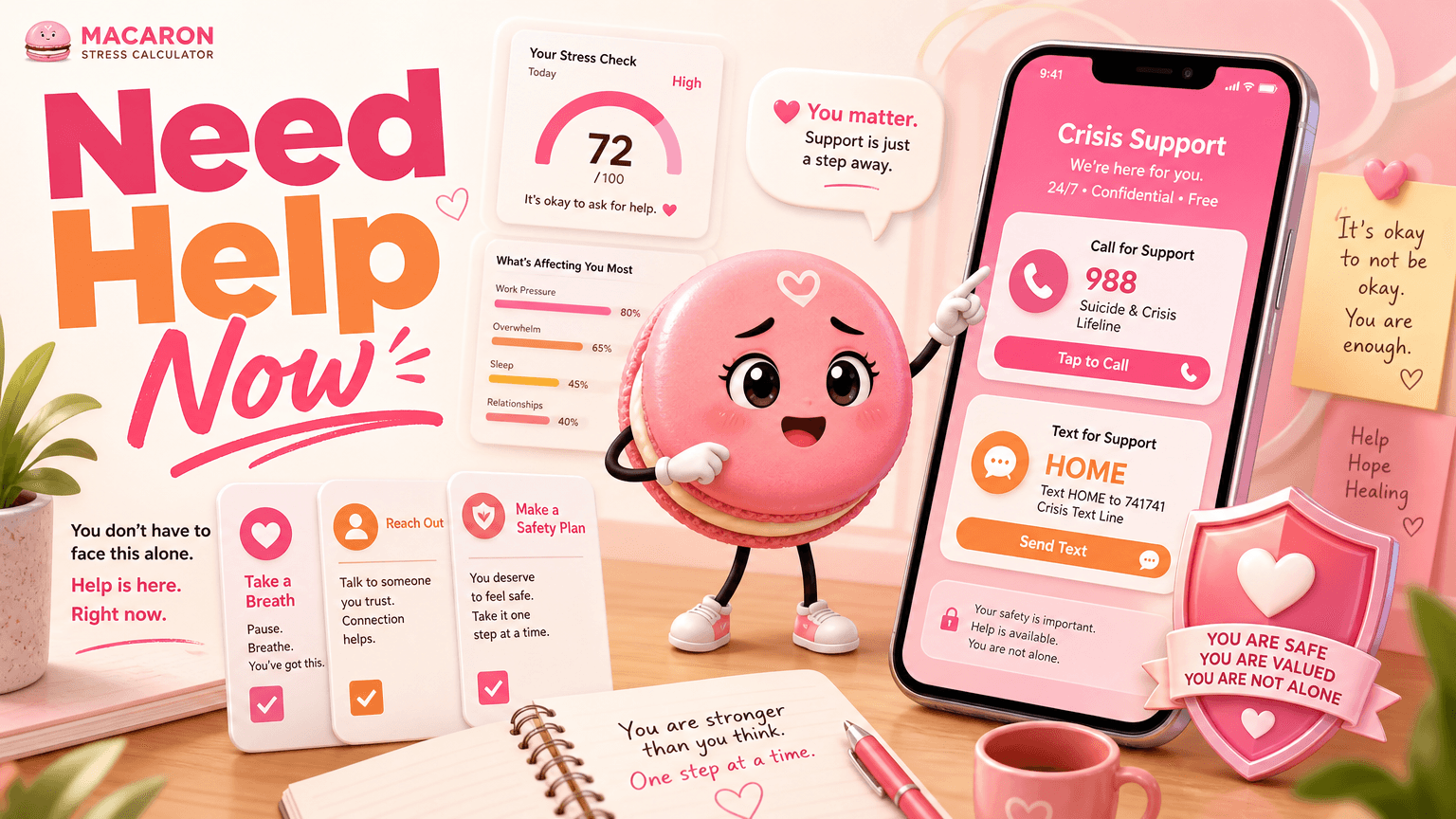
This self-check is not a substitute for professional help, especially if stress feels overwhelming or begins to affect your sense of safety. If you are thinking about harming yourself, cannot calm down, or feel like you may not be able to stay safe, contact crisis support right away. In the United States, call or text 988. In the United Kingdom and Ireland, call 116 123. If you are elsewhere, use findahelpline.com to locate local support quickly. Macaron can help you notice the problem, but urgent support is the right tool when the situation is no longer manageable on your own.
Your Responses and Privacy
Stress-related reflection can involve sensitive personal information, so privacy is part of the experience, not an afterthought. Macaron is provided by MINDAI PTE. LTD., and the official Privacy Policy explains how data is handled. If you have questions about privacy or data use, you can also contact contact@macaron.im. This matters because people usually answer more honestly when they understand how their responses are protected, and that honesty improves the usefulness of the stress check-in. If privacy is a major concern, reviewing the policy before using the tool is the safest approach.
Frequently Asked Questions
This stress calculator looks at several connected signs of strain, including pressure level, emotional load, physical stress signals, recovery difficulty, and how much the stress is affecting daily functioning. That broader view is useful because stress is not always obvious from one symptom alone. Someone may feel mentally overloaded but still seem outwardly fine, or they may notice body tension and poor sleep before they would describe themselves as highly stressed. Macaron uses those combined signals to make the pattern easier to understand.
After reviewing the result, focus on the area that seems to be carrying the most strain and pick one realistic next step. That might mean reducing a source of overload, protecting time for recovery, improving sleep conditions, or asking someone for support. The point is to respond to the pattern you noticed, not to treat the result like a final label. Small, specific changes are often more useful than trying to fix every stressor at once, especially when your energy is already limited.
Stress should be taken more seriously when it starts affecting sleep, mood, concentration, relationships, safety, or your ability to function day to day. It is also important to pay attention when stress does not ease after rest or when it keeps building over time. If you feel unsafe, unable to cope, or worried about harming yourself, contact a licensed professional or crisis support right away rather than waiting for the situation to improve on its own. Persistent stress is easier to address earlier than after it has spread into many parts of life.
Rating a day as busy only tells you that a lot is happening. A structured stress calculator helps you see where the strain is coming from, how it is affecting your body and emotions, and whether you are recovering well enough between demands. That makes it easier to tell the difference between a packed schedule and a stress pattern that is starting to wear you down. Macaron is designed to make that distinction clearer so you can choose a response that fits the actual problem.
No. This stress calculator is a guided reflection tool, not a medical diagnosis or a formal mental health assessment. It can help you notice patterns, name the kind of strain you are under, and decide whether you need rest, support, or a more serious follow-up. If symptoms are severe, persistent, or interfering with daily life, a clinician can provide a more complete evaluation. Macaron is useful for awareness and next steps, but it should not be treated as a substitute for professional care.
Macaron goes beyond a single score by organizing the check-in around pressure, emotional strain, physical tension, recovery difficulty, and day-to-day impact. That makes the result more actionable because you can see which part of the stress pattern is most active. A simple score may tell you that stress is present, but it often does not explain why or what to do next. The tradeoff is that Macaron is more reflective than a quick quiz, so it takes a little more attention to use well. For a third-party check, Stress Calculator - Diley Ridge Medical Center at https://www.dileyridgemedicalcenter.com/patient-information/health-information/stress-calculator is worth comparing against the page summary.
Yes. Work and school stress often show up as overload, racing thoughts, trouble switching off, and recovery that never feels complete. A structured check-in can help you see whether the main issue is workload, interruptions, pressure to perform, or lack of rest between demands. That can make it easier to choose a practical response, such as setting boundaries, reducing one commitment, or protecting sleep. If the environment itself is the problem, though, a calculator can only point to the issue, not solve it for you. For another outside reference, Test Your Stress | Be Mindful at https://www.bemindfulonline.com/test-your-stress adds a second perspective.
If you want a more detailed or clinical assessment, a licensed mental health professional, physician, or counselor is the better next step. They can evaluate symptoms in context, look for related concerns like anxiety or depression, and help you build a treatment plan if needed. Macaron is designed for quick clarity and practical reflection, which is useful for everyday decision-making. It is not meant to replace formal assessment when your stress is severe, persistent, or tied to safety concerns. For outside context, Stress Calculator at https://www.omnicalculator.com/physics/stress is a useful reference point.
Read & discover
AI Personal Assistant
Free calculators


