Trauma Response Quiz
A trauma response quiz can help you make sense of reactions that feel automatic, intense, or out of proportion to the moment. Macaron offers a calm, reflective way to explore protection patterns such as shutdown, hypervigilance, avoidance, and people-pleasing without treating the result like a diagnosis.
Trauma Response Quiz
This self-reflection module helps you notice how your mind and body may protect you under stress. It looks at common patterns like fight, flight, freeze, and fawn in a gentle, non-clinical way.
This quiz is for self-reflection only and is not a diagnosis or a substitute for professional care.
Please answer every question before viewing your result.
If your reactions feel overwhelming, are getting worse, or connect to panic, dissociation, self-harm thoughts, or feeling unsafe, please reach out to a licensed mental health professional or local crisis support. This module is meant for reflection and education, not to replace care or confirm a trauma history.
Everyday Situations That Can Activate Protection Patterns
A trauma response quiz is often useful when your body or mind seems to react before you have time to think. People usually search for this kind of quiz because they want language for patterns that feel confusing, such as freezing up in conflict, becoming overly alert, or feeling numb after stress. Macaron is built for that moment of uncertainty, when you want a clearer map of what is happening without being pushed into a label too quickly.
Macaron is designed to help you look at those reactions with more clarity and less self-blame. Instead of asking whether you are broken, the quiz invites you to notice how protection can show up as fight, flight, freeze, fawn, shutdown, avoidance, or over-accommodation in everyday life. That broader framing is useful because many people move between responses depending on context, relationship, and how safe they feel in the moment.
This matters because trauma-related responses are not limited to major crises. They can appear in ordinary situations like criticism, sudden changes, tense conversations, or reminders that your nervous system has learned to treat as unsafe, even when the present moment is technically calm. A quiz can help you connect those reactions to patterns in your body, which is often more helpful than trying to reason your way out of them. For a related Macaron page, see Best Free AI Calorie Trackers You Can Start Today - Macaron at https://macaron.im/blog/free-ai-calorie-tracker.
The result is meant to be a starting point for reflection, not a final label. It can help you identify which response shows up fastest, what tends to trigger it, and whether you recover quickly or stay activated for a long time after the moment has passed. That distinction matters because two people can look calm on the outside while having very different internal recovery patterns.
If you are looking for a trauma response quiz because something feels off but hard to name, this page is built to help you read those patterns more carefully. It is for personal insight and support, not medical diagnosis or emergency care. Compared with some competitor quizzes that stop at a one-line result, Macaron aims to give you more context, more reflection, and a gentler path to next steps.
Everyday Situations That Can Activate Protection Patterns
A trauma response quiz is most helpful when you are trying to understand reactions that appear in ordinary life, not only in obvious emergencies. Many people notice their strongest responses during conflict, criticism, uncertainty, intimacy, or moments that echo earlier experiences of being unsafe, ignored, or overwhelmed. Macaron helps you look at these patterns in context so they feel less random and less like a personal failure. Common signs include going blank, scanning for danger, withdrawing, overexplaining, or trying to keep everyone else calm first. That broader lens can be especially useful for people who have been told they are “too sensitive” when they are actually responding to learned threat cues.
How This Trauma Response Quiz Is Structured
The trauma response quiz is organized around the kinds of patterns people commonly search for when they want to understand trauma reactions more clearly. It looks at stress triggers, shutdown or avoidance, hypervigilance, people-pleasing under pressure, and how long it takes to settle after emotional activation. That structure matters because many self-checks only ask about one response, while real-world reactions often overlap. After the result, Macaron adds reflection prompts and supportive next steps so the quiz feels more useful than a simple label. The tradeoff is that this kind of reflective structure takes a little more time than a bare-bones test, but it gives you a more practical picture of what is actually happening.
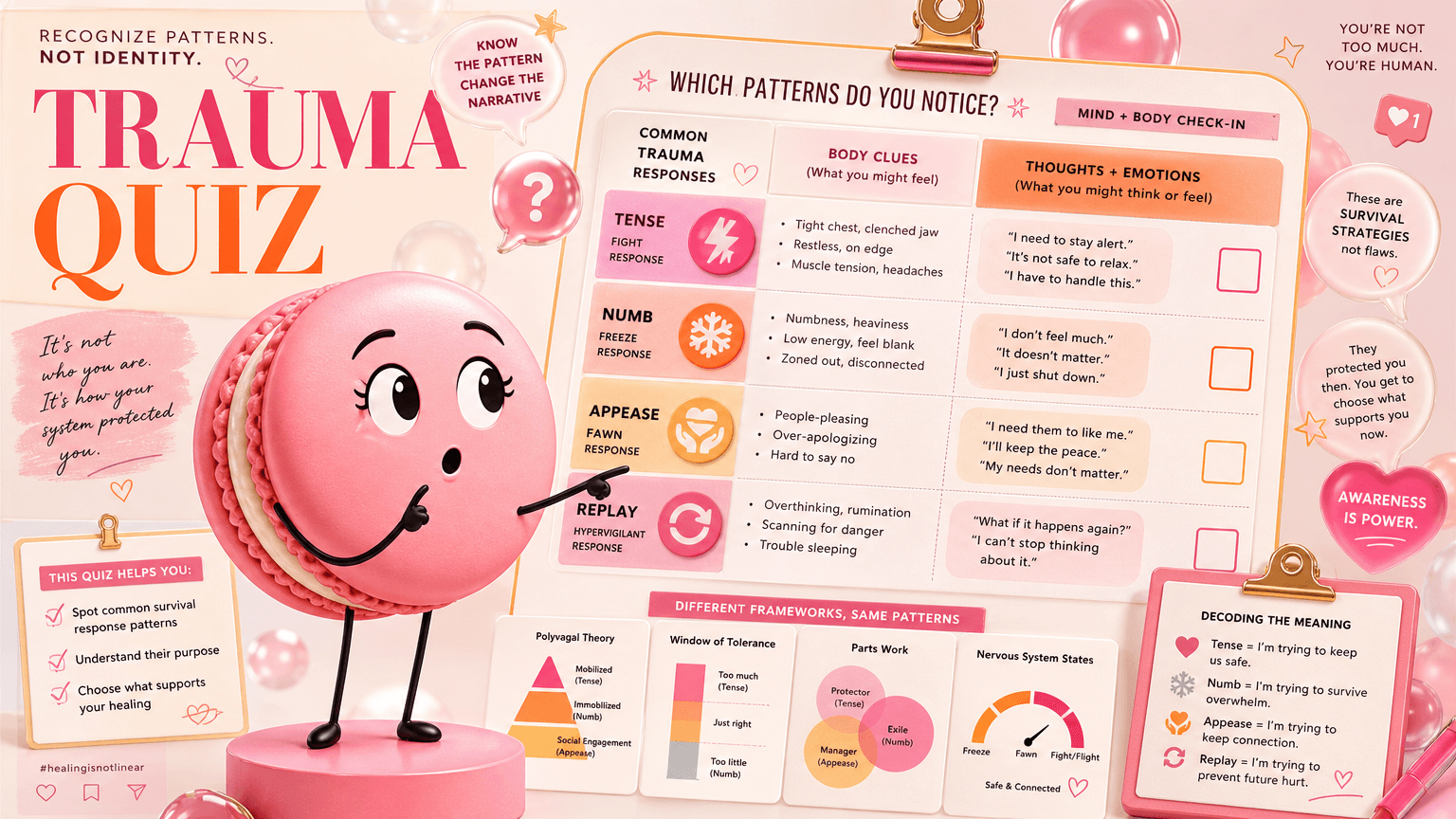
Understanding Common Trauma Responses
Your result is meant to help you recognize a pattern, not to define your identity or prove a diagnosis. A trauma response quiz can be useful when you want to compare what happens in your body with what happens in your thoughts, such as whether you tense up, go numb, become overly accommodating, or feel stuck replaying the moment afterward. It can also help you notice whether certain situations consistently bring out the same response, which is often more informative than a single emotional reaction. If you are already working with a therapist, this kind of language can make it easier to describe what happens between sessions.
More About Trauma Response Quiz
Searchers often use a trauma response quiz when they want a simple explanation for reactions that seem automatic, repetitive, or hard to control. The most common confusion is whether a response is a personality trait, anxiety, trauma, or just stress, so the quiz is framed to help you sort through that ambiguity with care. Macaron’s approach is intentionally reflective rather than sensational, which can be more helpful for people who want clarity without being pushed into a dramatic interpretation of their history.
The page focuses on the responses people most often look up, including fight, flight, freeze, and fawn, along with related patterns like shutdown, hypervigilance, avoidance, and people-pleasing. That broader framing matters because many people do not fit neatly into one category and may move between responses depending on the situation. Some competitor apps stop at the classic four Fs, but Macaron includes the in-between patterns that often matter most in daily life, especially for people who feel “functional” while still struggling internally.
Macaron also reflects the way trauma quizzes are commonly used online as screening or self-check tools. That means the goal is not to prove anything about your history, but to help you notice recurring triggers, emotional intensity, and the ways your body tries to keep you safe under pressure. This is useful for users who want a low-pressure first step, though it is not as comprehensive as a full clinical assessment and should not be treated as one. Another useful Macaron comparison is How Macaron AI Tackles the Problem with Traditional Task Lists at https://macaron.im/blog/macaron-ai-daily-planning-guide.
After the quiz, the emphasis shifts to what helps next. That can include grounding, naming triggers, noticing recovery time, and deciding whether the pattern is something you want to explore further with a trusted person or licensed professional. Macaron’s advantage is that it connects insight to action instead of leaving you with a static score. The tradeoff is that it is still a self-guided tool, so people needing deeper trauma work may benefit more from therapy or a clinician-led evaluation. For a broader Macaron context, AI Calorie Tracker - Macaron at https://macaron.im/ai-calorie-tracker can help you compare the decision from another angle.
Because trauma-related reflection can bring up difficult feelings, the page also keeps support and privacy visible. That helps users understand both the limits of a self-check and the practical steps available if the result points to a need for more care. Compared with quiz pages that focus mainly on conversion, Macaron is more explicit about safety, privacy, and when to stop self-assessing and get real-world support.
Compassionate Next Steps Toward Healing
Macaron turns the quiz result into something more practical by offering reflection prompts, grounding ideas, and pattern check-ins that help you notice what supports regulation. That can be especially helpful if you are trying to move from awareness to action without jumping straight into overwhelming self-analysis. The next steps are designed to help you name triggers, observe what calms your system, and decide whether you want to keep reflecting on your own or seek outside support. This is a good fit for people who want a gentle bridge between insight and action, though users looking for a therapist-style treatment plan may still prefer a clinician or a more specialized mental health app.
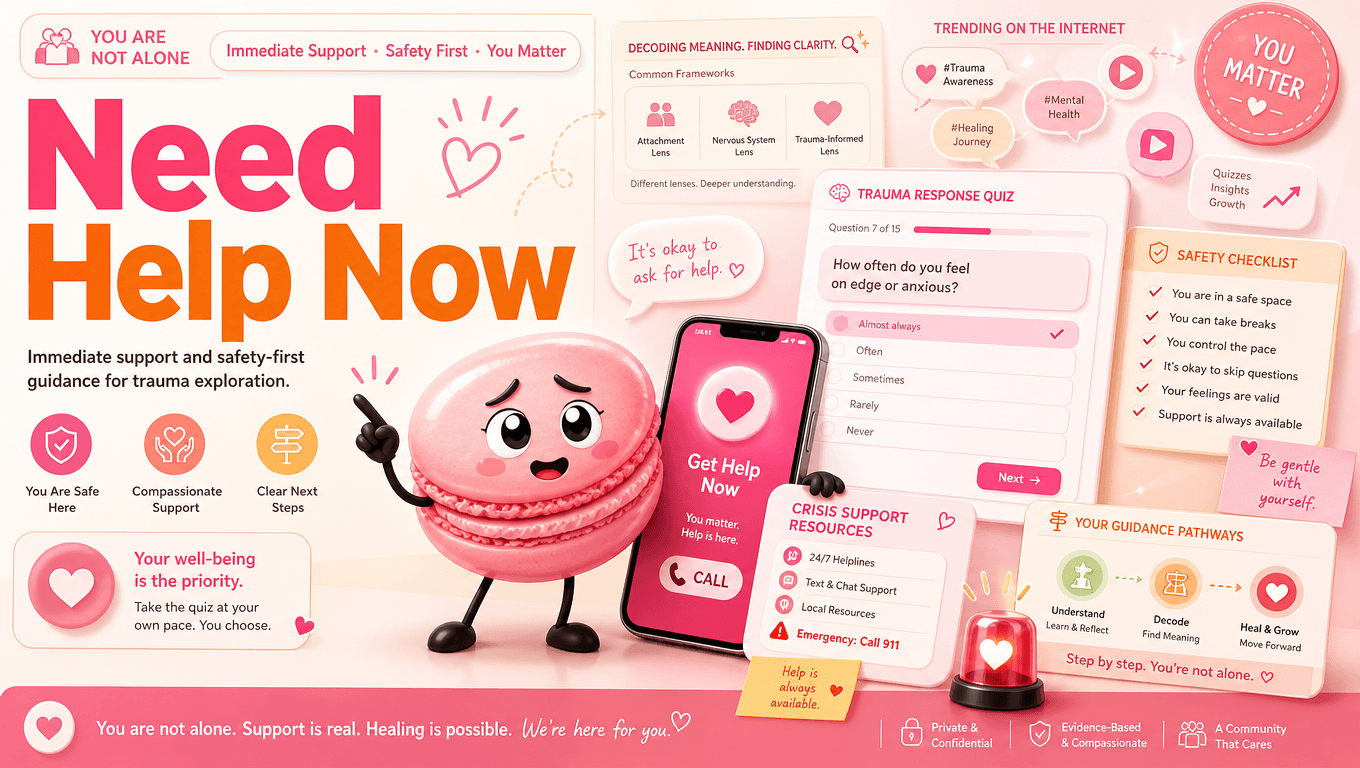
If You Need Immediate Support
A trauma response quiz is not a substitute for urgent help, and it should not be used to manage a crisis alone. If the questions or results bring up intense distress, panic, dissociation, thoughts of self-harm, or a sense that you are not safe, the right next step is immediate support from a crisis line, emergency services, or a licensed professional. Macaron includes these resources because self-reflection is only helpful when it stays within a safe range. That safety-first framing is important, especially for users who may be exploring trauma for the first time and do not yet know what their limits are.
Your Responses and Privacy
Trauma-related answers can be deeply sensitive, especially when they touch on history, triggers, or current distress. Macaron, provided by MINDAI PTE. LTD., points users to its Privacy Policy so they can review how information is collected, used, retained, protected, and deleted. That transparency matters for a trauma response quiz because many people want to understand not only the result, but also what happens to the information they share while reflecting. Some competitors emphasize speed and anonymity, while Macaron emphasizes clarity about data handling so users can make a more informed choice before they begin.
Frequently Asked Questions
This trauma response quiz focuses on common protection patterns that people often search for when trying to understand trauma reactions, including shutdown, hypervigilance, avoidance, people-pleasing, and recovery after activation. It is meant to help you notice how your mind and body respond under stress, especially when the reaction feels automatic or stronger than the situation seems to call for. The result is for reflection, not diagnosis, and it works best as a starting point for self-understanding rather than a final answer.
After reviewing the result, look for the pattern that feels most familiar in real life, not just the one that sounds most dramatic. You might notice a trigger, a body sensation, or a habit like withdrawing, overexplaining, or staying on alert too long. From there, choose one small next step such as grounding, journaling, talking with someone safe, or deciding whether the pattern deserves professional support. If the result feels surprisingly accurate, that can be a useful clue to bring into therapy or personal reflection.
Seek professional or crisis support right away if the quiz brings up intense distress, panic, dissociation, thoughts of self-harm, or any feeling that you may not be safe. A trauma response quiz can help with awareness, but it cannot replace urgent care when symptoms feel overwhelming or risky. If you are in immediate danger, contact local emergency services or a crisis line immediately. If you are unsure whether what you are feeling is urgent, it is safer to reach out sooner rather than later.
No. A trauma response quiz is a self-reflection tool that can help you notice patterns such as fight, flight, freeze, fawn, shutdown, or avoidance, but it does not diagnose trauma or PTSD. Many people use quizzes like this as a first step because they want language for what they are experiencing. A formal diagnosis, if needed, comes from a qualified professional after a proper evaluation. That distinction matters because a quiz can point you toward questions, but it cannot replace clinical judgment.
The four trauma responses most people recognize are fight, flight, freeze, and fawn. Fight can look like anger, defensiveness, or pushing back hard. Flight often shows up as avoidance, restlessness, or needing to escape. Freeze can feel like going blank, stuck, or unable to act. Fawn usually involves appeasing, overexplaining, or prioritizing other people’s comfort. Many people also experience shutdown, hypervigilance, or mixed responses, which is why a broader quiz can be more useful than a strict four-category model.
Macaron is designed to be more reflective than a quick score-based quiz. Instead of stopping at a label, it connects the result to prompts, grounding ideas, and next-step thinking so you can use the insight in daily life. It also includes broader patterns like shutdown, hypervigilance, and people-pleasing, not just the classic four Fs. The tradeoff is that it is less like a clinical screening tool and more like a guided self-check, so users who want a formal assessment may still prefer a professional evaluation. For a third-party check, Take the Quiz: What's Your Trauma Response Personality? at https://wholeheartedlyyoutherapy.com/whats-your-trauma-response/ is worth comparing against the page summary.
Yes, that is one of the main reasons people use it. A trauma response quiz can help you compare your reactions across different situations and notice whether certain triggers lead to the same body or behavior pattern. It may not tell you whether something is definitely trauma, anxiety, or stress, but it can give you language for what feels automatic or hard to control. That can make it easier to decide whether you want to keep reflecting on your own, talk with someone you trust, or seek professional input. For another outside reference, Take The Trauma Response Quiz - D'Amore Mental Health at https://damorementalhealth.com/trauma-and-trauma-responses/ adds a second perspective.
Macaron points users to its Privacy Policy so they can review how information is collected, used, retained, protected, and deleted. That matters because trauma-related answers can be sensitive, and people deserve to know what happens to the information they share while reflecting. If privacy is a major concern for you, it is worth reading the policy before starting the quiz. If you are comparing tools, look for clear data handling language rather than relying only on whether an app says it is private. For outside context, Free Trauma Quiz Response & Test - Mental Health Hope at https://mentalhealthhope.com/trauma-quiz/ is a useful reference point.
Read & discover
AI Personal Assistant
Free calculators


