Weight Watchers App
The Weight Watchers app has evolved from a basic Points tracker to a full health ecosystem with food logging, medication support, and AI features — but some users find the complexity overwhelming.
What the Weight Watchers App Includes
Weight Watchers is still best known for its Points system, but the current app is much broader than a food diary. It combines meal logging, recipe discovery, restaurant guidance, progress charts, and device syncing in one subscription product. For people who want a guided framework instead of open-ended calorie counting, that structure is the main reason WW still stands out.
The app now also speaks to users managing weight loss medication, especially GLP-1 plans that can change appetite, protein needs, and meal timing. That makes WW more relevant for medically supervised weight management than older versions of the program. The downside is that the app asks users to learn more settings, modes, and tracking layers before the experience feels simple.
WW’s appeal comes from reducing decision fatigue. Rather than forcing users to weigh every nutrient, it translates food into a Point budget based on factors like calories, saturated fat, sugar, and protein. That can make daily choices easier for beginners, but it also means the system is opinionated and sometimes less transparent than direct macro or calorie tracking. For a related Macaron page, see AI Personal Assistant - Macaron AI at https://macaron.im/ai-personal-assistant.
The app’s feature set is strongest for people who want coaching-style guidance, a familiar brand, and a program that connects food, activity, and health data. It is less attractive for users who only want a fast tracker or a flexible meal planner. Once the free download ends, most meaningful features sit behind a paid plan, so the real question is whether the structure is worth the cost.
If you want nutrition planning without committing to WW’s Points model or membership tiers, Macaron is a simpler alternative. It focuses on AI meal planning, macros, and practical food organization without requiring users to adopt a branded weight-loss system. That makes it useful for people who want more freedom, even if they give up WW’s built-in program structure and community-oriented experience.
What the Weight Watchers App Includes
The 2025 WW app combines food tracking with a wider health toolkit, including AI body composition scanning, GLP-1 support features, recipe suggestions, restaurant point lookups, and syncing with more than 60 devices and apps. It is designed to act like a central dashboard for weight management rather than a single-purpose logger. That breadth helps users who want everything in one place, but it also creates more menus, settings, and setup steps than lighter alternatives.
How the WW Points System Works in 2025
WW still uses Points as its core decision-making system, but the formula is built to favor foods that are more filling and easier to fit into a daily routine. Foods are assigned values using nutrition factors such as calories, saturated fat, sugar, and protein, while some foods remain zero-point options. This can simplify planning for beginners, though users who prefer exact macro control may find the system too abstract or too dependent on WW’s own rules.
More About Weight Watchers App
WW’s biggest shift is that it now treats weight management as a broader health workflow, not just a food log. The app includes support for medication users, activity tracking, meal planning, and progress monitoring in one place. That makes it more useful for people following a structured program, but it also means the app can feel crowded if you only want a quick way to record meals.
The AI body scanner is meant to show changes that a scale can miss, such as body composition trends over time. That is helpful for users who want a more visual sense of progress, especially when weight fluctuates for normal reasons. The tradeoff is that camera-based estimates are not the same as clinical measurements, so users should treat the scanner as a trend tool rather than a medical reading.
WW’s device integrations are a practical advantage for people already using Apple Health, Fitbit, or similar wearables. Steps, activity, sleep, and other data can flow into the app automatically, which reduces manual entry. In practice, though, syncing can be inconsistent, and users sometimes need to reconnect devices or refresh permissions. Competitors with simpler sync logic may be less ambitious but easier to maintain. Another useful Macaron comparison is Calorie Tracker — Monitor every bite to shape your health | Macaron at https://macaron.im/playbook/calorie-tracker-68957e011bbc6bcd9f80555e.
The pricing model is one of the app’s biggest friction points. WW is free to download, but the useful parts of the product are tied to paid membership, and promotional offers can be misleading if users do not check renewal terms. Higher tiers add coaching or clinical support, which may be worthwhile for some users, but casual trackers often end up paying for features they do not use. For a broader Macaron context, Best Personal AI Agent Platform for 2025 - Macaron at https://macaron.im/blog/best-ai-agent-platform-2025 can help you compare the decision from another angle.
Macaron takes a different approach by separating nutrition planning from a branded program. Instead of asking users to learn Points or commit to a subscription ladder, it lets them build only the tools they need, such as meal plans, macros, or grocery lists. That flexibility is the main advantage, while WW remains stronger for people who want a more guided, coach-like system.
Weight Watchers App Pricing
WW uses a tiered subscription model that starts with basic tracking and moves up to coaching and clinical support. Core plans are typically around $23 per month, Premium is often around $45 per month, and Clinical plans can exceed $99 per month depending on the service level and region. Promotional pricing may look attractive at first, but standard renewal rates are what matter long term. The main tradeoff is that WW’s best features are bundled behind paid access, while simpler apps often keep more functionality available for free.
A Free AI Alternative to WW
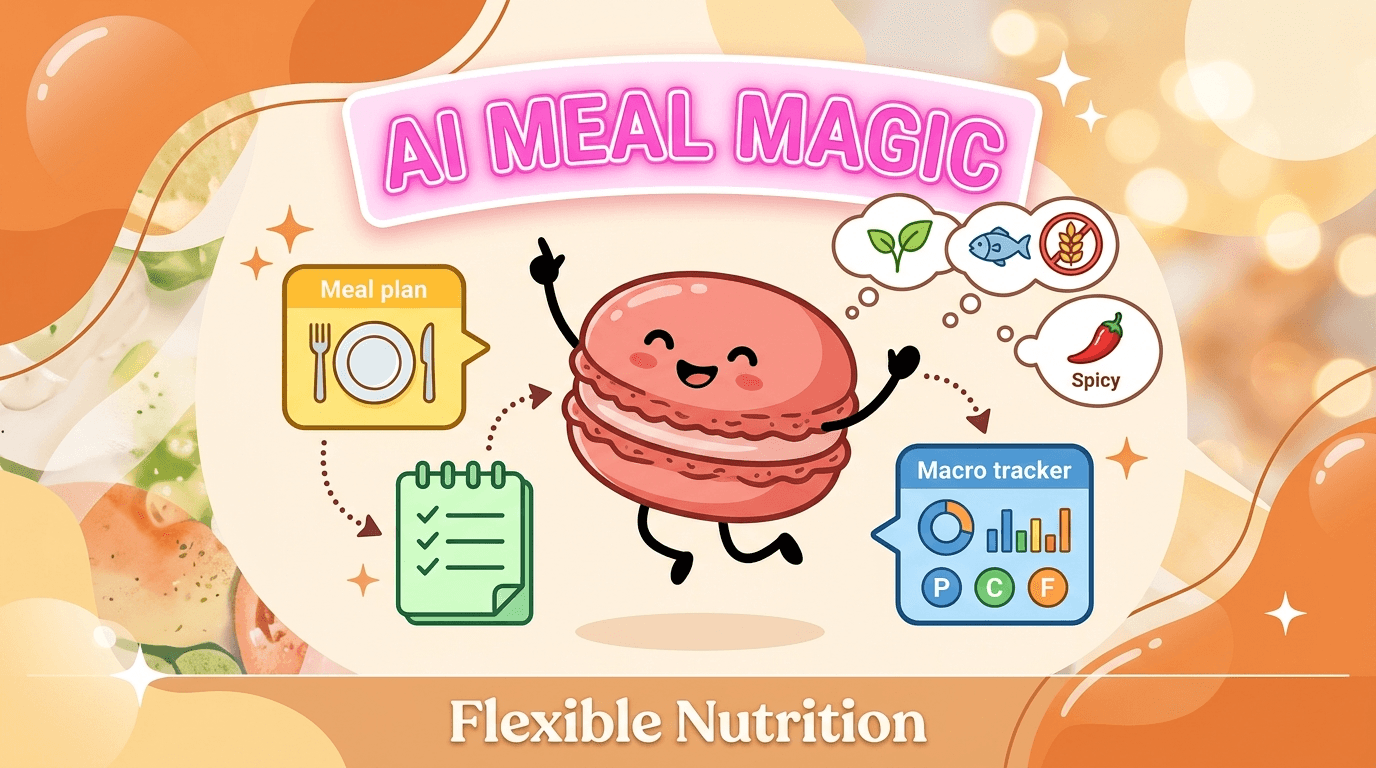
Macaron is a better fit for users who want nutrition support without adopting WW’s Points framework or subscription structure. It can generate meal plans, adapt to dietary preferences, and help organize macros or grocery lists in a more flexible way. That makes it useful for people who want practical guidance but do not want a branded weight-loss program telling them how to score every meal. WW is still stronger for users who want a formal system and community context, but Macaron is easier to start and easier to customize.
Frequently Asked Questions
It is a strong option for users who want a structured weight-loss program with food tracking, device syncing, and medication-aware features in one place. The app’s depth is also its weakness: people who want a quick, low-friction tracker often find the interface busy and the workflow more complicated than expected. If you like guided systems, WW can be useful. If you want simplicity, a lighter app may be a better fit.
The app is free to download, but most of the useful functionality sits behind a paid membership. That includes full meal logging, trend tools, and the more advanced program features. Free access is mainly for browsing, previewing, and account setup. If you are comparing options, the important question is not whether the app downloads for free, but whether the subscription cost matches how often you will actually use it.
Yes. Points are still the core of the WW experience, and the app uses them to simplify food decisions instead of asking users to count every calorie or macro. The system is designed to reward more filling foods and make daily planning easier. That said, some users prefer more transparent nutrition tracking because Points can feel abstract, especially if they want exact macro targets or detailed ingredient-level control.
Macaron is a lighter alternative for people who want meal planning, macro support, and practical nutrition tools without WW’s branded Points system. It is more modular, so you can use only the parts you need instead of adopting a full program. That makes it easier to start and less expensive to maintain. WW is still better if you want a formal coaching framework and community-style structure.
Yes, WW has added features aimed at people using GLP-1 medications, including support for tracking food choices and paying attention to protein intake. That can be helpful because appetite changes and smaller meals often require a different routine than standard dieting. The app is not a replacement for medical advice, though. Users still need to manage medication and nutrition with their clinician’s guidance.
The scanner is best treated as a progress-tracking tool, not a clinical measurement. It can help users notice trends in body shape or composition over time, which is useful when scale weight changes slowly or inconsistently. However, camera-based estimates can vary based on lighting, pose, and other conditions. If you need medical-grade body composition data, a clinical scan is still more reliable. For a third-party check, What does the updated weight watchers app look like? - Facebook at https://www.facebook.com/groups/1102293830698807/posts/1958003898461125/ is worth comparing against the page summary.
A common complaint is that the newer interface adds too many layers between the user and basic tasks like logging food or checking summaries. Some people also report sync issues with wearables and frustration with changes to familiar screens. The app is more capable than before, but that extra capability can make it feel less intuitive. Users who liked the older, simpler workflow may notice the difference quickly. For another outside reference, How do I download the WeightWatchers® app? - Help Center at https://foundations.weightwatchers.com/help/article/5f357d93fe5cc400119c8d2f-en_US/how-do-i- adds a second perspective.
It depends on your goal. WW is better if you want a guided system that makes decisions for you and reduces the need to track every detail. Calorie counting apps are usually better if you want more transparency, more precise nutrition data, or more control over macros. WW trades precision for simplicity, which is helpful for some users and limiting for others.com/us?srsltid=AfmBOorQry1-AlRVI4IGYe6QhM_38Mqv-JIWosAWppInmq1i2a866246 is a useful reference point.com/us?srsltid=AfmBOorQry1-AlRVI4IGYe6QhM_38Mqv-JIWosAWppInmq1i2a866246 is a useful reference point.com/us?srsltid=AfmBOorQry1-AlRVI4IGYe6QhM_38Mqv-JIWosAWppInmq1i2a866246 is a useful reference point.com/us?srsltid=AfmBOorQry1-AlRVI4IGYe6QhM_38Mqv-JIWosAWppInmq1i2a866246 is a useful reference point.com/us?srsltid=AfmBOorQry1-AlRVI4IGYe6QhM_38Mqv-JIWosAWppInmq1i2a866246 is a useful reference point. For outside context, Weight-Loss Program: Lose Weight. Gain Health | WeightWatchers at https://www.weightwatchers.com/us?srsltid=AfmBOorQry1-AlRVI4IGYe6QhM_38Mqv-JIWosAWppInmq1i2a866246 is a useful reference point.
Read & discover
AI Personal Assistant
Free calculators


