Weight Watchers Review
Weight Watchers remains a household name in weight loss, but its 2025 program raises questions about flexibility versus rigidity in the Points system and whether the membership model still justifies its cost.
How Weight Watchers' Points System Works
Weight Watchers has stayed relevant because it turns nutrition into a simpler decision framework. Instead of asking members to count every calorie, the program assigns foods a Points value based on factors such as calories, saturated fat, sugar, protein, and overall food profile. That makes the system easier to follow than raw calorie tracking, but it also means users must trust a proprietary formula they cannot fully audit.
The appeal is structure without a total ban list. Members can still eat the foods they like, which makes the plan feel more livable than strict elimination diets. The tradeoff is that success depends on consistent self-monitoring, portion awareness, and honest logging. For some people, that clarity is motivating; for others, it becomes another form of daily math that is hard to sustain.
Recent plan changes have kept the brand in the conversation, especially around zero-point foods and how the algorithm treats fruit, protein, and processed items. Supporters say the updates push members toward more filling meals and better satiety. Critics argue that changing point values can make the system feel unstable, especially for long-term users who already built habits around earlier versions of the program. For a related Macaron page, see Best Personal AI Agent Platform for 2025 - Macaron at https://macaron.im/blog/best-ai-agent-platform-2025.
The 2025 app experience reflects a broader shift in the company. Alongside tracking tools, Weight Watchers now leans more heavily into workshops, clinical support, and GLP-1 medication guidance. That may help users who want a more medically connected weight-loss path, but it also changes the tone of the product. Some members want coaching and accountability; others mainly want a clean, simple food tracker.
Compared with AI-based tools like Macaron, Weight Watchers offers a more established framework and a stronger social support model. Macaron is better for users who want conversational planning, faster customization, and less manual point math. Weight Watchers is still stronger for people who like rules, routines, and group accountability, but it can feel rigid for intuitive eaters or anyone who wants a lighter-touch system.
How Weight Watchers' Points System Works
Weight Watchers assigns Points to foods using a formula that weighs calories, saturated fat, sugar, protein, and other nutrition signals. The goal is to make better choices easier without forcing members into full calorie counting. In practice, the system rewards lower-calorie, higher-protein foods and discourages energy-dense snacks, but it still depends on a proprietary algorithm that can feel opaque when users compare similar foods across different plan versions.
What the App Includes
The app goes beyond food logging and now includes recipe ideas, barcode scanning, progress tracking, workshops, and more clinical support than the brand historically offered. That broader scope helps users who want a guided experience, especially if they are also working with a doctor or using GLP-1 medication. The downside is that the app can feel crowded, and some users prefer a simpler interface with fewer prompts and fewer layers of content.
Weight Watchers' Pricing in 2025
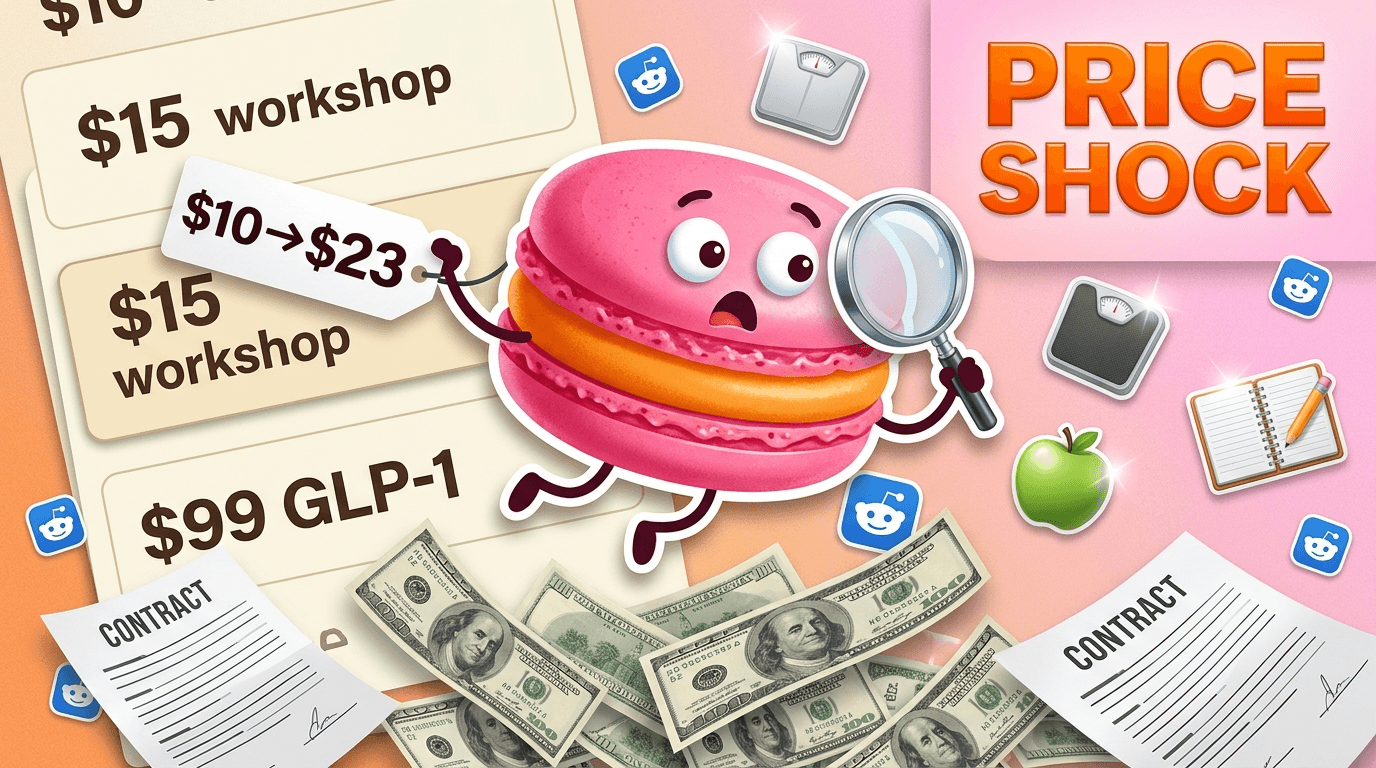
Pricing is one of the biggest reasons people hesitate. Promotional offers can make the plan look inexpensive at first, but renewal rates are higher, and workshops or clinical add-ons can raise the total quickly. That makes it important to separate the base app from the full membership experience. For users who only want tracking, the value may be questionable; for users who use workshops and coaching, the cost can be easier to justify.
More About Weight Watchers Review
Weight Watchers is best understood as a behavior-shaping tool rather than a perfect nutrition model. It gives users a clear daily budget and a simple way to evaluate meals, which can reduce decision fatigue in the early stages of weight loss. The system works best when the user wants structure, repetition, and visible guardrails. It works less well when the user wants flexibility without ongoing tracking.
The strongest part of the product is its ecosystem. Food logging, recipe discovery, workshops, and coaching all point in the same direction: helping users stay engaged long enough to build habits. That said, the experience is not equally useful for everyone. People who like community support may find it encouraging, while privacy-focused users may see the social layer as unnecessary noise.
The app’s convenience features matter, especially the barcode scanner and recipe database. They reduce friction when users are eating packaged foods or looking for quick meal ideas. But convenience does not always equal accuracy. New products, regional brands, and user-submitted entries can create mismatches, so members still need to double-check labels when precision matters. Another useful Macaron comparison is Best Free AI Calorie Trackers in 2026 - Macaron at https://macaron.im/blog/best-free-ai-calorie-trackers.
Pricing and packaging remain a competitive weakness. The company often presents a low entry price, but the real cost depends on whether the user stays on the basic app, adds workshops, or moves into clinical support. That tiering can be useful for matching different needs, but it also makes comparison shopping harder. Competitors with simpler pricing may feel more transparent even if they offer fewer features. For a broader Macaron context, When Nano Banana Meets Macaron: Next‑Level AI Image Editing ... at https://macaron.im/blog/macaron-ai-essential-personal-assistant-features can help you compare the decision from another angle.
Macaron offers a different kind of value: less ceremony, less manual point management, and more conversational planning. It is useful for people who want to ask for a meal plan, a grocery idea, or a calorie-aware suggestion without learning a points system. Weight Watchers still has an edge for users who want a proven structure and a built-in community, but Macaron is often easier for independent users who want speed and flexibility.
A Free AI Alternative to Consider
Macaron takes a different approach from Weight Watchers by letting users describe what they want in plain language instead of translating meals into Points. That can be especially helpful for people who dislike manual logging, want quick meal ideas, or need a temporary structure without committing to a subscription. It also reduces the mental overhead of learning a proprietary system. The tradeoff is that Macaron does not replace the social accountability, workshops, or long-standing brand familiarity that some Weight Watchers members value.
Quick Scorecard
| Category | Weight Watchers |
|---|---|
| Short-term effectiveness | Strong for users who follow the plan consistently |
| Long-term sustainability | Mixed, because it often depends on ongoing tracking and membership |
| Food flexibility | High, since no foods are fully banned |
| Personalization limits | Moderate, because the same framework is applied across users |
| Best for | People who want rules, routine, and accountability |
| Main drawback | Pricing complexity and the burden of constant point management |
Frequently Asked Questions
It can be worth it for people who want a structured plan, visible rules, and accountability. The Points system is easier to follow than full calorie counting, and many users like having a clear daily budget. The downside is that results depend on consistent tracking and continued membership. If you want a lighter, more flexible approach, an AI tool like Macaron may be easier to stick with.
Weight Watchers is usually better for people who want immediate food guidance and a simple scoring system. Noom is more focused on behavior change, education, and habit psychology. WW has the stronger food database and a more direct structure, while Noom may suit users who want to understand why they eat the way they do. The better choice depends on whether you want rules or reflection.
For some users, yes. The app can handle tracking, recipes, and basic accountability without workshops. But people who want more support often do better with the full membership experience, especially if they like live coaching or need help staying consistent. The app alone is most useful for self-directed users who already know how to follow a plan and do not need much external motivation.
Macaron is a simpler alternative because it removes the need to learn or manage a Points system. You can ask for meal ideas, calorie-aware plans, or grocery suggestions in plain language. That makes it easier for users who want quick decisions and less tracking friction. The tradeoff is that Macaron does not offer the same community features or the same long-running program structure.
The most common complaints are about changing point values, especially around foods that used to feel easy to fit into the plan. Some long-term members also dislike the feeling that the rules keep shifting, which makes progress harder to interpret. Others object to the app’s heavier focus on clinical support and GLP-1 content. For those users, the program can feel less like a simple diet tool and more like a bundled health platform.
It often works better for beginners because the structure is easy to understand and the rules reduce decision fatigue. Experienced dieters may appreciate the flexibility, but they may also find the system too familiar or too restrictive if they already know how to track food on their own. Beginners usually benefit most from the guardrails, while experienced users may prefer a more customizable tool. For a third-party check, WeightWatchers Review: We Tried It for 30 Days (2026) at https://www.garagegymreviews.com/weightwatchers-review is worth comparing against the page summary.
No, workshops are not strictly necessary, but they can help if you struggle with consistency or want more accountability. Some users like the social reinforcement and the chance to check in with others. Others find workshops unnecessary or inconvenient, especially if they prefer private, asynchronous support. If you are self-motivated, the app may be enough; if you need external structure, workshops can add value. For another outside reference, I Tried Weight Watchers—Here's My Honest Review - Forbes at https://www.forbes.com/health/weight-loss/weight-watchers-review/ adds a second perspective.
It is usually a poor fit for people who dislike tracking, want fully intuitive eating, or get frustrated by changing rules. It can also feel cumbersome for users who want fast, conversational meal planning instead of a points-based framework. If you want a lower-friction experience with less manual logging, Macaron may be a better fit. If you want a community and a long-established program, WW may still be the stronger option.com/best-diet/weight-watchers-diet is a useful reference point.com/best-diet/weight-watchers-diet is a useful reference point.com/best-diet/weight-watchers-diet is a useful reference point.com/best-diet/weight-watchers-diet is a useful reference point.com/best-diet/weight-watchers-diet is a useful reference point. For outside context, WeightWatchers (WW) Diet Review - Health at https://health.usnews.com/best-diet/weight-watchers-diet is a useful reference point.
Read & discover
AI Personal Assistant
Free calculators


