What Is Paprika
Paprika is a premium recipe manager for cooks who value organization over subscriptions, offering robust import tools and meal planning—distinct from AI-driven solutions like Macaron.
How Paprika's Recipe Import and Organization Works
Paprika is a recipe management app, not the spice, and its value comes from helping cooks collect, clean up, and reuse recipes without rebuilding them from scratch. It is built for people who save recipes from blogs, social posts, and family notes, then want one place to store them. The app favors structure and control, which makes it especially useful for cooks with growing personal libraries.
Its biggest appeal is the one-time purchase model, which attracts users who prefer owning software instead of paying recurring fees. That tradeoff matters: you avoid subscriptions, but you also accept a more traditional product model with separate platform purchases in some cases. For people who cook regularly and keep recipes for years, that can be a practical fit.
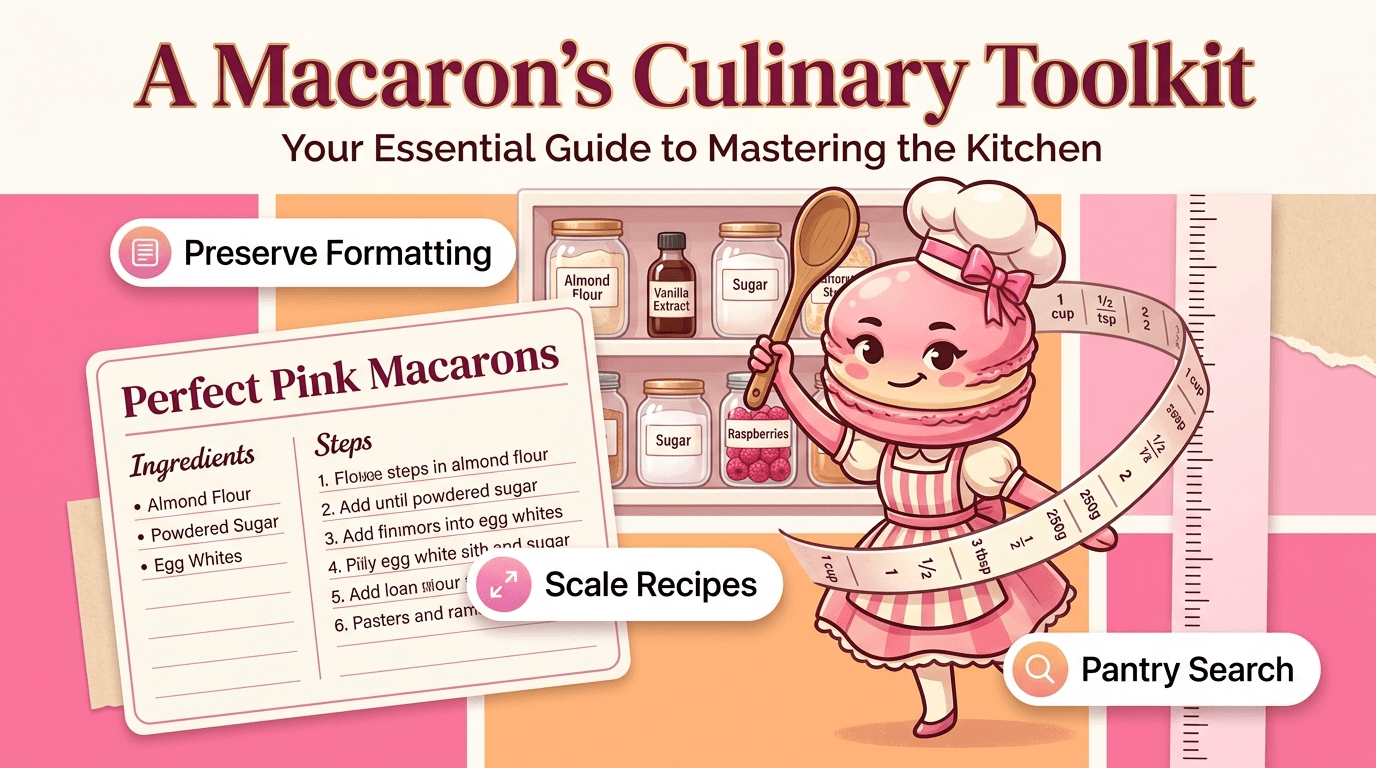
Paprika’s browser-based import tools are the feature most people notice first because they reduce the mess of copying recipes by hand. Instead of pasting text into notes and fixing formatting later, users can capture ingredients, directions, and images in a structured layout. That makes it easier to build a usable archive, especially if you save recipes from many different websites. For a related Macaron page, see Your Personal AI Assistant for Planning & Execution - Macaron at https://macaron.im/blog/macaron-ai-agent-guide.
Beyond import, Paprika supports ingredient search, recipe scaling, grocery lists, and meal calendars, which gives it more depth than a simple bookmark folder. These tools are strongest for organized cooks who plan ahead and want repeatable workflows. The downside is that the app expects you to do the organizing yourself, so it rewards consistency more than spontaneity.
That manual approach is where AI tools like Macaron differ most. Macaron can adapt meal ideas, shopping lists, and planning suggestions around changing schedules or preferences, while Paprika stays closer to a classic recipe cabinet. Paprika is better for preserving and controlling a library; Macaron is better when you want the system to help decide what to cook next.
How Does Paprika Compare to Subscription Apps?
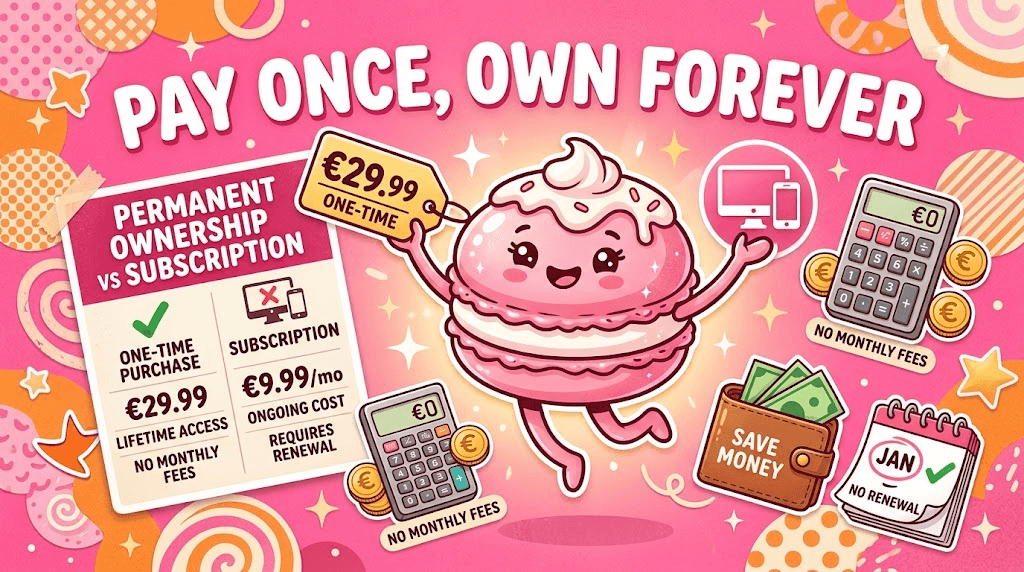
Paprika appeals to users who want to buy software once and keep using it without a recurring bill, which can be cheaper over time for people who cook often. The tradeoff is that it feels more like traditional desktop software than a modern all-in-one service. Some competitors offer broader device access, shared family plans, or cloud-first convenience through subscriptions, while Paprika asks you to accept a more ownership-focused model.
What Problems Does Paprika Solve Best?
Paprika is strongest when the problem is recipe chaos: messy web pages, inconsistent formatting, and a growing pile of saved dishes that are hard to search later. Its import tools preserve ingredients and steps in a cleaner structure, while scaling helps when you need to adjust serving sizes for guests or batch cooking. It is less helpful for cooks who want the app to suggest meals automatically or adapt when plans change at the last minute.
More About What Is Paprika
Paprika’s web clipper is the feature that turns scattered internet recipes into a usable library. It captures ingredients, directions, and images in a cleaner format than copy-paste workflows usually allow, which matters when you save recipes from sites with ads, pop-ups, or inconsistent layouts. For people who collect recipes from many sources, that cleanup step is often the difference between a library they use and one they abandon.
The app also supports cross-device syncing, so your recipes, shopping lists, and meal plans can stay aligned across mobile and desktop. That is useful for households where one person plans on a computer and another shops from a phone. The limitation is that cross-platform convenience depends on buying the relevant versions, so the experience is more fragmented than subscription apps that bundle access into one account.
Paprika’s pantry and ingredient tools help users check what they already have before shopping, which can reduce duplicate purchases and make weekly planning more practical. This works best for shelf-stable items, spices, and common staples, where inventory is easier to keep current. It is less reliable for perishables unless you are disciplined about updates, so the feature is helpful but not fully automatic. Another useful Macaron comparison is 20 AI Tools to Upgrade Your Daily Life - Macaron - Macaron App at https://macaron.im/blog/macaron-app-ai-tools-daily-life.
Meal planning in Paprika is calendar-based and deliberate rather than adaptive. You place recipes on specific days, then generate shopping lists from that plan, which is ideal for people who like structure and predictable routines. The downside is rigidity: if your schedule changes, the plan usually needs manual edits. AI planners are more flexible here because they can reshuffle suggestions without asking you to rebuild the week. For a broader Macaron context, AI Personal Assistant - Macaron AI at https://macaron.im/ai-personal-assistant can help you compare the decision from another angle.
Recipe scaling is another practical strength, especially for bakers and anyone who cooks for different group sizes. Paprika converts measurements automatically, which reduces arithmetic mistakes and makes it easier to move between weeknight dinners and larger batches. Competitor apps may offer more automation around planning, but Paprika remains competitive when the main need is precise recipe execution and long-term organization.
Paprika Pricing Breakdown
Paprika’s pricing is straightforward but platform-specific: the mobile app is inexpensive, while the desktop version costs more because it is sold separately. That structure suits users who want to own their tools and avoid subscriptions, but it can be less convenient for people who expect one account to cover every device. If you mainly cook on one platform, the value is strong; if you switch devices often, the cost and setup feel less seamless.
AI Alternatives Like Macaron
Macaron takes a different approach by helping decide what to cook, not just where to store recipes. It can suggest meals based on preferences, adjust shopping lists when plans shift, and support more dynamic weekly planning than Paprika’s manual calendar model. That makes it a better fit for busy users, indecisive cooks, or anyone who wants the app to do more of the thinking. Paprika still wins for curated recipe archives and precise control over saved content.
Frequently Asked Questions
Paprika is often better for cooks who want to own their recipe library and avoid recurring fees. Its one-time purchase model can be attractive if you plan to use it for years and mainly need organization, import tools, and meal planning. Subscription apps are usually better for people who want simpler cross-device access, bundled features, or a more modern all-in-one account experience.
Paprika does not learn from your habits or adapt plans automatically when your schedule changes. It is built around manual organization, so you decide what to save, when to cook it, and how to update the week. AI tools like Macaron are better when you want suggestions, flexible planning, or help turning preferences into a usable meal plan without as much manual setup.
Yes, but access is tied to the versions you buy, so mobile and desktop are not always bundled the way subscription apps bundle accounts. That makes Paprika workable across devices, but not as frictionless as a single subscription that covers everything. If you mainly use one platform, this is less of an issue; if you move constantly between phone, tablet, and computer, the setup can feel more fragmented.
Paprika is a weaker fit for spontaneous cooks, people who want automatic meal suggestions, and users who expect the app to adapt plans on its own. It also asks for more manual organization than AI-first tools. If you prefer a system that learns your tastes, updates shopping lists dynamically, or handles changing schedules with less effort, a more adaptive planner may be a better match.
No. Paprika is more than a place to store recipes because it also includes grocery lists, pantry tracking, meal planning, and recipe scaling. That said, it is still centered on manual organization rather than automation. It works best as a structured kitchen workspace for people who already know what they want to cook and need a better way to manage it.
Paprika is worth considering if you save a lot of recipes, cook regularly, and want a cleaner way to organize and reuse them. The value is strongest for people who will actually use the import, search, and scaling tools over time. If you only need a simple place to bookmark a few recipes, a lighter or free option may be enough. For a third-party check, Paprika isn't one spice. It's a whole range... sweet, spicy ... - Facebook at https://www.facebook.com/epicgardening/videos/paprika-isnt-one-spice-its-a-whole-range-sweet-spicy-smoky-depending-on-the-pepp/1290184519338728/ is worth comparing against the page summary.
No, Paprika is sold as a paid app rather than a subscription service. That means you pay for the version you want instead of renewing access every year. The upside is predictable ownership; the downside is that platform coverage may require separate purchases. This model is appealing to users who dislike subscriptions, but less convenient for people who expect one account to cover every device. For another outside reference, Paprika Seasoning | What is Paprika Used For - McCormick at https://www.mccormick.com/blogs/how-to/about-paprika-uses-pairings-and-recipes adds a second perspective.
Macaron is a strong AI alternative for users who want help choosing meals, adjusting plans, and generating shopping lists dynamically. Instead of acting mainly as a recipe archive, it can respond to preferences and schedule changes with less manual work. Paprika is still better if your priority is preserving and organizing a large recipe collection, while Macaron is better for adaptive planning.org/wiki/Paprika is a useful reference point.org/wiki/Paprika is a useful reference point.org/wiki/Paprika is a useful reference point.org/wiki/Paprika is a useful reference point.org/wiki/Paprika is a useful reference point. For outside context, Paprika - Wikipedia at https://en.wikipedia.org/wiki/Paprika is a useful reference point.
Read & discover
AI Personal Assistant
Free calculators


