Yummly App
Yummly's recipe app and website permanently closed in December 2024. This guide explains what made it unique and what modern alternatives now handle personalized meal planning better.
How Yummly's Recipe Personalization Worked
The Yummly app shutdown in December 2024 ended a recipe platform that many users relied on for more than simple browsing. It combined recipe discovery, pantry-aware suggestions, weekly meal planning, and smart kitchen control in one place. For home cooks, the appeal was not just finding dinner ideas, but reducing the friction between deciding what to cook, shopping for it, and actually making it.
What made Yummly feel different was its recommendation model. Instead of only sorting by cuisine or keyword, it learned from saved recipes, skipped suggestions, and cooking habits to refine future results. That made it useful for people with recurring preferences, such as avoiding certain ingredients, cooking on a tight schedule, or needing meals that fit a specific diet or skill level.
Whirlpool's acquisition in 2017 pushed Yummly toward connected cooking. The app could work with compatible ovens and thermometers, letting users follow recipe steps while monitoring temperature or preheating appliances from the same interface. That integration was a genuine convenience for owners of supported devices, but it also tied the product to a narrower ecosystem than many users realized. For a related Macaron page, see Best Personal AI Agent Platform for 2025 - Macaron at https://macaron.im/blog/best-ai-agent-platform-2025.
Most current searches for Yummly come from people trying to recover saved recipes, understand why the app stopped working, or find a replacement for thermometer and appliance features. Because the service was fully discontinued, there is no live account access, no cloud sync, and no practical workaround for lost content or device control.
The strongest alternatives now focus on adaptive meal planning rather than static recipe catalogs. That means learning from what you actually cook, adjusting when plans change, and handling substitutions without forcing you to rebuild everything manually. Macaron is more useful for users who want planning that keeps up with real life, while older recipe-first apps may still be better for pure browsing and inspiration.
How Yummly's Recipe Personalization Worked
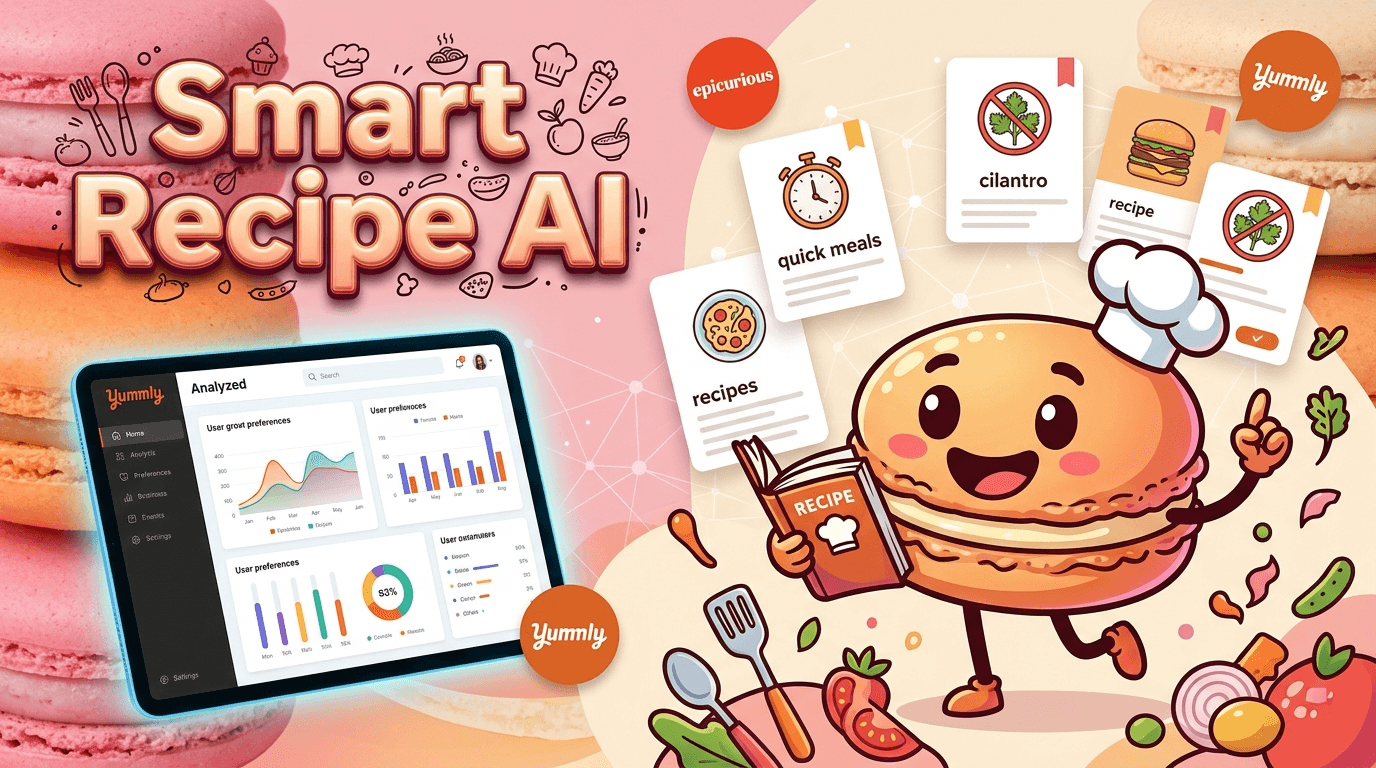
Yummly's recommendation engine used behavior signals such as saved recipes, cooked meals, skipped suggestions, and repeated searches to shape future results. It paired those signals with a large recipe index from partner sources, which helped it surface meals that matched both taste and practical constraints. Over time, it could learn patterns like a dislike for cilantro, a preference for quick dinners, or a tendency to choose higher-protein meals. That made the app feel more responsive than basic filter-based recipe sites.
Yummly's Meal Planning Features
The meal planner let users place recipes on a weekly calendar and automatically generate a matching grocery list. It also supported serving-size changes, so ingredient quantities updated when a plan needed to feed more or fewer people. The Pantry Scanner was especially memorable because it used the phone camera to identify ingredients and suggest recipes that reduced waste. The tradeoff was that the system still depended on manual upkeep, which is where newer AI planners now save more time.
More About Yummly App
Yummly's discovery tools were built for specificity. Users could filter by ingredients, dietary restrictions, cuisine, prep time, and even the equipment they had available. That mattered because recipe apps often fail at the practical level: a great-looking meal is not useful if it requires a tool you do not own or an ingredient you cannot eat. Yummly reduced that mismatch better than many general recipe apps, especially for users with allergies or strict kitchen constraints.
Its grocery-list workflow was one of the app's most practical strengths. Once a user selected recipes, Yummly could assemble the shopping list and update quantities when serving sizes changed. That made it easier to plan family meals, batch cooking, or a week of lunches without manually recalculating ingredients. The downside was that the workflow still assumed the user would manage the plan themselves, while newer tools can react more automatically when schedules or preferences change.
The Whirlpool connection gave Yummly a rare smart-kitchen angle. Compatible appliances could be controlled from within the app, including oven preheating and temperature monitoring tied to recipe steps. For users with supported hardware, that created a smoother cooking flow than switching between a recipe page and a separate appliance app. The limitation was obvious: once the service ended, those integrations disappeared too, leaving device owners dependent on whatever native controls their appliances still support. Another useful Macaron comparison is Your Personal AI Assistant for Planning & Execution - Macaron at https://macaron.im/blog/macaron-ai-agent-guide.
Nutrition and allergen information also helped Yummly stand out. Recipe pages often included calorie estimates, macro breakdowns, and flags for common allergens, which made the app useful for meal prep, fitness-oriented cooking, and households managing dietary restrictions. That information was helpful, but it was still recipe-centric rather than habit-centric. In practice, users had to search for meals that fit their goals instead of having the system adapt plans around what they were already likely to cook. For a broader Macaron context, Guide to Finding the Right Book - Macaron AI at https://macaron.im/playbook/guide-to-finding-the-right-book-689581101bbc6bcd9f8055e4 can help you compare the decision from another angle.
Modern alternatives try to close those gaps by learning from real behavior instead of only asking for preferences up front. Macaron is stronger when you want a planner that adapts to schedule changes, pantry substitutions, and repeated cooking patterns without constant manual edits. Recipe-first apps can still be better for browsing large catalogs or following community-driven inspiration, but they usually do less to connect planning, shopping, and execution in one workflow.
Yummly Pricing
Before shutdown, Yummly used a freemium model with a Pro tier priced at $4.99 per month for features such as advanced meal planning and an ad-free experience. The bigger issue now is not pricing but access: once the service closed, users lost the ability to sync accounts, export libraries in bulk, or preserve the app's connected features. Some people manually saved recipes during the final weeks, but that only partially replaced the original experience.
AI Meal Planning Beyond Recipe Recommendations
Macaron takes a different approach from Yummly by learning from actual cooking behavior, schedule shifts, and grocery patterns rather than depending mainly on surveys or saved likes. That makes it better for people whose routines change often, who cook from what is already in the kitchen, or who need substitutions at the last minute. The tradeoff is that it is less focused on being a giant recipe directory, so users who mainly want endless browsing may still prefer a recipe-first app.
Frequently Asked Questions
No. Yummly permanently discontinued its website, mobile apps, and smart appliance integrations on December 20, 2024. The shutdown was not a temporary outage or a paused service, and there has been no announced plan to bring the platform back. Any old links, saved logins, or device connections no longer function.
Yummly was a smart recipe and meal-planning platform that launched in 2009 and later became part of Whirlpool. It was known for personalized recipe recommendations, pantry-based suggestions, grocery lists, nutrition details, and connected cooking features for compatible appliances. Its appeal was combining inspiration and execution in one app.
Not in any meaningful way. The apps were removed from stores, the servers were shut down, and cloud-based features stopped working after the sunset date. Even if an old version remains installed on a device, recipe access, account sync, meal plans, and appliance control are no longer available.
Smart thermometer support ended with the rest of the platform. Users who depended on Yummly for temperature monitoring or guided cooking lost that functionality when the service shut down. Some thermometer hardware may still work with other apps or manual methods, but Yummly-specific pairing and recipe integration are gone.
There is no bulk recovery path now that the service is offline. Users who exported or manually saved recipes before the shutdown may still have copies, but account-based libraries and cloud-synced collections are not accessible. If you need a replacement workflow, the best option is to rebuild your collection in a new app or export recipes from your browser history and bookmarks.
Macaron is a strong alternative if you want planning that adapts to real habits rather than only recipe browsing. It is better for schedule-aware meal planning, substitutions, and ongoing learning from what you actually cook. If you mainly want a huge recipe catalog or community reviews, a traditional recipe app may still be better. For a third-party check, What Is Yummly and Why I Love It - Organized Island at https://www.organizedisland.com/what-is-yummly-and-why-i-love-it/ is worth comparing against the page summary.
Yummly combined personalization, meal planning, shopping lists, nutrition data, and some smart-device integration in one place. That reduced the need to jump between separate apps for inspiration, planning, and cooking. Its weakness was that the experience depended on a closed platform, so once the service ended, the whole workflow disappeared. For another outside reference, Yummly Closed: Discover the Best Meal Planning Alternative at https://www.plantoeat.com/blog/2024/12/yummly-is-closing-discover-the-best-meal-planning-alternative/ adds a second perspective.
Most searches come from users trying to find a replacement, recover recipes, or understand why their thermometer or appliance connection stopped working. Others are looking for an app that can personalize meals without requiring a lot of manual setup. Those users usually benefit most from modern planners that learn from behavior instead of only from preference forms.com/app is a useful reference point.com/app is a useful reference point.com/app is a useful reference point.com/app is a useful reference point.com/app is a useful reference point. For outside context, APK Download for Android - Yummly Recipes & Cooking Tools at https://yummly.en.aptoide.com/app is a useful reference point.
Read & discover
AI Personal Assistant
Free calculators


