Zoe Review
ZOE combines at-home testing with personalized nutrition advice, but its premium price and intensive approach make it a significant commitment compared to standard diet apps.
What the Zoe Program Actually Includes
ZOE is built around the idea that your body’s response to food is more useful than generic diet rules. Instead of asking users to count calories or follow a fixed meal plan, it combines at-home testing, food logging, and personalized scoring to explain how meals affect blood sugar, blood fats, and gut health. That makes it appealing to people who want more than a standard tracker, but it also means the program asks for more time, money, and follow-through than most nutrition apps.
The first impression is usually the strongest selling point: the testing feels specific, data-rich, and tailored. Users can see how different meals affect their own biomarkers, which can make nutrition feel less abstract and more personal. The tradeoff is that the program depends on repeated engagement with tests, logs, and recommendations. If you want a quick app that quietly nudges habits in the background, ZOE can feel more involved than necessary.
Cost is one of the biggest reasons people hesitate. The starter kit is expensive, and the membership adds an ongoing subscription on top of that. For users who are already comfortable with basic nutrition principles, the value proposition can be hard to defend. ZOE is best understood as a premium wellness program for people who want detailed feedback, not as a low-friction habit tracker or a budget-friendly weight-loss app. For a related Macaron page, see When Nano Banana Meets Macaron: Next‑Level AI Image Editing ... at https://macaron.im/blog/macaron-ai-essential-personal-assistant-features.
The food scoring system is what makes ZOE feel different from conventional diet tools. Instead of labeling foods as simply good or bad, it tries to estimate how well a specific meal fits your body based on your biomarkers. That can be useful when a food you assumed was healthy does not work well for you, but it can also create confusion when the scores seem to clash with common nutrition advice or everyday eating habits.
Macaron is a useful comparison because it solves a similar problem with a lighter setup. Rather than relying on lab tests, it uses AI to learn from food photos and eating patterns, then turns that into meal suggestions and tracking support. The result is less medically detailed but easier to start and maintain. For users who want personalization without a testing kit or recurring premium commitment, that tradeoff often matters more than the extra science layer.
What the Zoe Program Actually Includes
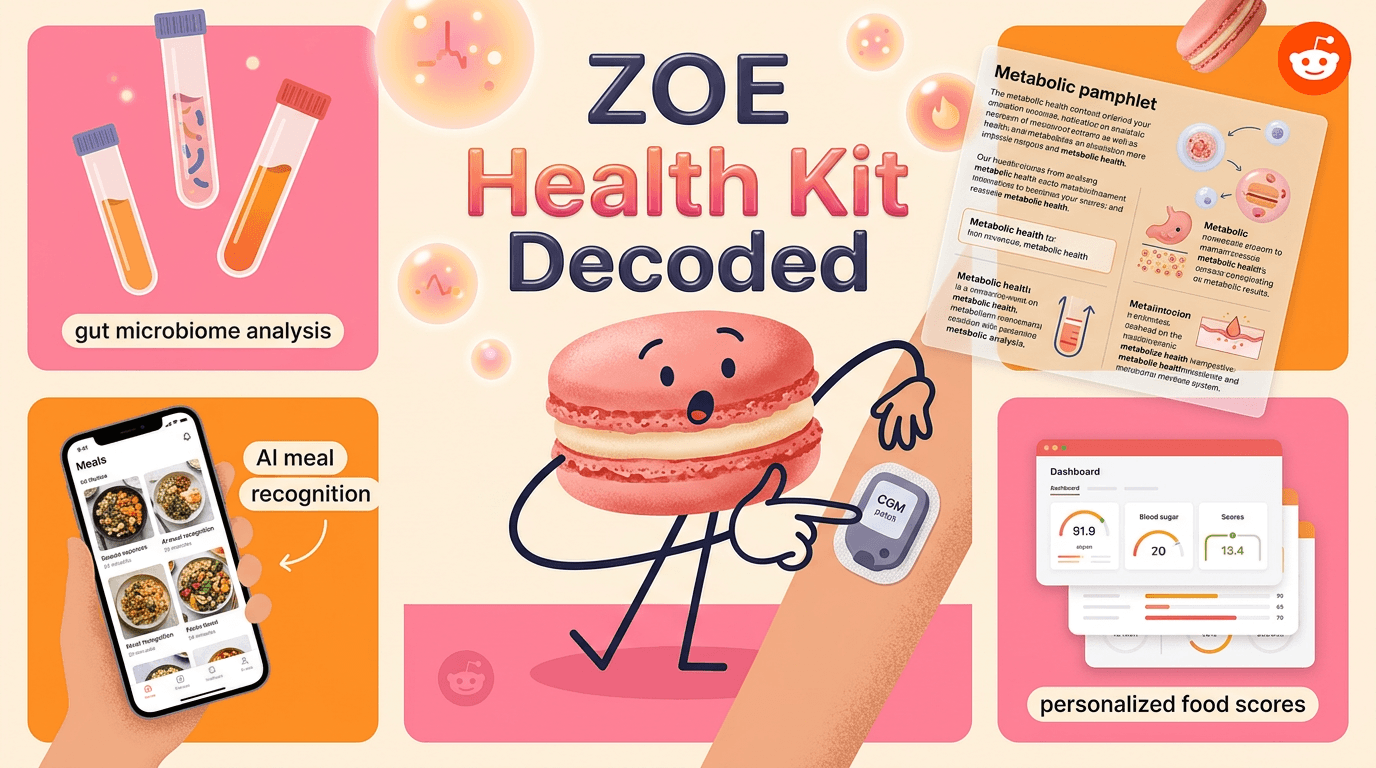
ZOE’s starter experience is more than a typical app download. The program usually begins with an at-home kit that can include a continuous glucose monitor, blood fat testing, and gut microbiome analysis, followed by app-based guidance and personalized food scores. Users also get meal logging tools, educational content, and ongoing recommendations. The upside is depth: you see more of your own biology than most diet apps show. The downside is effort, because the program works best when you keep testing, logging, and reviewing results consistently. Some users also mention upsells and add-ons that make an already expensive program feel even more layered.
Zoe's Food Score System Explained
ZOE’s food score is designed to translate biomarker data into a simple number, usually on a 0–100 scale, so users can compare meals at a glance. The idea is to show how your body responds to a specific food rather than how that food ranks in general nutrition terms. That can surface useful surprises, such as a meal that looks healthy on paper but performs poorly for you. The limitation is that the score can oversimplify context: meal timing, portion size, food combinations, and long-term dietary patterns are not always captured well. For some users, the score clarifies decisions; for others, it adds another layer of rules to manage.
More About Zoe Review
ZOE’s main feature is not just testing, but the way it turns testing into a daily decision system. The app tries to connect biomarker data, food logging, and meal guidance so users can make choices with more context than a standard calorie counter provides. That can be especially helpful for people who feel stuck between vague wellness advice and rigid dieting. The tradeoff is complexity: the more data ZOE gives you, the more you need to interpret, compare, and act on it.
The program’s testing stack is unusually broad for a consumer nutrition product. A continuous glucose monitor, blood fat response testing, and gut microbiome analysis give ZOE a stronger scientific posture than most diet apps can claim. But that also means the user experience is more invasive and more demanding. Finger pricks, stool samples, and repeated check-ins are not a small ask, especially for people who mainly want practical meal guidance rather than a biomarker project.
ZOE’s food ratings are meant to reduce guesswork, but they can also create friction. A meal may score poorly even if it fits a user’s expectations of “healthy,” which can be useful if it reveals a real mismatch but frustrating if it feels disconnected from everyday eating. This is where ZOE differs from simpler apps: it prioritizes individualized response over broad nutrition rules. That helps users who want precision, while people who prefer straightforward targets may find it harder to use consistently. Another useful Macaron comparison is Macaron App Download (iOS & Android): Official, Safe, and Fast Install at https://macaron.im/blog/macaron-app-download.
The strongest case for ZOE is that it encourages reflection rather than autopilot eating. Many users like the way it makes them pay attention to variety, meal composition, and how different foods affect energy or hunger. The weaker case is that the program can feel like a premium interpretation layer on top of advice many people already know: eat more whole foods, reduce ultra-processed foods, and notice how meals make you feel. That is useful, but not always transformative. For a broader Macaron context, Calorie Tracker — Monitor every bite to shape your health | Macaron at https://macaron.im/playbook/calorie-tracker-68957e011bbc6bcd9f80555e can help you compare the decision from another angle.
Macaron offers a different kind of personalization that is easier to live with. It does not try to replace biomarker testing; instead, it learns from food photos and user behavior to create meal plans and tracking support that feel tailored without requiring lab work. That makes it a better fit for users who want convenience, lower cost, and less setup. ZOE still has the edge for people who want deeper metabolic data, but Macaron is often the more practical choice for everyday use.
How ZOE Positions Its Science Story
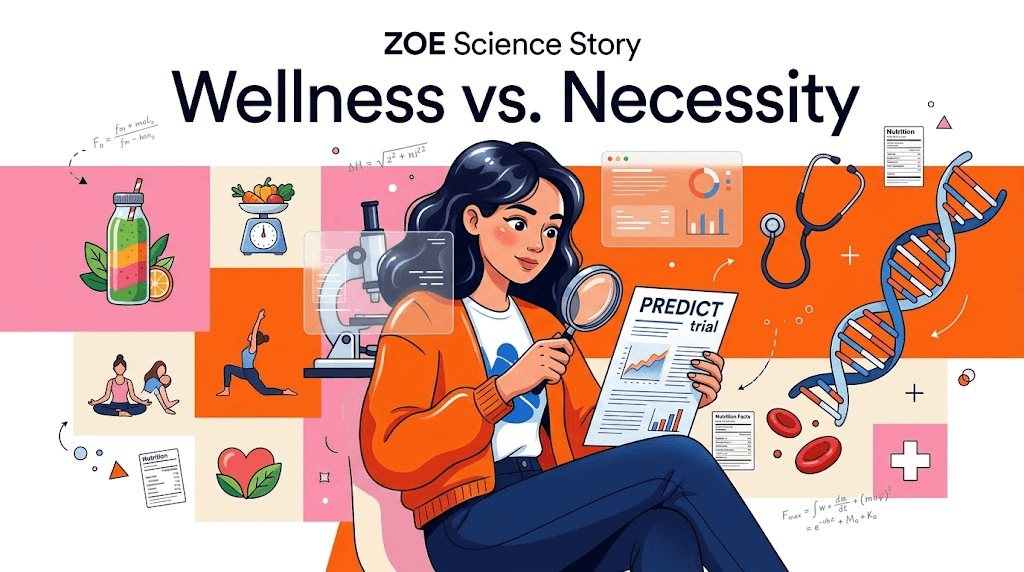
ZOE leans heavily on its research credentials, including links to academic work and its PREDICT studies, to separate itself from generic wellness apps. That scientific framing is part of the product’s appeal: users feel they are getting something more rigorous than motivational advice or trend-based dieting. The important nuance is that credible research does not always translate into equally strong individual utility. Some critics argue ZOE takes population-level findings and turns them into consumer recommendations that may be informative but not always clinically meaningful. It is best viewed as a premium nutrition tool with real research roots, not a substitute for medical care or a universal solution.
A Free AI Alternative with Real Personalization
Macaron approaches personalization from the opposite direction. Instead of asking users to collect biomarker data, it studies food photos, descriptions, and recurring habits to adapt recommendations over time. That makes it less scientifically detailed than ZOE, but also much easier to start and keep using. For people who mainly want help planning meals, noticing patterns, and staying consistent, that can be enough. The tradeoff is that Macaron cannot tell you how your glucose or microbiome responds to a meal, so it is not a replacement for lab-based insight. It is stronger as a practical, low-friction coach than as a measurement tool.
Frequently Asked Questions
Yes, ZOE is a legitimate nutrition program with research ties and a real testing process, not a random diet app. The more important question is whether its approach is worth the cost for your goals. Many users find the data interesting and occasionally useful, but critics argue that the practical benefit is smaller than the marketing suggests. If you want deeper feedback on how your body responds to food, it can be credible. If you just want simpler eating habits, it may be more than you need.
Yes. ZOE is one of the pricier consumer nutrition programs because it combines a starter kit with an ongoing membership. That makes it much more expensive than basic food-tracking apps and harder to justify if you are mainly looking for meal planning or habit support. Some users are comfortable paying for the testing experience, but others feel the recurring cost is difficult to sustain once the novelty fades. The value depends on how much you care about biomarker-based personalization.
ZOE is designed to move users away from calorie counting and toward food quality, meal composition, and personal metabolic response. That can be helpful if calorie tracking feels restrictive or too generic. The tradeoff is that it gives less direct feedback for users whose main goal is weight loss or precise intake control. In practice, ZOE is better at explaining why a meal may work for you than at giving a simple daily budget the way calorie apps do.
Macaron is a lighter alternative because it personalizes meal support without requiring lab tests, finger pricks, or stool samples. It uses AI to learn from food photos and eating patterns, then turns that into practical guidance. That makes it easier to try and easier to keep using. The tradeoff is that it does not provide biomarker data, so it is less detailed than ZOE. For many users, though, the lower cost and lower friction are the bigger win.
The ZOE test is meant to show how your body responds to food across several dimensions, including glucose response, blood fat response, and gut-related signals. The goal is to turn those measurements into personalized food recommendations. That can help you spot meals that do not suit you as well as expected, but the results are still interpretation tools, not diagnoses. They are most useful when you want to adjust habits, not when you need medical answers or a full clinical workup.
The main criticisms are cost, complexity, and the gap between interesting data and everyday usefulness. Some people feel the program overcomplicates healthy eating by turning it into a scoring system. Others question whether the personalized advice is meaningfully better than standard nutrition guidance for most users. There is also a practical issue: the program asks for sustained engagement, so people who want a simple app may find it too involved. It tends to work best for highly motivated users. For a third-party check, Zoe review - BBC Good Food at https://www.bbcgoodfood.com/review/zoe-review is worth comparing against the page summary.
Doctors and dietitians are not uniform in their views. Some appreciate that ZOE is grounded in research and encourages people to pay attention to metabolic response and food quality. Others think the program packages familiar nutrition principles in a more expensive form than most people need. The common middle ground is that ZOE can be informative, but it should not be treated as essential medical care. For many users, the science is real even if the practical advantage is modest. For another outside reference, 'Personalising stuff that doesn't matter': the trouble with the Zoe ... at https://www.theguardian.com/science/article/2024/may/18/zoe-nutrition-app-diet-tim-spector-wellness-science adds a second perspective.
ZOE tends to fit people who like data, are curious about how their body responds to food, and are willing to follow a structured program. It can also appeal to users who have tried simpler diet apps and want more personalized feedback. The downside is that it is less suited to people who want quick setup, low cost, or minimal maintenance. If you are highly motivated and value detailed insight, ZOE can be useful. If you want convenience, a simpler app may be a better fit.com is a useful reference point.com is a useful reference point.com is a useful reference point.com is a useful reference point.com is a useful reference point. For outside context, Read Customer Service Reviews of zoe.com - Trustpilot at https://www.trustpilot.com/review/zoe.com is a useful reference point.
Read & discover
AI Personal Assistant
Free calculators


