ChatGPT Cooking Prompts for Everyday Meals
ChatGPT Cooking Prompts for Everyday Meals

I've cooked with ChatGPT open on my phone more times than I'd like to admit. Not because I can't cook — because staring into the fridge at 6:30pm and trying to invent something from half a zucchini, leftover rice, and a can of chickpeas is genuinely annoying. AI handles that specific problem well.
What it doesn't handle well is harder to see until you follow the output too literally. This guide covers both sides.
What ChatGPT Cooking Prompts Are Actually Good For
Quick Meal Ideas From What's in Your Fridge
This is the strongest use case, and it works better than most people expect. When you describe what's in your fridge and ask ChatGPT to suggest a meal, you get something to react to immediately — rather than cycling through recipe sites trying to reverse-engineer what fits your ingredients.
The key is being specific. "What can I make for dinner?" gets you nothing useful. "I have chicken thighs, half a can of coconut milk, garlic, and some wilting spinach — what's a simple weeknight dinner?" gets you a workable answer in seconds.
Ingredient Swaps and Substitutions
This is where AI genuinely earns its place in the kitchen. Midway through a recipe and out of buttermilk? Need a dairy-free swap for heavy cream in a sauce? Asking ChatGPT for substitutions is faster than Googling, and the answers are usually solid for common swaps.
The caveat: substitutions that affect texture or baking chemistry (like swapping eggs in a cake) need more scrutiny than substitutions in a savory dish. AI gives you the swap; you still need to judge whether it'll work for your specific recipe.
Leftover-Based Cooking
Leftovers are the other strong suit. "I have leftover roast chicken, cooked quinoa, and some cherry tomatoes — what's a quick lunch that isn't a sad bowl?" is exactly the kind of prompt AI handles efficiently. It's good at reframing ingredients you already have into something that doesn't feel like you're eating leftovers for the third time.
Best ChatGPT Cooking Prompts to Try
Prompts for Quick Weeknight Meals (Copy-Paste)
These are designed to get specific, usable output rather than a generic recipe dump:

I have [list 3–5 ingredients you actually have]. I need dinner in under 30 minutes.
Suggest one simple meal I can make with these. Keep the instructions to 5 steps or fewer.
Give me a 20-minute weeknight dinner that uses chicken thighs. I don't want anything that needs more than one pan. List ingredients first, then steps.
I want to cook [cuisine type] tonight but I'm keeping it simple.
Suggest one dish a beginner could make. Avoid any technique that requires a thermometer or specialized equipment.
I have these leftovers: [list]. What's one thing I can make for lunch tomorrow? Don't suggest a recipe that requires more than 10 minutes of additional cooking.
### Prompts for Beginner Cooks

Beginners get the most out of ChatGPT when they explicitly ask for explanation alongside instruction:
Explain what "sauté" actually means and show me how to sauté onions properly. Tell me what it should look and smell like at each stage.
I'm making [dish] for the first time. Walk me through the steps and flag anything
that's easy to get wrong. Explain why each step matters, not just what to do.
What are 5 simple meals someone new to cooking can make with basic pantry ingredients? For each one, tell me the hardest part and how to avoid messing it up.
The "explain why" addition makes a significant difference. Without it, ChatGPT gives you a steps list. With it, you get context that helps you recover when something doesn't go as expected.

### Prompts for Healthier Cooking Without Losing Flavor
Take this recipe: [paste recipe or describe the dish]. Suggest modifications to reduce sodium and saturated fat without making it taste worse. Explain the trade-offs for each change.
I want to eat more vegetables but I find them boring. Suggest three ways to cook
[vegetable] that actually have good flavor. No steaming.
I'm trying to add more protein to my weeknight meals without meal prepping. Suggest 3 dinners under 30 minutes that are protein-forward. Keep it simple.
***
## Using AI as a Cooking Assistant — Not a Chef
### Verifying Cooking Times and Food Safety Basics
Here's where I'd push back on trusting AI output directly: cooking times and food safety.
ChatGPT's timing suggestions are often optimistic or based on a generic assumption about your equipment. A "20-minute chicken dish" assumes your pan is the right temperature, your chicken is a specific thickness, and your stove behaves predictably. Mine doesn't always. Follow timing as a rough guide, not a countdown.
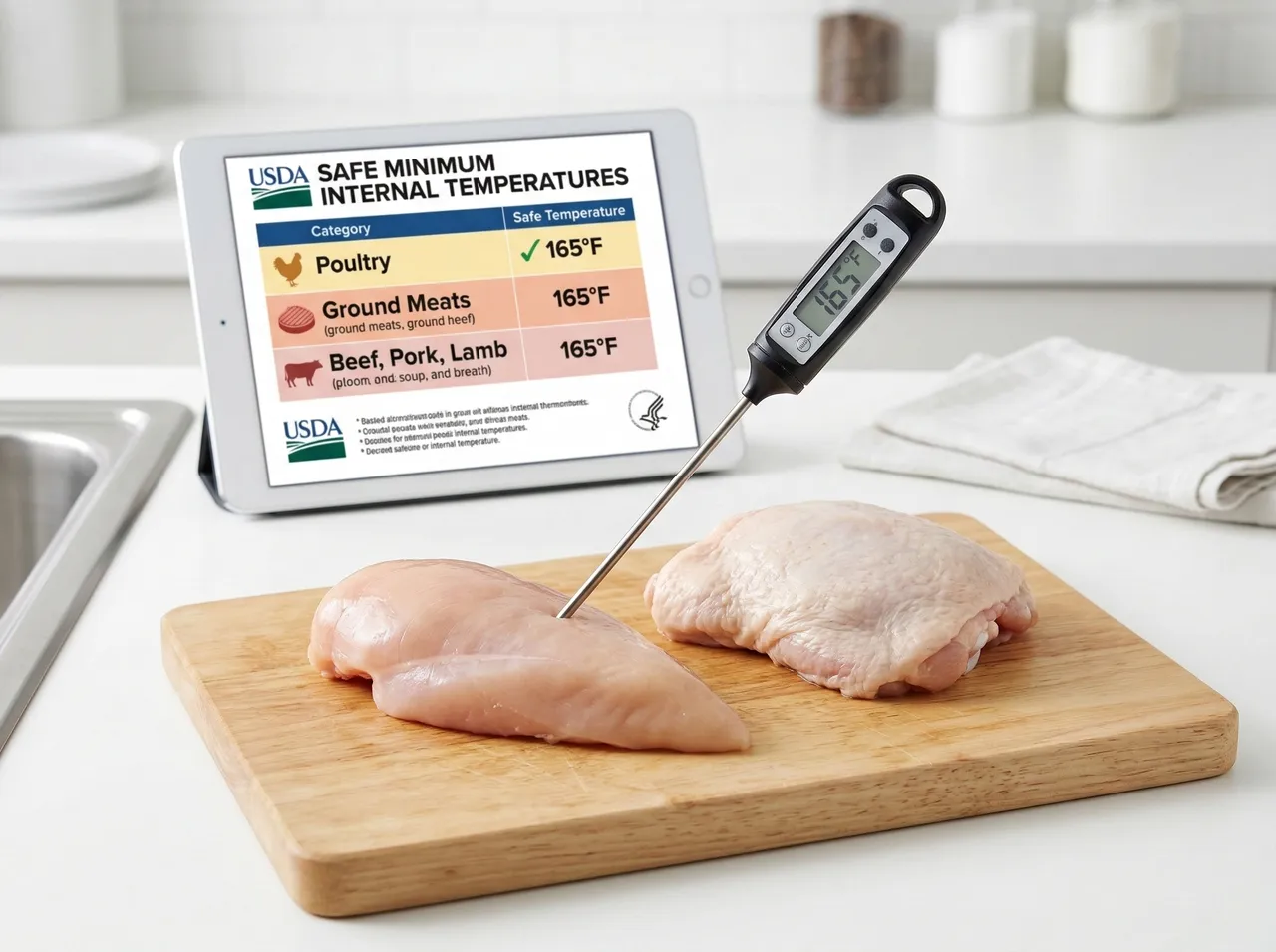
More importantly: food safety is non-negotiable and AI gets it wrong often enough to matter. Internal temperature for chicken is 165°F (74°C). For ground beef, 160°F (71°C). For pork, 145°F (63°C) with a rest. AI might give you correct numbers, or it might confidently give you incorrect ones. Cross-check against the [USDA safe internal temperatures guide](https://www.fsis.usda.gov/food-safety/safe-food-handling-and-preparation/food-safety-basics/safe-temperature-chart) — don't use AI as your only source for food safety.
### When to Trust the Output and When to Double-Check
Trust it for: ingredient combinations that are unlikely to be dangerous, substitution logic for common ingredients, general technique explanations, recipe ideas as a starting point.
Double-check for: cooking times (especially for meat and fish), food safety-related temperatures, baking ratios where chemistry matters, and anything involving preservation, canning, or food storage.
The mental model that works: use ChatGPT to reduce friction in meal planning and recipe discovery, and use your own judgment — or a verified source — when safety or technical precision is involved.
***
## Where AI Cooking Help Breaks Down
### Texture and Technique Descriptions
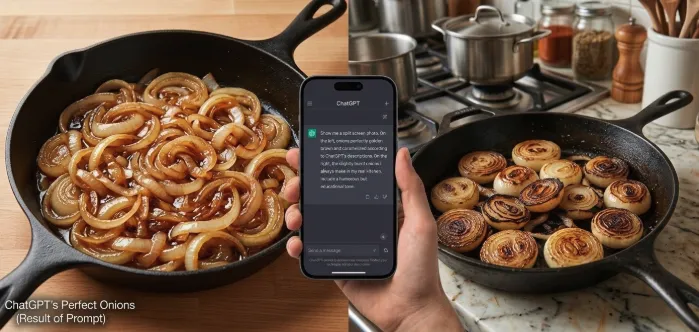
AI can tell you to cook something "until golden brown" or "until the sauce thickens." What it can't do is help you recognize those things in your actual kitchen, with your actual stove, in real time.
Cooking is tactile and visual in ways that text descriptions compress poorly. "The onions should be translucent with slightly browned edges" sounds clear until you're standing over a pan trying to decide if yours qualify. For techniques that rely on judgment — caramelizing, searing, knowing when bread dough has proofed enough — AI descriptions are a starting point, not a substitute for cooking the dish a few times and developing your own read on it.
### Regional or Culturally Specific Recipes
This one surprised me. ChatGPT's coverage of mainstream Western recipes is reasonably solid. Its coverage of regional or less-documented cuisines is inconsistent in ways that aren't obvious if you're not already familiar with the dish.
If you're cooking something from a cuisine you know well, you'll catch the errors. If you're trying a recipe from a cuisine you're new to, you may not know what "authentic" tastes like — which means you can't tell when the output is off. For regional dishes where specificity matters, cross-reference with a cookbook or a community source (a subreddit for that cuisine, a diaspora food blog) rather than relying on AI alone.
***
## Firsthand Verdict
### Best For
ChatGPT cooking prompts are most useful for the unglamorous part of cooking: deciding what to make on a Tuesday night with whatever's in your fridge, figuring out a substitution mid-recipe, and making leftovers interesting again. They're also genuinely useful for beginner cooks who want explanation alongside instruction — the "explain why" prompt pattern extracts significantly more educational value than a plain recipe request.
For everyday meal planning and quick weeknight decisions, the friction reduction is real and worth building into your routine.
### Biggest Drawback
The outputs feel more confident than they should be. ChatGPT doesn't hedge on cooking times, doesn't flag when a substitution might not work for your specific dish, and doesn't tell you when it's giving you a reasonable approximation versus a tested fact. That confidence is fine when you're deciding between pasta and stir-fry. It matters more when you're relying on it for food safety or baking precision.
Treat every AI cooking output as a useful draft, not a recipe from a tested source. Edit before you execute.
***
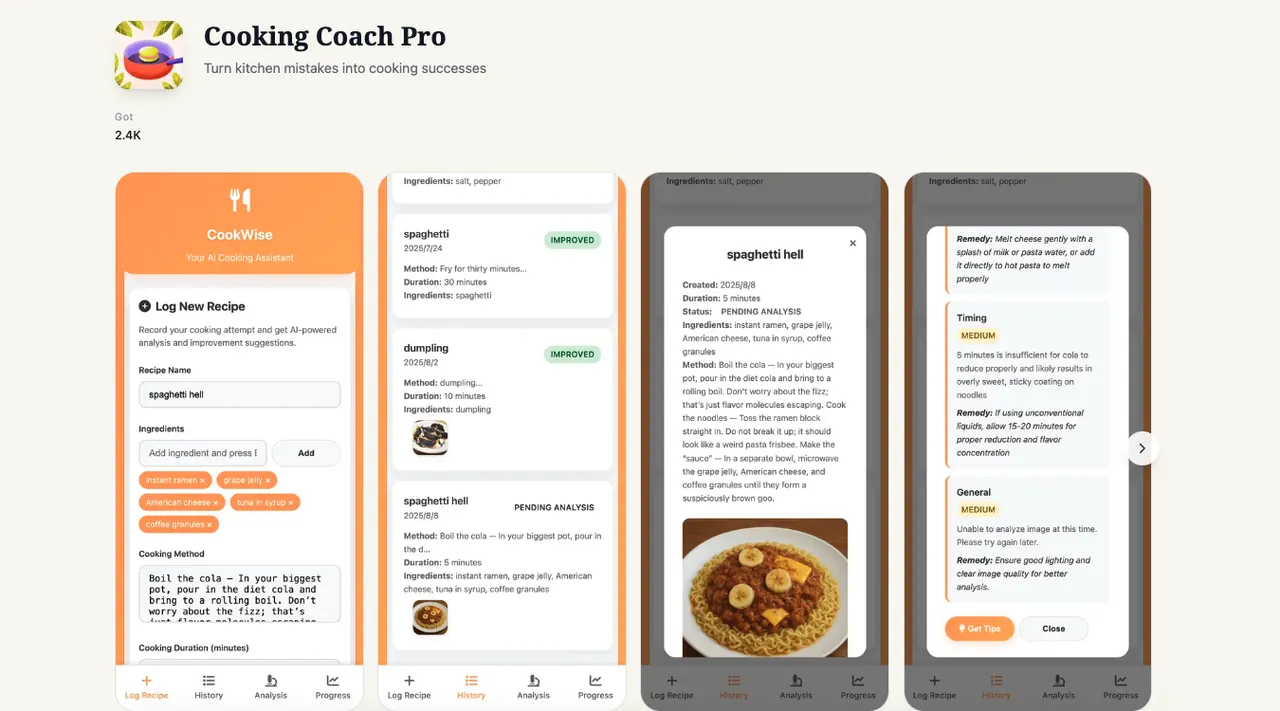
*The part AI doesn't solve: remembering what worked last week, adjusting for the week ahead, and building a system that doesn't start from scratch every time. At* [*Macaron*](https://macaron.im/)*, you can track what you actually cooked, what you want to try, and build a weekly plan that carries forward — rather than starting a new conversation every Tuesday night.*
***
## FAQ
**Are ChatGPT cooking prompts actually useful, or just novelty?** Useful for specific, constrained tasks — ingredient-based meal ideas, substitutions, leftover cooking, beginner technique explanations. Less useful for anything requiring real-time judgment, cultural specificity, or food safety precision. The key is knowing which category your question falls into.
**How specific do I need to be with cooking prompts?** More specific than you'd think. "What should I make for dinner?" gets generic output. "I have salmon, garlic, lemon, and some asparagus — what's a simple weeknight dinner that takes under 25 minutes and doesn't require anything other than a pan?" gets something usable. Constraints improve AI cooking output significantly.
**Can I use ChatGPT to learn cooking techniques?** Yes, with the caveat that text descriptions of technique only go so far. ChatGPT can explain what you're trying to achieve and why — which is genuinely useful for beginners. The hands-on recognition of when something is actually done right comes from cooking, not from reading about it. Use AI for the conceptual layer; build the tactile layer yourself.
**What's the difference between using ChatGPT and a recipe app?** A recipe app gives you tested, structured recipes. ChatGPT gives you flexible, on-demand suggestions based on whatever constraints you provide. Recipe apps win on reliability and testing; ChatGPT wins on adaptability and speed. For "I need to cook with what I have right now," AI; for "I want a reliable version of a specific dish," a tested recipe source.
**Is it safe to follow AI cooking instructions?** For general cooking, yes — with one firm exception: food safety temperatures for meat, poultry, fish, and eggs should always be verified against a trusted source like the USDA, not taken from AI output alone. AI can and does get these wrong. Everything else (ingredient combinations, technique, flavor) operates in a lower-stakes zone where a bad output means a disappointing meal, not a food safety risk.
***
**Related Articles**
* [AI recipe generator: create better recipes with AI](https://macaron.im/blog/ai-recipe-generator)
* [ChatGPT meal plan prompts that actually work](https://macaron.im/blog/chatgpt-meal-plan-prompts)
* [Best AI tools for grocery lists in 2026](https://macaron.im/blog/best-ai-tools-for-grocery-lists)
* [AI diet plan generator: does it actually work?](https://macaron.im/blog/ai-diet-plan-generator)
* [AI food photo generator: best tools, prompts and how to use](https://macaron.im/blog/ai-food-photo-generator)









Apply to become Macaron's first friends
Read & discover
AI Personal Assistant
Free calculators


