Hermes Bot Review 2026: Messaging, Memory, and Limits
Hermes Bot Review 2026: Messaging, Memory, and Limits

Quick Verdict for Everyday Messaging Users
This Hermes Bot review finds a capable remote entry point for people who already understand the responsibility that comes with an agent able to use tools. This AI bot review evaluates the Hermes messaging gateway through current official documentation, not hands-on message-delivery or reliability tests.
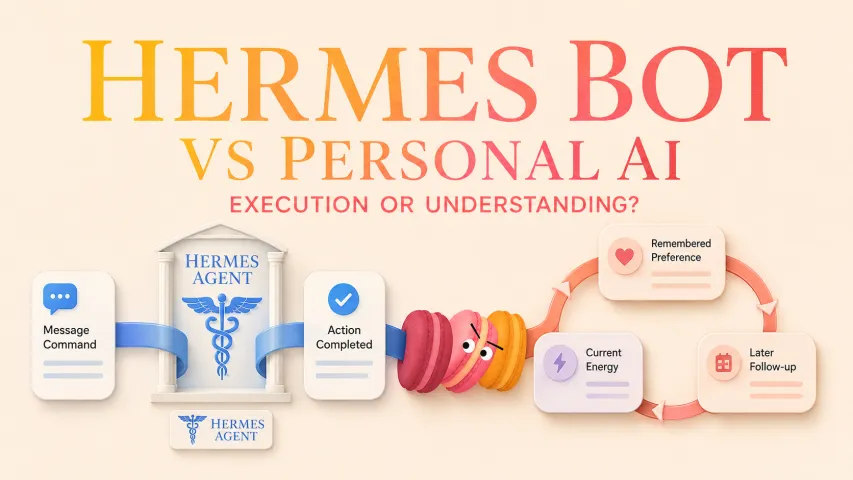
Three layers matter. Bot Mode is a Hermes Desktop feature for configured Bot profiles; the Messaging Gateway connects Hermes to chat platforms; and a platform bot identity is the external account, token, and permissions used there. They are not one product, and Bot Mode is not standalone. The fit is strongest for technically comfortable users who want remote tasks, not a relationship-centered always-on AI agent.
What “Hermes Bot” Can Mean Today
The name is ambiguous, so use this terminology map:
- Bot Mode profile: a Desktop-presented Hermes profile with a role, model, memory, skills, credentials, history, and avatar.
- Messaging Gateway: the process that connects platforms, routes sessions, runs scheduled jobs, and returns output.
- Platform bot identity: the external service account governed by that platform’s credentials and permissions.
Bot Mode Profiles Inside Hermes Desktop

Official Bot Mode documentation says the feature is built into Desktop as an interface over profiles. A Bot can have a model pin, custom instructions, skills, toolsets, MCP servers, memory, and an avatar. Its state remains profile-scoped.
Bot Connections Through the Messaging Gateway
The gateway documentation lists many adapters and shows that capabilities differ. Telegram, Discord, and Slack support threads, while WhatsApp and Signal do not in the official comparison. Attachments, reactions, typing indicators, and streaming also vary, so “Hermes Agent bot” does not describe one uniform chat experience.
The Everyday Messaging Experience
Starting Tasks from a Familiar Chat App
The practical appeal is simple: an authorized message can reach the same tool-capable agent without opening a terminal. The documented message path is:
- Authorized user: an allowlisted or paired caller sends a request; protect that account.
- Platform: the service transports it; availability and data handling remain outside Hermes.
- Gateway: an adapter selects a per-chat session; secure the gateway and credentials.
- Hermes session or task: enabled tools can run; oversight still matters.
- Response or output: the documented workflow separates task execution from platform message delivery; verify delivery behavior for the specific adapter.
- Platform return: the adapter handles the return path according to its current implementation and platform capabilities.

Moving Between Messaging, Desktop, and Terminal
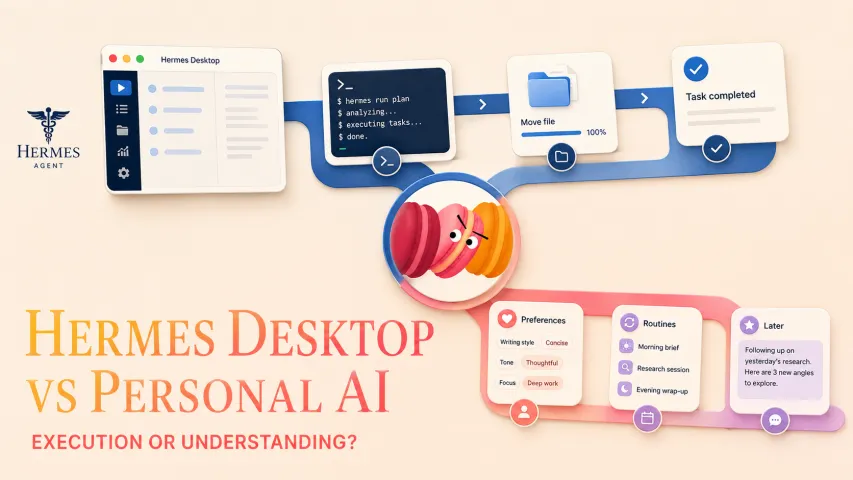
Desktop, CLI, and gateway use the same core, configuration, sessions, skills, and memory. However, messaging sessions are keyed to their chat origin. Do not assume a task from one chat automatically becomes the active conversation everywhere; continuity depends on resuming the relevant stored session.
Memory and Session Continuity
What the Agent Can Carry Forward
The session documentation describes stored history and source identifiers. The memory documentation separately describes curated stores and searchable past sessions. History and durable memory differ: a transcript does not make every fact persistent memory.

What Still Requires User Oversight
Review saved information, manage sessions deliberately, and never treat remembered text as verified truth. The cron documentation says scheduled jobs use fresh sessions and can be paused or resumed. Remote availability guarantees neither safe execution nor delivery.
Setup, Permissions, and Security
Bot Tokens, User Authorization, and Remote Access
The gateway denies users who are neither allowlisted nor paired by default. Pairing approvals can be revoked, and platform credentials must be protected. Exact identifiers vary by adapter: some use numeric user IDs, while phone-based services may use phone identifiers. I did not find a documented universal account-migration process; verify the current documentation for your adapter.
Local Control Does Not Remove Platform Risk

Hermes can run on a user-controlled host, but messages still cross platform accounts, provider APIs, notifications, and logs. The official security documentation discusses authorization and security boundaries; verify the exact isolation model for your deployment. Local control does not erase token or third-party risk.
Strengths and Limits
Useful for Remote Task Execution
Strengths: familiar chat entry, per-chat sessions, scheduled delivery, background tasks, multiple adapters, and explicit platform pause controls.
Limits: platform-dependent features, operational setup, powerful permissions, adapter-dependent delivery behavior, and no independent performance evidence in this review.
Less Suited to Relationship-Centered Support
Memory and a persistent chat can make follow-up work easier, but they do not establish emotional understanding, companionship, or human-like availability. Messaging access is an operational convenience, not evidence of a relationship-centered assistant.
Who Should Try It
Try it if you can manage tokens, allowlists, gateway uptime, and tool permissions. Skip it if you want a low-maintenance companion or guaranteed delivery. Verify first which platform features you need, where the gateway runs, who is authorized, and which actions require approval.
FAQ
What happens when a messaging account changes its username or phone number?
Authorization is adapter-specific and commonly uses platform IDs or phone identifiers. I did not find a documented universal remapping process. Recheck the current adapter documentation, allowlist, and pairing state before continuing.
Can users mute scheduled output without stopping the gateway?
Yes, a scheduled job can be paused while the gateway keeps running. Muting device notifications is a separate platform control; it does not pause Hermes execution or delivery.
Can Hermes reply inside a message thread instead of the main channel?
Sometimes. Officially documented thread support includes Telegram, Discord, and Slack, while several adapters lack it. Context behavior should be checked for the specific platform and thread type.
How are failed messages handled after the gateway restarts?
Retry behavior should be verified against the current delivery implementation and adapter documentation. I did not find one stable retry rule that should be assumed across every adapter and future version.
Can one platform be paused without disconnecting the others?
Yes. The documented /platform pause <name> control stops new dispatch for one adapter while leaving it loaded; other adapters can continue. Paused incoming messages are dropped, and resume is manual.
Conclusion
Hermes works best as a remote messaging gateway to a powerful agent, not as a promise of companionship or flawless autonomy. Its strongest qualities are flexible access, persistent sessions, and explicit operational controls. Its limits begin where platform behavior, credentials, permissions, and unattended execution require human judgment.
Previous Posts









Apply to become Macaron's first friends
Read & discover
AI Personal Assistant
Free calculators


