Hello, I'm Anna. That day, I just wanted a small Pythonscript to rename a batch of screenshots without me babysitting each file. I figured an AI could draft the code while I made tea. Then I caught myself copy-pasting the bot's suggestions, fixing a test, and rereading the same error three times. That's when I wondered: if I'm going to lean on AI for tiny coding chores, how do I keep it from becoming one more mentally heavy task?
This is my simple approach to "How to Orchestrate AI Coding Agents" for small, real projects, the kind you poke at on weeknights. Nothing fancy, no sprawling frameworks. Just a clean division of roles, a gentle task flow, and a few guardrails so things don't spiral. If you're curious but allergic to configuration, this is for you.
Step 1 — Define Agent Roles
If there's one choice that reduced my mental load, it was splitting responsibilities. Not ten agents, not a simulated startup, just three, with clear boundaries. When I keep it this simple, I spend less time correcting vibe-y guesses and more time making small, crisp decisions.
Coder / Reviewer / Tester separation
Here's how I frame it in practice:
Coder: writes or edits code. Its job is to propose a concrete diff, not a think piece. I ask it to output unified diffs or a patch-like block so I can see exactly what would change.
Reviewer: examines that diff for clarity and cohesion. It doesn't rewrite the world: it checks naming, structure, and edge cases, and leaves short comments like a code review.
Tester: runs tests and quick sanity checks. If there are no tests, it writes the smallest possible ones to cover the new behavior.
I treat these as roles, not separate apps. Sometimes they're just distinct prompts in one chat: sometimes I run them in different tabs. The point is the separation in my head and in the instructions. I even give each role a tiny charter I reuse:
Coder charter: "Propose a minimal patch for X. Don't refactor unrelated files. Keep changes under 50 lines unless I say otherwise."
Reviewer charter: "Find the fastest path to ‘good enough.' Flag naming issues and tests missing. Don't request style changes that aren't in the project's linter rules."
Tester charter: "Run tests (or sketch them). If a test fails, point to the exact line and expected vs actual."
Step 2 — Design the Task Flow
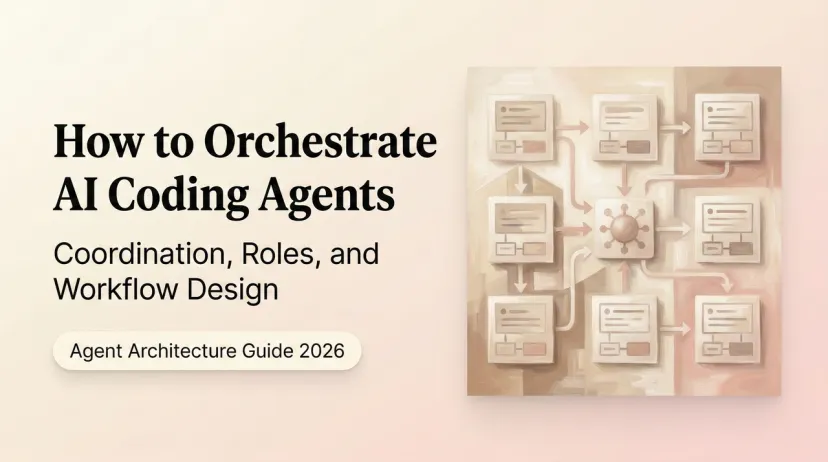
I used to dump a problem in one prompt and hope for a tidy solution. It worked, until it didn't. Now I walk the problem through a short sequence that matches how I'd handle a pull request myself. Two or three steps, tops. It sounds slower. It isn't, because the context doesn't blur.
Linear vs parallel execution
Linear flow: Coder → Reviewer → Tester. This is what I use for almost everything. The Coder produces a minimal patch, the Reviewer suggests precise changes (ideally by pointing at line numbers), then the Tester runs tests. If a test fails, I loop back once. After that, I stop and look with human eyes.
Parallel flow: tempting for linting and formatting, not great for logic. I experimented with running a linter and unit tests in parallel while the Reviewer commented. It looked efficient, but I ended up with conflicting advice, one agent suggesting renames while tests were written against the original names. My takeaway: run quick, independent checks (lint, type hints) in parallel, but keep code edits and test design in a simple line. If two agents are editing at once, they will step on each other.
Mapping a real PR workflow
When I map the flow to something I'd actually do in a pull request, the whole thing clicks:
Draft: Coder proposes a diff with a crisp title and a two-line rationale. I ask for the diff in code blocks so I can copy it verbatim.
Review: Reviewer responds with bullet comments tied to exact lines (e.g., "L12: rename var for clarity"). If there's a bigger concern, it suggests a minimal alternative patch.
Test: Tester runs or writes the smallest tests to pin the new behavior. If a test fails, it pastes the error and names the failing assertion.
Apply: I paste the diff locally, run tests, and commit if green.
I keep the humans-in-the-loop part explicit. If a patch exceeds the diff budget, I break it into two PRs. If I'm tired, I stop, because tired-me ignores red flags. It's not automation: it's scaffolding for attention.
If you want to structure this without any custom code, a practical combo is:
Git + a PR template with a checkbox list ("tests updated," "docs updated") so the Reviewer has structure to respond to.
A linter/formatter in pre-commit hooks (e.g., Black, Ruff, ESLint) so style debates vanish.
A slim test runner (pytest or npm test) that the Tester can reference by name. If you don't have tests, ask the Tester to write one assertion that proves the new behavior actually happened.
If you prefer some code orchestration, a short script that feeds the same context to each role (original file, proposed diff, test results) is enough. You don't need a full agent framework unless you enjoy that kind of thing. I usually don't.
Step 3 — Handle Failures Gracefully
I used to treat failures as "try again" moments. That just multiplied the same mistake. When I started treating failure handling as part of the design, the process felt calmer, and cheaper.
Fallback logic basics
My basic rules:
One retry with a new angle. If the Coder's patch fails tests, I allow one retry but require a short explanation: what changed and why. If the second try fails, we stop. The explanation step matters, it prevents aimless thrashing.
Tight scopes, then expand. If a change touches more than one file, the Reviewer asks the Coder to split patches. Smaller diff, faster feedback, fewer phantom errors.
Ask before guessing. If the model is clearly missing context (e.g., no idea how a helper function is used), the Reviewer prompts a question instead of guessing. I answer in plain text and rerun the step that needed it.
Preserve the trail. I keep a tiny "transcript.md" in the branch with the rationale, the patches proposed, and failures. It's overkill for a two-line fix, but wildly useful when I come back three weeks later wondering, "why this?"
Common failure modes I hit, and what helped:
Over-editing: The Coder refactors more than asked, then tests explode. Fix: hard cap on lines changed, and a reminder to avoid renames unless required by a test or a linter rule already in the repo.
Flaky tests: The Tester writes a clever but timing-sensitive test. Fix: prefer pure functions, avoid network calls, and stub randomness. If the test can't be made deterministic quickly, I pause and write it myself.
Hallucinated paths or APIs: It compiles nowhere. Fix: the Reviewer checks imports and file paths against what actually exists. If the project has a requirements.txt or package.json, include it in the context to prevent imaginary modules.
Step 4 — Plug Into Your Stack
I'm allergic to big platforms for small problems. So I plug this into what I already use.
Minimum viable setup for How to Orchestrate AI Coding Agents, the quiet way:
A local Git repo. Branch per change. A simple PR template with checkboxes. This gives the Reviewer a place to anchor comments and the Tester a place to note test intent.
A formatter/linter you trust so style becomes mechanical. Pre-commit hooks save me from arguing with an agent about spaces.
A short context pack: the relevant file(s), test file, and README chunk with charters. I paste this into the chat at the start of a session. It's low-tech, but it prevents drift.
If you're comfortable with light scripting, a tiny orchestrator helps:
A command like: orchestrate change "Add --dry-run to rename CLI" that:
Collects the target file snippet and current tests
Calls your Coder prompt and saves the proposed diff
Feeds that to your Reviewer prompt for comments or a revised diff
Applies the diff locally, runs tests, and prints the result
Stops on failure with the transcript path so you can skim what happened
I've done this with fewer than 150 lines of Python plus the OpenAI or Anthropic SDK. No tools, no function-calling gymnastics. Just careful prompts and file I/O. If that sentence already makes your eyes glaze over, skip it and keep the manual version. The linear flow still works fine in a single chat.
If you want to read up on the human parts I mirrored, the official docs for pull requests and pytest are solid references. That's the backbone: the agents just move along it.
I'll keep using this, for now. And I'm curious whether the 50-line rule keeps holding as the projects nudge bigger.
Hi, I'm Anna, an AI exploration blogger!
After three years in the workforce, I caught the AI wave—it transformed my job and daily life. While it brought endless convenience, it also kept me constantly learning. As someone who loves exploring and sharing, I use AI to streamline tasks and projects: I tap into it to organize routines, test surprises, or deal with mishaps. If you're riding this wave too, join me in exploring and discovering more fun!