Healthy Drinks for Weight Loss Without Detox Claims
Healthy Drinks for Weight Loss Without Detox Claims
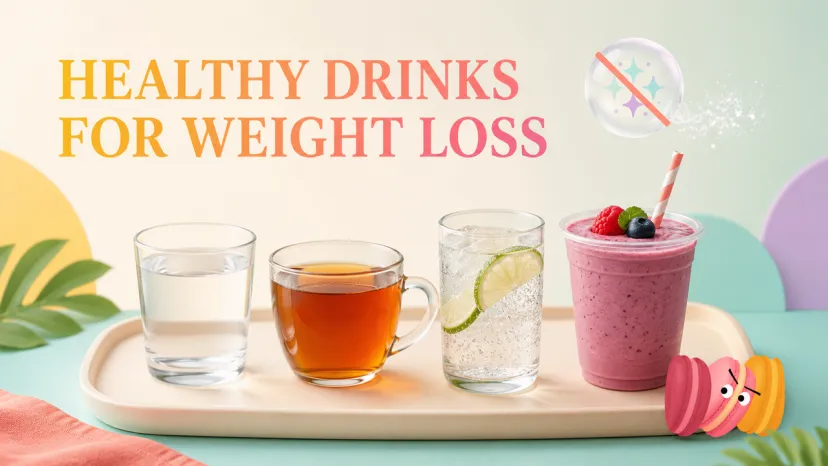
Healthy drinks for weight loss are drinks that support hydration, satisfaction, and a routine you can actually repeat. They do not “detox” your body, melt fat, reset your metabolism, or cancel out food.
The most useful drink note I keep as Maren is not glamorous: “coffee gets additions, smoothies count like food, sparkling water prevents bored sipping, alcohol gets its own category.” That note is more helpful than any cleanse bottle with a gold label and a suspicious amount of confidence.
The practical answer is simple: choose drinks by what role they play in your day. Water helps hydration. Unsweetened coffee and tea can fit a routine. Smoothies may work more like meals. Sugary drinks can add calories quickly. Alcohol should not be framed as a healthy drink.
What Healthy Drinks Can and Cannot Do
Healthy drinks can help with routine. They can make hydration easier, reduce added sugar intake, make meals feel more satisfying, or replace a beverage that was adding calories without much fullness.
Healthy drinks cannot do the work of an entire eating pattern.
According to CDC water and healthier drink guidance, getting enough water supports normal body function, and water has no calories. CDC also notes that replacing sugary drinks with plain water can help reduce caloric intake. That is a practical, limited claim. It does not mean water causes weight loss by magic.
For weight loss, drinks matter because they can be easy to forget. A snack usually feels like food. A drink can feel like background. Sweetened coffee, juice, soda, energy drinks, cocktails, and large smoothies may all change the day’s intake without feeling like a full meal.
The main question is not “Which drink burns fat?” The better question is “Which drinks are quietly shaping my routine?”
Hydration, satisfaction, and routine support
A useful beverage routine usually has three jobs.
Hydration: Water, sparkling water, unsweetened tea, and other low- or no-calorie drinks can help you drink regularly without adding much to track.
Satisfaction: A warm coffee, iced tea, smoothie, or flavored sparkling water may make the day feel easier. Satisfaction matters because a plan that feels bleak usually does not repeat well.
Routine support: A drink can mark transitions. Morning coffee. Water with lunch. Tea after dinner. A smoothie after a workout. A sparkling water when you want something cold but not sweet.
For a simple drink audit, track only four things for one week:
Drink type: water, coffee, tea, smoothie, juice, soda, alcohol, energy drink, or other.
Add-ins: sugar, syrup, cream, milk, sweetener, protein powder, fruit, or alcohol.
Timing: morning, meal, workday, evening, social, or weekend.
Effect: helped, unnoticed, triggered grazing, replaced food, or worth repeating.
This is not a punishment log. It is a pattern check. A drink routine becomes clearer when you track the role of the drink, not just the calorie number.
Avoid Detox and Fat-Burning Claims
Detox and cleanse language is where “healthy drinks for weight loss” gets risky.
A drink can be hydrating. It can be lower in added sugar. It can contain nutrients. It can be enjoyable. But if the claim is detox, cleanse, fat-burning, metabolism reset, or “flush,” the burden of proof should be high.
The National Center for Complementary and Integrative Health warns that many detoxes and cleanses do not have convincing evidence for weight loss or toxin removal, and some may carry risks. That matters because cleanse framing often sounds scientific while staying vague about what is actually being measured.
Your body already has systems that process and remove waste, including the liver, kidneys, lungs, digestive tract, and skin. A drink does not need a detox claim to be useful.
If a beverage needs fear to sell itself, it is probably not the calmest tool for your routine.
Why cleanse framing is misleading
Cleanse framing usually creates three problems.
First, it makes normal eating sound dirty. Words like “toxins,” “flush,” and “reset” can imply that regular meals need to be corrected. That can push people toward all-or-nothing thinking.
Second, it hides the real mechanism. If a drink plan leads to short-term weight change, the reason is often reduced calorie intake, lower food volume, water shifts, or temporary restriction. That is different from proving that the drink removes toxins or burns fat.
Third, it can replace sustainable habits with a dramatic short plan. A two-day cleanse may feel decisive, but it does not teach you what to drink on a tired Wednesday afternoon, at a restaurant, or after dinner when you want something sweet.
A stronger standard is this:
Can I name what this drink does?
Can I repeat it without stress?
Does it replace something I wanted to reduce?
Does it avoid extreme claims?
Does it fit my health context?
If the answer is yes, the drink may be useful. If the answer depends on vague detox language, skip the claim.
Drinks That Are Easier to Build Into a Routine
The best drink routine is usually boring in a helpful way.
Water is the base. It does not need to be perfect. Tap water, chilled water, water with lemon, sparkling water, or unsweetened flavored water can all help if they make hydration easier.
Coffee and tea can fit too. The drink itself may be low in calories, but additions can change the pattern quickly. Cream, sugar, syrups, sweetened milks, whipped toppings, and large coffee-shop drinks deserve attention if they are frequent. That does not make them bad. It makes them worth logging honestly.
CDC’s Be Smart About Sugar page gives a useful data point: a 12-ounce can of regular soda can contain about 10 teaspoons, or about 42 grams, of added sugar. CDC also reports that sugary drinks are a major source of added sugar in the U.S. diet. For tracking purposes, that is why drinks can matter even when meals look fairly steady.
Coffee, tea, smoothies, sparkling water, and everyday choices
Coffee: Plain coffee is simple to log. Coffee with milk, cream, syrups, sugar, or flavored foam is still fine to enjoy, but it works better when saved as a repeat order instead of guessed from scratch every time.
Tea: Unsweetened tea is usually easy. Sweet tea, bottled tea, bubble tea, and tea lattes need more attention because sugar, milk, tapioca pearls, and toppings can change the drink substantially.
Smoothies: Smoothies often behave more like food than water. Fruit, yogurt, protein powder, nut butter, juice, and sweeteners can make a smoothie filling and useful, but also calorie-dense. For tracking, a smoothie should usually be logged like a small meal or snack, not like a background drink.
Sparkling water: Sparkling water can help when the problem is boredom, not hunger. If it replaces soda or a sweet drink you were drinking out of habit, it may support the routine without needing any wellness claim.
Diet or zero-sugar drinks: These can reduce added sugar or calories for some people. The FDA’s sweetener guidance explains that approved sweeteners are regulated and assessed for safety under specific conditions of use. Still, they are not required for weight loss. If they help you reduce sugar without increasing cravings or stress, they may be useful. If they make you feel more fixated, choose something else.
Juice: 100% juice can provide nutrients, but it is easier to drink quickly and may be less filling than whole fruit for many people. If juice is part of your routine, portion and frequency matter more than whether it sounds natural.
A practical drink routine could look like this:
Morning: coffee with a repeat add-in.
Workday: water bottle plus sparkling water.
Afternoon: tea or low-sugar drink if you want flavor.
Post-workout or busy morning: smoothie logged as snack or meal.
Dinner: water, tea, or another drink that does not turn into automatic refills.
The point is not to create a perfect drink day. The point is to remove the drinks that are invisible, not the drinks you actually enjoy.
If Alcohol Is Part of Your Routine
Alcohol belongs in a separate category. It should not sit beside water, tea, coffee, and sparkling water as a “healthy drink for weight loss.”
If alcohol is part of your life, track it only when tracking is useful. That may mean saving a usual order, noticing weekend patterns, or estimating a cocktail after a night out. It should not mean using calories to justify drinking more, skipping meals to make room for alcohol, or calling a low-calorie alcoholic drink healthy.
The CDC alcohol and health guidance states that drinking less is better for health than drinking more, and people who do not drink should not start for any reason. That boundary matters here.
This article does not encourage drinking for weight loss.
Keep it separate from “healthy drink” framing and track only when useful
If you drink occasionally and want a low-stress estimate, save the pattern:
Usual wine pour.
Usual beer.
Usual whiskey.
Usual gin and tonic.
Usual restaurant cocktail.
That can reduce repeated guessing. But if alcohol feels hard to control, secretive, stressful, or emotionally loaded, the priority is not a better calorie estimate. The priority is support around alcohol itself.
A drink log should make life clearer. It should not become a tool for restriction, compensation, or denial.
FAQ
What drinks actually support hydration and satisfaction without “detox” claims?
Water, sparkling water, unsweetened coffee, unsweetened tea, milk or fortified unsweetened milk alternatives, and some smoothies can all support a routine depending on the context.
The key is to name the role. Water supports hydration. Coffee may support a morning ritual. Tea may help an evening routine. A smoothie may function as a snack or meal. None of these need detox language to be useful.
Do smoothies count as drinks or meals in calorie tracking?
Usually, smoothies should be treated more like meals or snacks than plain drinks. A smoothie can contain fruit, yogurt, milk, juice, nut butter, protein powder, oats, seeds, or sweeteners. That can be helpful, but it changes the calorie and fullness picture.
A simple rule: if the smoothie has enough ingredients to replace food, log it like food.
How should I think about liquid calories like coffee, tea, or juice?
Look at frequency and add-ins first. Plain coffee or tea may be minimal. Sweetened coffee, bottled tea, juice, soda, and specialty drinks can add up if they are daily habits.
You do not need to panic over one drink. But if a drink appears every day and has sugar, cream, syrup, juice, or alcohol, it is worth making it visible in your routine.
Are detox or cleanse drinks necessary for weight loss?
No. Detox or cleanse drinks are not necessary for weight loss. A more reliable approach is to build an eating and drinking pattern that supports hydration, satisfaction, realistic calorie awareness, and consistency.
A healthy beverage routine should make your day easier to repeat, not make your body sound like a problem to fix.