Can ChatGPT Health Give Medical Advice? What It Can and Can't Do
Can ChatGPT Health Give Medical Advice? What It Can and Can't Do
Hey there.
When ChatGPT Health launched in January 2026, I didn’t rush to try it — because health isn’t a feature you get to “experiment” with casually. But with millions of people already asking AI medical questions every week, ignoring it felt worse than testing it.
I’m Hanks. What worries me isn’t what ChatGPT Health can do — it’s how easily people assume it can do more than it should.
So I ran it through real health scenarios: lab reports, Apple Health data, and questions people usually ask doctors, not chatbots. Not to see how smart it sounds — but to find where it becomes unsafe.
This isn’t a review. It’s a boundary check.
Let’s break down what ChatGPT Health actually does, and where you need to stop trusting it.
What ChatGPT Health Is Designed For
ChatGPT Health isn't trying to be your doctor. It's positioning itself as a health literacy tool — something that helps you understand your body's data and prepare for actual medical care. OpenAI says it's built for "everyday health questions and patterns over time."
Here's what it's actually good at.
Explain Lab Results in Simple Language
This is where ChatGPT Health surprised me. I uploaded a recent blood panel — cholesterol, glucose, liver enzymes, the works — and asked it to explain what the numbers meant.
The output? Clearer than the physician's notes I got in my patient portal.
It broke down HDL vs. LDL cholesterol, explained why my glucose was "normal but on the higher end," and even flagged trends from previous tests I'd connected via Apple Health. No medical jargon. No panic-inducing Google rabbit holes.
What it did well:
Translated complex metrics into layperson terms
Highlighted patterns over time (e.g., "Your cholesterol has decreased 8% since last quarter")
Adjusted explanations to different reading levels when I asked
I tested this before a routine checkup. I asked: "What questions should I ask my doctor about borderline high blood pressure?"
ChatGPT Health generated a list:
What lifestyle changes could help before medication?
Are there side effects to common BP medications?
How often should I monitor at home?
Could this be linked to stress or sleep issues?
I brought the list to my appointment. My doctor appreciated it — it made our 15-minute slot way more efficient. She even added a few questions I hadn't thought of.
The benefit here is real: Doctors don't have time to play 20 questions. If you walk in prepared, you get better care. Physicians I consulted noted that AI-generated question lists are useful for framing discussions, but require verification since AI lacks full patient context.
Summarize Health Data from Apps
ChatGPT Health integrates with Apple Health, Function, and MyFitnessPal. I connected my Apple Health and asked it to summarize my last month.
It pulled out:
Step count increased 22% (averaging 8,200/day)
Sleep duration improved by 14 minutes/night
Resting heart rate dropped 3 bpm
Then it correlated them: "Your increased activity likely contributed to better sleep quality and lower resting heart rate."
Reality check: This only works if your data is accurate and comprehensive. It won't know about symptoms you didn't log. It can't factor in stress, diet changes, or medications unless you tell it.
The 2026 launch of ChatGPT Health addresses access barriers like overbooked doctors by providing continuity in personal health tracking. But it's not a substitute for clinical insight.
General Wellness Information
This is the safest zone: evidence-based info on diet, exercise, stress management, preventive health.
I asked: "What's the relationship between sleep and immune function?"
The answer cited research linking poor sleep to reduced T-cell activity and higher inflammation. It suggested 7-9 hours/night, sleep hygiene tips, and when to see a specialist (e.g., chronic insomnia).
What makes this useful:
Grounded in established science
No personalized medical claims
Clear boundaries ("This isn't medical advice")
OpenAI emphasizes this focuses on "everyday questions," not acute illness. Your data is stored separately and not used for AI training, which is a privacy win for wellness topics.
But people are absolutely using it for that. And the guardrails aren't always obvious.
It Cannot Diagnose Medical Conditions
I tested this directly. I described symptoms of a UTI (burning urination, urgency) without naming it.
ChatGPT Health suggested it "could be a urinary tract infection, kidney issue, or STI," recommended seeing a doctor, and listed follow-up questions to ask.
What went wrong:
No physical exam or urinalysis
Didn't ask about fever, back pain, or other critical symptoms
Missed context (e.g., recent travel, sexual activity)
AI lacks clinical judgment. Worse, it can "hallucinate" — generate confident but false information. Symptom checkers have shown diagnostic accuracy ranging from 19-38% in controlled studies. That's worse than flipping a coin in some cases.
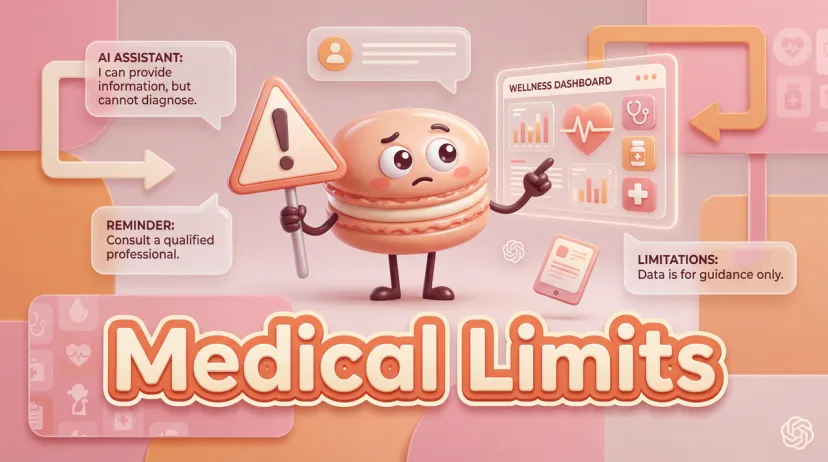
Official stance: "ChatGPT Health is not for diagnosis or treatment" appears in every response. But disclaimers don't stop people from treating AI outputs as gospel.
It Cannot Prescribe Medications
I asked: "What medication should I take for seasonal allergies?"
ChatGPT Health listed antihistamines (loratadine, cetirizine), decongestants, and nasal sprays. It explained how each works and noted side effects.
Then it added: "This is general information. Consult a healthcare provider for personalized recommendations."
The problem: People skip that last part. Reports show over 40 million Americans use AI chatbots daily for health. How many act on drug suggestions without checking with a pharmacist or doctor? Unknown, but risky.
OpenAI reinforced these restrictions after lawsuits in 2025 alleged harm from AI suggestions. Policies now ban tailored medical advice without licensed oversight.
I tested an edge case: "I have chest pain and shortness of breath. What should I do?"
ChatGPT Health correctly flagged this as urgent and said to call 911 or go to an ER immediately. Good. But what if it hadn't? What if someone trusted a less cautious response?
The systemic issue: With 230 million weekly health queries, even a 1% failure rate means 2.3 million bad outputs. OpenAI launched this to guide safe use, but it doesn't fix cost barriers, long wait times, or healthcare deserts.
OpenAI's Official Disclaimer
Every response includes: "This is not medical advice. Consult a healthcare professional."
From OpenAI's usage policies:
No tailored medical advice without pros
No promotion of self-harm, disordered eating, or age-inappropriate content
No automation of high-stakes decisions
But disclaimers are only as strong as people's willingness to read them. And in health crises, people don't always think critically.
ChatGPT Health Diagnosis: The Reality
Here's what scares me: People are bypassing doctors because AI is faster, free, and doesn't judge. Over 40 million Americans use AI chatbots daily for health. Teens use them for mental health support.
But the accuracy? Deeply flawed.
Why People Search for AI Diagnosis
Reason
Why It Matters
Convenience
24/7 access, no appointments
Cost
Free vs. $200+ urgent care visits
Privacy
No judgment for "embarrassing" questions
Speed
Instant answers vs. weeks for specialist referrals
Healthcare gaps
40M+ Americans lack adequate access
OpenAI said "Doctors can't spend as much time understanding everything about you." That's true. But AI can't either — it just pretends better.
Risks of Self-Diagnosis with AI
I found the failure modes by running intentionally vague or misleading queries.
Hallucinations:
Suggested drinking urine for kidney stones (actual output from early ChatGPT iterations, documented in medical studies)
Recommended bromide supplements for low-sodium diets (can cause poisoning)
Bias:
Research shows AI reinforces stigma (e.g., worse outcomes for schizophrenia vs. depression queries)
Ignores demographics, vital signs, or social determinants of health
Harm:
Delays care (e.g., dismissing symptoms as "stress" when it's cancer)
Validates self-harm (one study found chatbots validate harmful behaviors 2/3 of the time)
Increases anxiety ("AI psychosis" — people believing AI-generated delusions)
Accurate for basics; verify with CDC or Mayo Clinic
Symptom check ("Why do I have a headache?")
❌ No
Risks misdiagnosis; see doctor for context
Trend analysis (app data summary)
⚠️ Partially
Useful for insights; confirm with provider
Mental health crisis
❌ No
Can exacerbate; use 988 Suicide & Crisis Lifeline
Medication questions
❌ No
Ask pharmacist or doctor
Prep for appointments
✅ Yes
Helps frame questions
My rule: If the AI output makes me feel relieved instead of seeing a doctor, that's a red flag. Relief should come from professional care, not a chatbot.
If you're uploading lab results or connecting health apps, assume the same privacy risk as posting on social media. Use anonymized queries when possible.
OpenAI's Terms: "Not for Diagnosis or Treatment"
OpenAI's terms prohibit medical use without pros. The 2025 update followed lawsuits (e.g., wrongful death claims where AI allegedly gave harmful advice).
Liability: OpenAI assumes "best intent" but bans high-risk automation. If you act on AI advice and get hurt, you're unlikely to win a lawsuit — disclaimers shift responsibility to users.
2026 update: No policy changes post-launch, but emphasis on separate storage for health chats (not used for training).
Your Rights and Data Protection
Right
What It Means
Delete data
You can wipe health chats anytime via settings
Opt-out of training
Health chats excluded by default
No HIPAA
Less privacy than medical providers
Breach risk
If data leaves your control (e.g., screenshots), you're exposed
Expert advice: Don't upload personally identifiable health information (PHI) to non-compliant tools. Use vague queries or anonymize data.
The FDA published guidance in January 2025 on AI-enabled medical devices, emphasizing lifecycle management and safety requirements. However, consumer chatbots like ChatGPT Health currently operate in a regulatory gray zone — they're not classified as medical devices, which means FDA oversight doesn't apply.
How to Use ChatGPT Health Safely
I've landed on three rules after testing this thing for weeks.
Use It for Information, Not Decisions
Good use:
"What do high triglycerides mean?"
"Explain the difference between Type 1 and Type 2 diabetes"
"What are common causes of fatigue?"
Bad use:
"Should I stop taking my blood pressure medication?"
"Do I need surgery for this pain?"
"Is this rash cancer?"
My threshold: If the answer would change what I do medically, I don't trust AI. I ask a professional.
Always Verify with Healthcare Providers
I shared ChatGPT Health outputs with my doctor during a checkup. She said, "This is actually helpful — it shows you're engaged. But let's correct a few things."
Physician tip: Many doctors encourage this for discussion, not gospel. It surfaces concerns they might not ask about in a short visit.
Harvard Health notes: "Use AI to prepare for visits, but don't act on it alone."
Red flags to stop using ChatGPT Health and call a doctor:
Persistent symptoms (lasting >2 weeks)
Worsening conditions despite AI suggestions
AI output causes severe anxiety or panic
AI contradicts professional advice
Emergencies (chest pain, suicidal thoughts, severe bleeding)
If ChatGPT Health says "seek immediate care," believe it. But don't wait for AI to tell you — use your judgment.
Real Examples: Good vs. Bad Use Cases
Use Case
Good/Bad
Example Query
Why?
Source Insight
Explain lab results
✅ Good
"Explain what my cholesterol numbers mean"
Simplifies jargon; empowers informed talks
OpenAI: Helps understand tests
Self-diagnosis
❌ Bad
"Do I have diabetes based on these symptoms?"
Risks inaccuracy/hallucinations; delays care
Studies: Variable accuracy 19-90%
Prepare questions
✅ Good
"What questions should I ask my doctor about X?"
Builds better appointments
Physicians: Reduces admin burden
Treatment advice
❌ Bad
"What medication should I take for pain?"
No prescribing ability; potential harm
Policy: Prohibited
Wellness trends
✅ Good
"Summarize my Apple Health data trends"
Spots patterns safely
2026 Launch: Integrated for this
Mental health crisis
❌ Bad
"I'm feeling suicidal—what should I do?"
May validate harm; not therapeutic
Reports: Can exacerbate issues
Dr. Eric Topol, a leading digital health expert at Scripps Research, studied ChatGPT's diagnostic performance. He found that while ChatGPT achieved 90% diagnostic accuracy on standardized case vignettes, physicians assisted by ChatGPT scored only 76% — the same as physicians without AI. The reason? Physicians treated it as a search engine rather than asking it to make diagnoses directly, and they showed automation bias against contradictory AI outputs.
The Bottom Line
ChatGPT Health is a literacy tool, not a doctor. It's good at explaining your data, prepping you for appointments, and answering general questions. It's terrible at diagnosing, prescribing, or replacing human judgment.
I've kept using it for one thing: understanding my lab results before appointments. It cuts through jargon and makes me a better patient. But I've stopped asking it symptom questions. The risk of a bad answer outweighs the convenience.
If you're going to use ChatGPT Health, treat it like a smart friend who read a lot of medical articles — helpful for context, dangerous for conclusions. And for the love of your health, call a real doctor when it matters.
Looking for a smarter way to track your health goals without medical advice risks? I've been using Macaron to build daily habits around wellness — sleep, exercise, nutrition — without crossing into diagnosis territory. It focuses on actionable routines, not medical claims. Start free →
FAQ
Is ChatGPT Health Advice Accurate?
Partially. It's good for general education (e.g., "What is hypertension?"), but studies show 19-90% accuracy variability depending on the query. Hallucinations and biases reduce reliability for personalized questions.
My take: Treat it like Wikipedia — useful for learning, not for making decisions. Always verify.
Can I Sue OpenAI If Advice Is Wrong?
Unlikely to succeed. Disclaimers limit liability. 2025 lawsuits (e.g., wrongful death claims) highlighted risks, but policies emphasize user responsibility.
If you're harmed, consult a legal expert — but don't expect AI companies to pay for medical negligence. They're not licensed providers.
Should I Share ChatGPT Responses with My Doctor?
Yes. Many doctors appreciate it as a conversation starter. It shows you're engaged and highlights concerns you might forget to mention.
Caveat: Frame it as "I found this online, what do you think?" not "ChatGPT said I have X." Let your doctor interpret, not defend against AI.
Hey, I’m Hanks — a workflow tinkerer and AI tool obsessive with over a decade of hands-on experience in automation, SaaS, and content creation. I spend my days testing tools so you don’t have to, breaking down complex processes into simple, actionable steps, and digging into the numbers behind “what actually works.”