MBTI Sleep Habits: How Your Type Rests
MBTI Sleep Habits: How Your Type Rests

I'm Maren, and I've been tracking my own sleep for about six weeks now — not with a fancy ring, just a notebook by the bed and a stubborn habit of writing down what time my brain actually turned off. The reason I started is embarrassing: I kept blaming "a stressful week" for nights where I lay there until 2am replaying a Slack message from Tuesday. Labels need the caution in MBTI stereotypes vs reality. It wasn't a stressful week. It was just me. Specifically, it was my wiring — the same pattern I've had since college, the same one my INFJ friends describe almost word-for-word.
So I went down a rabbit hole. How much of "I can't sleep" is personality, and how much of it is a sleep problem pretending to be personality? Here's what I found, tested against my own three weeks of data and a lot of secondhand reports from friends who were unlucky enough to get texted at 1:47am.
Quick note before we go further: Personality type is not a sleep diagnosis. If you're losing sleep three or more nights a week for longer than three months, skip to the section on when to see a doctor. The MBTI angle is useful for self-observation. It's not a medical framework.
Do Personality Types Actually Affect Sleep?
Kind of. Not in the way most MBTI content implies.
There's a small body of research linking personality dimensions to sleep patterns. A study on sleep disturbances and MBTI type found that Extraverted, Sensing, and Perceiving types reported higher rates of insomnia than their opposites — with the J-vs-P difference being the most statistically significant. Feeling types also reported more tooth grinding and snoring than Thinking types.
That's interesting. It's also a single study on 524 college students in Korea, which I'd call directional, not definitive.
What does seem to hold up across research is that the mechanism keeping most people awake isn't personality at all — it's cognitive arousal. Research on nocturnal cognitive arousal shows that people with racing thoughts at bedtime spend significantly longer awake, regardless of whether they technically meet criteria for insomnia. Rumination is the real problem. MBTI just tells you which flavor of rumination you're probably stuck in.
Which is actually useful. If I know my brain's default failure mode at 11pm, I can design around it.
Sleep Patterns by Type

I'm generalizing here. Your type is not a prison. But the patterns are consistent enough in the research and in every group chat I've ever been in that they're worth naming.
Analysts (INTJ, INTP, ENTJ, ENTP) — Overthinking at 2am
This group tends to go to bed late and think their way past tired. The brain treats bedtime as the first quiet moment of the day, which means it treats bedtime as a working moment. Ideas arrive. Open questions resurface. You mentally rewrite a conversation from last Thursday.
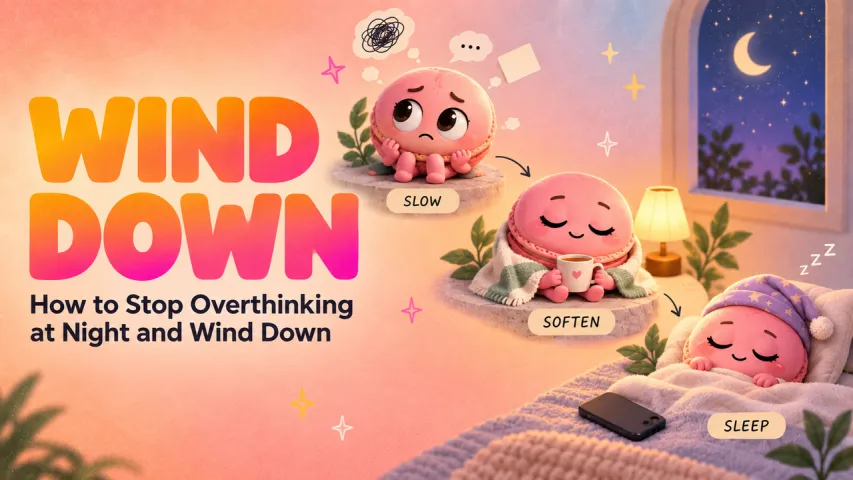
The friction here isn't sleepiness — it's cognitive de-arousal failure. The mind doesn't wind down on its own, and most Analysts haven't built a ritual that forces it to. The Sleep Foundation's guidance on bedtime routines suggests a 30-to-60-minute wind-down — most Analysts I know treat that as optional. It isn't.
Diplomats (INFJ, INFP, ENFJ, ENFP) — Emotional Processing Before Bed
This is me. The pattern: the day is fine until my head hits the pillow, and then suddenly I'm replaying a microinteraction from the afternoon and wondering if I was too short with someone. Diplomats tend to process emotion retrospectively, and bedtime is when the queue finally gets attention.
Turns out, doing it this way wrecks sleep onset pretty reliably. Cognitive behavioral therapy for insomnia (CBT-I) specifically targets this — the bed becomes associated with rumination instead of rest, and the association strengthens every night it happens.
Sentinels (ISTJ, ISFJ, ESTJ, ESFJ) — Routine Sleepers

Sentinels generally sleep the best, at least on paper. They have bedtimes. They keep them. The research on wind-down routines basically describes how Sentinels already operate.
The failure mode here is different: when life disrupts the routine — travel, a sick kid, a deadline — Sentinels often can't improvise their way back. Rigidity is protection until it isn't.
Explorers (ISTP, ISFP, ESTP, ESFP) — Irregular but Adaptable
Explorers' sleep schedules look chaotic and somehow it works. Bed at 10 one night, 1am the next, fine both times. The research suggesting P-types report more insomnia tracks with this — but in my observation, Explorers suffer less from it subjectively because they don't fight it. They just sleep when they're tired.
Until they can't, and then it gets bad fast.
Bedtime Routines That Match Your Type

Generic sleep hygiene helps. Type-tuned sleep hygiene helps more. Here's what I've actually tested on myself and a handful of patient friends.
For Analysts: A written brain-dump 60 minutes before bed. Not a journal — a list. Everything unresolved, one line each, no solutions. The point is to tell your brain the tab is closed. I do this on paper because screens pull me back in.
For Diplomats: Cognitive shuffling — thinking of a random sequence of unrelated words (lemon, kite, staircase, orange) as you lie there. It sounds ridiculous. It worked for me on night three. The theory: it gives the brain just enough to do that it can't build narrative loops.
For Sentinels: Protect the routine, but build a backup version. A "travel mode" five-step version you can run in a hotel room. Brittle routines fail at the worst moments.

For Explorers: A consistent wake time, even when bedtime varies. This is the one non-negotiable. Research on circadian rhythm shows wake-time anchors the whole system better than bedtime does.
Small friction point I'll admit: I tried to get my Macaron assistant to remember which wind-down routine I was testing and automate the reminder. It actually did, which is the first time a tool has held onto that context through a month of variations without me re-explaining. That's the part I didn't plan for.
When Sleep Problems Need Professional Help
This is the part I want to underline, because "my personality type is just like this" is the kind of story that can quietly delay a real diagnosis.
Per NIH guidance on chronic insomnia, you should see a doctor if sleep difficulty occurs three or more nights a week for three months or longer. Not because it's a crisis — because the treatment pathway for chronic insomnia is specific, well-researched, and works.
Also worth a call: waking up gasping, acting out dreams, uncontrollable daytime sleepiness, or a distinct worsening after a medication change. Those aren't personality. Those are clinical.
FAQ
Which MBTI type sleeps the least?

Research suggests INTPs, INTJs, and ENTPs report the shortest average sleep durations, largely because they delay bedtime to think. Self-reported, though — not lab-measured.
Can personality type cause insomnia?
No. Personality type can predispose you to patterns (rumination, delayed bedtime, rigid routines) that correlate with insomnia. The insomnia itself has clinical criteria independent of personality.
What bedtime routine works for overthinkers?
A structured wind-down with a written brain-dump, followed by a low-cognitive-load activity (cognitive shuffling, a dull book, a guided body scan). The goal is reducing presleep cognitive arousal, which is the actual mechanism keeping you awake.
Should I track my sleep?
Short-term yes, long-term probably not. A 1-2 week sleep diary before a doctor's visit is genuinely useful. Tracking indefinitely with a wearable can cause orthosomnia — anxiety about sleep data that makes sleep worse.
Is it bad to go to bed at different times every night?
It's less ideal than consistency, but a consistent wake time matters more for most people. Don't panic about the occasional late night.
Still thinking about why the shuffle technique worked when the journaling didn't. I'll come back to that one.
Previous posts:







Apply to become Macaron's first friends
Read & discover
AI Personal Assistant
Free calculators


