Before you read further: PCOS is a medical condition managed differently for each person. This article provides general dietary information based on current research — not personalised medical advice. If you have PCOS, the most useful thing alongside any meal plan is working with a registered dietitian who understands your specific presentation. The eating patterns described here are consistent with clinical guidance, but your doctor or dietitian can help you adjust them for your situation.
It was the appointment where someone finally said the words "polycystic ovary syndrome" that started the spiral into dietary research. You read one article that says eliminate dairy, another that says dairy is fine, one that says go keto, another that says low-GI is enough.
The information is both overwhelming and contradictory because PCOS is genuinely heterogeneous — it presents differently in different people, and the research on diet reflects that. What's consistent across the evidence is narrower and more useful than most wellness content suggests: certain eating patterns support blood sugar management and reduce inflammatory load, and those patterns are well-defined enough to follow.
Here's what the current evidence actually supports, and what a week of eating this way looks like in practice.
How Diet Affects PCOS
The insulin resistance connection
Insulin resistance affects 50% to 75% of people with PCOS, according to Amanda Stathos, a clinical dietitian at Johns Hopkins' Sibley Memorial Hospital. The mechanism is straightforward: insulin is supposed to act as a key that opens cells and allows glucose in for energy. In insulin resistance, that process doesn't work properly — glucose doesn't enter cells efficiently, and the body compensates by producing more insulin.
Elevated insulin levels then drive a cascade of hormonal effects relevant to PCOS: higher androgen production, disruption to ovulation, and an increased risk of metabolic complications over time. Over half of those with PCOS develop diabetes or prediabetes before the age of 40, making blood sugar management a central dietary priority rather than a peripheral concern.
Dietary choices that reduce rapid blood sugar spikes — and therefore reduce the demand for large insulin responses — are a meaningful component of PCOS dietary management. This is the evidence base behind the consistent emphasis on low glycemic index foods, fibre, and protein in PCOS dietary guidance.
Inflammation and hormonal balance
PCOS is also associated with chronic low-grade inflammation, which compounds the metabolic picture. Dietary interventions including low glycemic index foods, high-fibre diets, omega-3 rich diets, and anti-inflammatory dietary patterns have been shown in research to improve insulin sensitivity and hormonal balance in women with PCOS, according to a 2025 systematic review published in Nutrients.
The overlap between PCOS dietary guidance and anti-inflammatory eating is substantial — the food categories that support blood sugar stability also tend to reduce inflammatory markers. This means the practical eating pattern doesn't require following two separate protocols; one well-structured eating approach addresses both.
PCOS-Friendly Foods to Prioritise
Low glycemic carbohydrates
Choosing more low-glycemic carbohydrates — those that do not cause a surge in blood sugar — such as fibre-rich whole grains and non-starchy vegetables can be helpful for people with PCOS, according to Johns Hopkins' clinical dietitian guidance. Eliminating carbohydrates entirely is not recommended; the type and fibre content matter more than elimination.
A 2025 meta-analysis in Frontiers in Nutrition examining carbohydrate quality in women with PCOS found that high dietary fibre and low glycemic index diets significantly reduced fasting glucose and insulin resistance, and also reduced triglycerides and LDL cholesterol. Both fibre and low-GI approaches also increased Sex Hormone-Binding Globulin (SHBG) and reduced free androgen index — markers directly relevant to PCOS hormonal balance.
Practical low-GI carbohydrate choices:
Oats, barley, and rye (lower GI than most other grains)
Whole fruit (particularly berries, apples, pears — slower sugar release than juice or high-GI fruit)
Wholegrain bread and pasta in moderate portions
Anti-inflammatory fats
Healthy fats support several aspects of PCOS management: reducing inflammatory markers, supporting hormonal synthesis, and improving insulin sensitivity. The primary sources to emphasise:
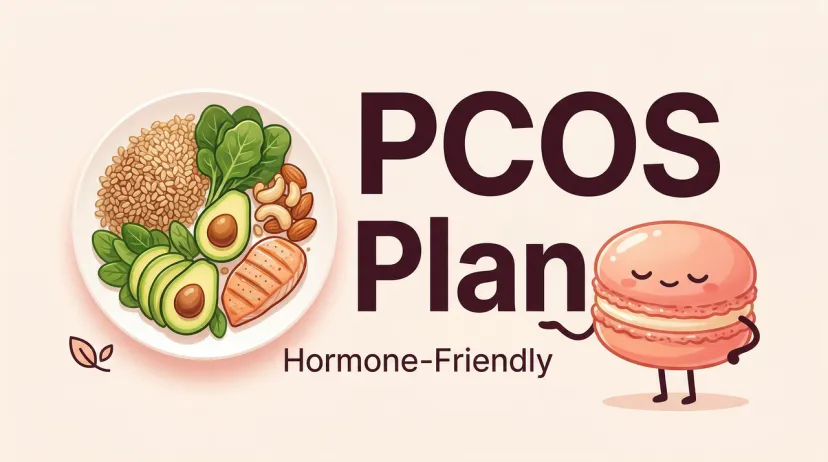
Omega-3 fatty acids — fatty fish (salmon, sardines, mackerel, herring), walnuts, flaxseed, chia seeds. Omega-3s are associated with reduced androgens and improved inflammatory markers in PCOS research. Aim for fatty fish 2–3 times per week.
Monounsaturated fats — extra-virgin olive oil as the primary cooking fat. Consistent with Mediterranean dietary guidance, which is among the better-evidenced dietary patterns for PCOS management.
Avocado and nuts — additional monounsaturated and polyunsaturated fat sources. Almonds, walnuts, and Brazil nuts (the latter for selenium) are the most relevant.
Protein sources that help
Research shows that eating a higher protein diet when you have PCOS can help improve insulin resistance alongside a reduction in refined carbohydrates. Protein also slows gastric emptying and blunts post-meal glucose rises, which supports blood sugar stability.
Prioritise: fatty fish (dual benefit — protein and omega-3), eggs, legumes (protein and fibre combined), Greek yogurt with live cultures, chicken and turkey, tofu and tempeh for plant-based options.
On dairy: the evidence is mixed. Some studies suggest dairy may affect androgen levels; others show no significant impact. Current guidance doesn't universally recommend eliminating dairy, but if you suspect dairy affects your symptoms specifically, a trial elimination period (4–6 weeks, then reintroduce) is a reasonable approach to assess.
Foods to Limit With PCOS
High glycemic foods
The foods most consistently associated with worsening insulin resistance in PCOS:
White bread, white rice, standard pasta — rapidly digested, drive blood sugar spikes
Sugary breakfast cereals
Fruit juice and sweetened drinks — fructose in liquid form is processed differently than whole fruit
Confectionery, pastries, and baked goods with added sugar
Processed snacks: crackers, chips, many energy bars
There is no standard diet for PCOS, but three eating patterns appear most likely to be beneficial: a low glycemic index diet, an anti-inflammatory diet, and the DASH diet, according to Medical News Today's reviewed dietary guidance. What these share is an emphasis on whole foods and a reduction in refined carbohydrates and added sugars.
Processed and refined options
Eating too many foods associated with inflammation can aggravate PCOS symptoms and raise the risk of other diseases that people with PCOS are at heightened risk for developing, such as heart disease. Foods to avoid include fried foods, processed meats, and refined options, per Johns Hopkins clinical guidance.
The category to reduce most meaningfully: ultra-processed foods as a group. Packaged snacks, fast food, ready meals with long ingredient lists — reducing these moves the overall dietary pattern substantially toward lower inflammatory load, regardless of which specific PCOS dietary approach you're following.
On alcohol: consistent evidence links regular alcohol consumption to higher inflammatory markers and disruption to hormone metabolism. Reduction is advisable; elimination is recommended during any period of active symptom management.
How strict you need to be
No single food will derail a generally good dietary pattern, and no single food is a cure. The consistent message in PCOS dietary research is that overall pattern matters more than individual food choices, and sustainable changes matter more than strict short-term elimination.
Sample Weekly PCOS Meal Plan
This plan follows low-GI Mediterranean principles — the dietary pattern with the most consistent evidence for PCOS dietary support. It's a reference framework, not a prescription. Adjust any meal for your preferences, dietary restrictions, or budget.
Breakfast ideas (rotate through the week)
Option A — Oat bowl with berries: 80g rolled oats cooked with 250ml oat milk or water, topped with a large handful of blueberries, 1 tbsp ground flaxseed, 30g walnuts, and a sprinkle of cinnamon. No added sugar.
Option B — Egg and vegetable scramble: 3 eggs scrambled with a large handful of spinach, cherry tomatoes, and mushrooms, cooked in olive oil. 1 slice of wholegrain rye bread.
Option C — Greek yogurt and seed bowl: 200g full-fat Greek yogurt with live cultures, mixed berries, 1 tbsp chia seeds, 1 tbsp pumpkin seeds, a drizzle of almond butter.
Option D — Smoked salmon and avocado: 60g smoked salmon, ½ sliced avocado, 2 poached eggs, 1 slice wholegrain rye toast. High protein, low GI, omega-3 rich.
Lunch and dinner
Day 1Lunch: Large salad with mixed greens, cherry tomatoes, cucumber, red onion, tinned salmon (120g), 1 tbsp extra-virgin olive oil, lemon juice. Dinner: Baked salmon (180g) with roasted sweet potato (150g), steamed broccoli, and a lemon-herb dressing.
Day 2Lunch: Lentil and spinach soup — 200g cooked green lentils, diced tomatoes, spinach, garlic, cumin, olive oil, vegetable stock. Batch cook and refrigerate. Dinner: Stir-fried tofu (150g firm tofu) with broccoli, bok choy, garlic, ginger, tamari, sesame oil, served with 80g cooked brown rice.
Day 3Lunch: Quinoa bowl — 100g cooked quinoa, roasted chickpeas (½ tin), cucumber, red pepper, 30g feta, olive oil and red wine vinegar dressing. Dinner: Chicken thighs (200g) baked with garlic, lemon, and herbs, served with roasted courgette, red pepper, and cherry tomatoes.
Day 4Lunch: Sardine and avocado open sandwich — 2 sardines in olive oil, ½ avocado mashed on 1 slice wholegrain rye, sliced tomato, black pepper. Dinner: Turkey and vegetable stir-fry — 200g turkey mince, broccoli, snap peas, garlic, ginger, low-sodium tamari, served over brown rice noodles.
Day 5Lunch: Leftover lentil soup from Day 2 with a small wholegrain roll. Dinner: Mackerel fillets (2 fillets) with a watercress and fennel salad, olive oil and lemon dressing.
Day 6Lunch: Grain bowl — 80g cooked farro or barley, leftover roasted vegetables from Day 3, 1 soft-boiled egg, hummus, fresh herbs. Dinner: Slow-roasted cherry tomato and white bean pasta — 400g tin tomatoes slow-roasted with garlic and olive oil, tossed with white beans (½ tin) and wholegrain pasta (80g dry weight), fresh basil.
Day 7Lunch: Avocado and salmon rice bowl — tinned or leftover salmon, 80g cooked brown rice, ½ avocado, cucumber, sesame seeds, splash of rice vinegar. Dinner: Baked cod (200g) with lemon, capers, cherry tomatoes, and green beans, roasted together on one tray with olive oil.
Snack options
30g walnuts or almonds
Apple or pear with 1 tbsp almond butter
Carrot and celery with hummus
150g Greek yogurt with a small handful of berries
1 boiled egg
Edamame (shelled, 100g)
How AI Personalises a PCOS Meal Plan
What you tell it
AI builds a useful PCOS-friendly plan when you give it the dietary parameters upfront — blood sugar management priority, low-GI carbohydrates, anti-inflammatory fats, and high protein — alongside your personal constraints.
A structured prompt that works consistently:
Build a 7-day meal plan for someone with PCOS.
Dietary priorities:
- Low glycemic index carbohydrates (whole grains, legumes,
  non-starchy vegetables, berries)
- Anti-inflammatory fats: olive oil as primary cooking fat,
  fatty fish 2–3x/week, walnuts and seeds daily
- Protein at every meal (eggs, legumes, fish, chicken, Greek yogurt)
- No refined carbohydrates, minimal added sugar,
  no processed meats or fried foods

My constraints:
- [Any allergies or intolerances]
- Cooking time: weekdays max [X] minutes
- Cooking for [1/2/family]
- [Any specific foods to avoid]

Please include estimated prep time per meal and one batch-cook
suggestion for the week.
How it adjusts for preferences and intolerances
AI handles common dietary adjustments within PCOS-appropriate parameters well. If you're dairy-free, it replaces yogurt with coconut yogurt or oat alternatives and adjusts protein accordingly. If you don't eat fish, it leans heavier on eggs, legumes, walnuts, and flaxseed for omega-3 equivalents, and notes where EPA/DHA from algae-based supplements may be worth discussing with your doctor. If you're vegetarian or vegan, it builds the plan entirely around plant proteins with attention to complementary amino acid coverage.
The one area where AI has limits: it can't assess your individual hormonal picture, weight management needs, or how your specific PCOS presentation responds to dietary changes. That level of personalisation requires working with a registered dietitian familiar with your case.
Grocery List
For the weekly plan above, one person.
Fish and protein
Salmon fillet — 180g
Mackerel — 2 fillets
Cod fillet — 200g
Sardines in olive oil — 1–2 tins
Tinned salmon — 1 tin
Turkey mince — 200g
Chicken thighs — 200g
Firm tofu — 150g
Eggs — 12
Dairy and fermented
Full-fat Greek yogurt (live cultures) — 400g
Feta — 50g
Grains and legumes
Rolled oats — 500g
Brown rice — 400g
Brown rice noodles — 200g
Quinoa — 200g
Farro or barley — 200g
Wholegrain pasta — 400g
Wholegrain rye bread — 1 loaf
Chickpeas — 1 × 400g tin
Green lentils — 400g (dry or tinned)
White beans — 1 × 400g tin
Edamame — 200g frozen
Flaxseed (ground) — small bag
Chia seeds — small bag
Vegetables
Spinach — 1 large bag
Mixed greens / watercress — 2 bags
Broccoli — 2 heads
Cherry tomatoes — 2 punnets
Canned tomatoes — 1 × 400g tin
Courgette — 2
Red peppers — 3
Cucumber — 2
Fennel — 1 bulb
Bok choy — 1 head
Snap peas — 1 bag
Green beans — 200g
Mushrooms — 200g
Red onion — 3
Fruit
Blueberries (fresh or frozen) — 300g
Mixed berries — 200g
Apples — 4
Lemons — 4
Avocado — 4
Pantry and staples
Extra-virgin olive oil (large bottle)
Sesame oil
Tamari (gluten-free soy sauce)
Rice vinegar
Capers — 1 small jar
Walnuts — 200g
Almonds — 150g
Pumpkin seeds — 100g
Almond butter — 1 jar
Hummus — 1 tub
Garlic, ginger (fresh)
Cumin, cinnamon, turmeric, black pepper
Vegetable stock (cartons or cubes)
Olives — 1 jar
Important Limitations
This is not medical advice
The dietary guidance in this article is based on current published research and is consistent with clinical recommendations from organisations including Johns Hopkins Medicine, the NHS, and peer-reviewed literature. It represents general dietary information about eating patterns associated with blood sugar management and reduced inflammation.
It is not a substitute for individualised medical or nutritional advice. PCOS presentations vary significantly — some people have primarily metabolic features, others have predominantly reproductive symptoms, and the most useful dietary adjustments may differ depending on your specific picture, any medications you're taking, and other health factors.
A 2025 systematic review on dietary interventions in PCOS concluded that lifestyle modifications improve biochemical and hormonal parameters, the research base still has significant gaps in head-to-head dietary comparisons and long-term outcomes. What the evidence supports is a general direction — not a single prescribed protocol.
When to see a registered dietitian
If you have PCOS and want to use diet as part of your management, seeing a registered dietitian (rather than relying on meal plans alone) is genuinely worth the investment. A dietitian can assess your specific metabolic markers, adjust recommendations if you're also managing weight, work around food preferences and intolerances in a way a general plan can't, and help you avoid the common pattern of making dietary changes that are unsustainable because they're too restrictive.
In many countries, a referral through your GP or gynaecologist can provide access to dietitian support as part of your PCOS management. It's worth asking at your next appointment if you haven't already.
Honest Verdict
The dietary patterns most consistently supported by PCOS research — low glycemic index eating, Mediterranean-style fat sources, adequate protein, high fibre — are practical to follow and nutritionally complete. They're not extreme protocols that require eliminating entire food groups. The eating pattern described in this guide represents a sustainable direction, not a short-term fix.
What this approach supports, based on current evidence: blood sugar management, reduced inflammatory load, and a dietary pattern associated with lower long-term metabolic risk. What it doesn't do: eliminate the need for medical management where medication is indicated, provide a guaranteed timeline for symptom changes, or replace personalised clinical guidance.
AI is useful here for building the initial framework — taking the dietary parameters and turning them into a week of actual meals that fits your life. The clinical and individual layer requires a professional who knows your case.
At Macaron, we built a personal AI that remembers your dietary preferences, restrictions, and eating history — so adjusting a meal plan like this over time doesn't mean re-explaining your situation each week. If you want to test what context-aware meal planning looks like, try Macaron free.
FAQ
Does what I eat actually affect PCOS?
Diet doesn't cause or cure PCOS, but it is consistently identified as a meaningful factor in managing PCOS-related metabolic symptoms. Insulin resistance is present in the majority of people with PCOS, and dietary choices that support blood sugar stability — low glycemic index carbohydrates, adequate fibre, protein at each meal — are among the first-line lifestyle recommendations in clinical guidance. The evidence for dietary intervention in PCOS is more consistent for metabolic markers (insulin sensitivity, blood glucose, lipid profiles) than for direct effects on hormonal or reproductive symptoms, though the two are connected.
Do I have to cut out all carbohydrates?
No — and eliminating carbohydrates is not what clinical guidance recommends. Johns Hopkins' PCOS dietary guidance explicitly states that eliminating carbs is not the approach their dietitians recommend. What matters is carbohydrate quality and fibre content. Whole grains, legumes, non-starchy vegetables, and whole fruit are all carbohydrate-containing foods that are consistent with PCOS-friendly eating. What to reduce significantly: refined carbohydrates, added sugar, and ultra-processed foods — these drive blood sugar spikes in ways that whole-food carbohydrates don't.
Hey — I'm Jamie. I try the things that promise to make everyday life easier, then write honestly about what actually stuck. Not in a perfect week — in a normal one, where the plan fell apart by Thursday and you're figuring it out as you go. I've been that person. I write for that person.