Romantic Body Type in Kibbe: Outfit Ideas to Try
Romantic Body Type in Kibbe: Outfit Ideas to Try

The same blouse shape can fall in folds or hold a clearer outline, depending on the fabric. That gives you a useful way to explore the Romantic body type: keep the rest of your outfit steady and compare how two fabrics behave.
Begin with clothes that already fit comfortably. Notice how each version hangs, moves, and feels during an ordinary part of your day. You might keep the more fluid option, prefer the firmer one, or discover that a seam needs attention before either comparison tells you much. Each outcome can help you get dressed.
What Does Romantic Mean in Kibbe?
Romantic is an Image Identity in David Kibbe's style system, associated with a strong emphasis on soft, rounded yin qualities. Here, “Romantic” refers to that particular framework, rather than a relationship style or a personality description.

David Kibbe's 2025 book Power of Style is the current book reference for his updated system. Its Romantic description gives a direction for exploring an overall outline; it does not supply a clothing size.
For the wider map, use the Kibbe Image Identity overview. Theatrical Romantic has its own page and is a separate identity. This guide stays with practical Romantic-inspired clothing experiments, without trying to determine your identity from measurements or photographs.
How Can Fabric and Shape Follow Your Line?
They can create an outline that follows your shape while leaving room for comfortable movement. You can investigate that relationship by comparing fabric behavior within a similar cut, then looking at the complete outfit.
The suggestions below are editorial experiments. They translate the idea of a softer outline into things you can observe, without presenting a universal dress code from Kibbe.
Compare Flexible and Firm Fabrics
Choose two tops with similar lengths, sleeve shapes, and amounts of room. One might fold easily in your hand; the other might hold its shape more firmly. Keep the same bottom and shoes for both versions.
Neither column earns an automatic pass. A fluid fabric may catch on the layer underneath, while a firmer garment may give you a shape you enjoy.
Check the actual material rather than relying on a fiber name alone. Stretch and drape describe different behaviors: a fabric can stretch without falling into the folds you want. If the tops also differ in cut or lining, record that difference before crediting the fabric for everything.

Notice How Details Change the Whole Outfit
A gathered neckline, cuff, or fastening can alter where your attention goes. Once you have compared fabrics, try changing one removable detail, such as adding a brooch you own.
Look at the detail with the entire outfit on. Does it relate to the folds and outline, or become the main thing you notice? Either result can be deliberate. If gathering feels uncomfortable against your skin, a plain finish can keep the fabric experiment useful.
Try a Romantic-Inspired Outfit With Clothes You Own
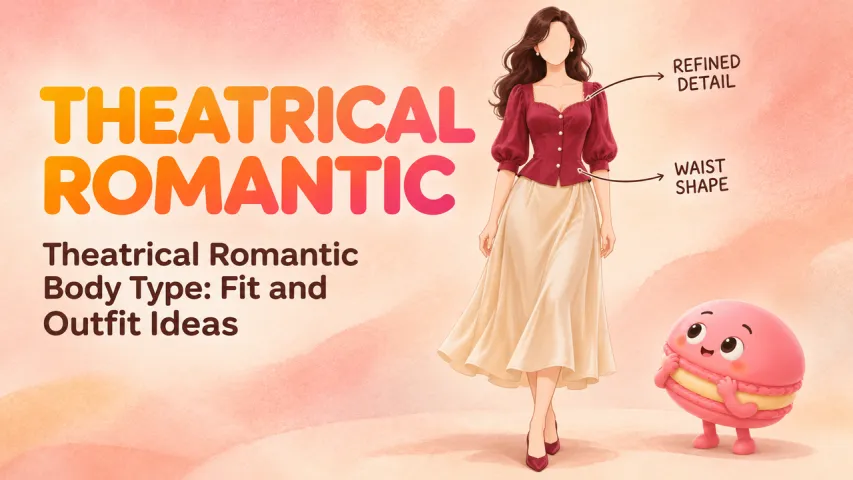
Start with a top and skirt that allow easy sitting and walking. For example, pair a softly falling blouse with a skirt that has room through the hips. Use the top's existing shaping or a comfortable tuck if you like that outline; extra shaping is optional.
Compare it with a similarly cut, firmer top while keeping the skirt, shoes, and hem placement unchanged. This is one way to explore Romantic body type clothing, not a prescribed uniform.

After standing, sitting, and reaching, write a short record. These hypothetical entries show how a preference and a practical problem can coexist:
A useful result can be a change to this particular outfit. You don't have to turn it into a verdict about every blouse you will ever wear.

How Can You Keep the Look Personal?
Keep the colors, coverage, details, and activities that matter to you. The softer outline can be one element of your outfit, alongside preferences you already have.
For different daily settings, adapt the version you liked:
- A desk-based day: Check the neckline and waistband while seated. Keep the top that stays comfortable through that position, even if another photographs better standing.
- An afternoon out: Carry your usual bag during the comparison. Notice whether its strap changes the blouse's folds or requires repeated adjustment.
- A meal with friends: Add one accessory you enjoy, then check the whole combination again. You can leave the blouse plain if the accessory already gives you enough detail.
These are adjustable Romantic body type outfit examples. You can enjoy drape while preferring dark colors, fewer accessories, or more coverage than a reference image shows.
What Can This Label Not Tell You About Sizing?
The label cannot tell you your size, required garment measurements, or how a particular brand will fit. “Romantic” and “hourglass” belong to different systems; neither replaces a product's size chart.
For measurement-based categories, see the body type calculator guide. Keep that task separate from exploring Kibbe.
When fabric pulls, check the garment's room, seam placement, lining, and intended fit. A larger size might help, or a different cut might address the problem more directly. Forcing a tight garment to create a curved outline makes the comparison less useful.
FAQ
Can Romantic outfits include trousers and sneakers?
Yes. You can bring the same fabric-and-outline comparison to a trouser outfit. Keep sneakers in the trial if they are your everyday shoes. Check how the trouser hem meets them and whether you enjoy the complete combination; heels are not an entry requirement for this experiment.
Does Romantic style have to look vintage or formal?
No. A contemporary knit and simple skirt can let you explore the same ideas. When using an older reference, separate the outline you like from its period details. You might borrow gentle gathering without copying the gloves, jewelry, or occasion.
How can I adapt a Romantic outfit for rain or cold weather?
Add the protective layers you need, then assess the outfit with those layers on. Check whether the coat closes comfortably over your clothes and whether hems remain practical in wet conditions. Warmth and weather protection are good reasons to change the outline.
Is a particular hairstyle or makeup look required?
No hairstyle or makeup change is necessary to try these clothing comparisons. Kibbe's broader approach includes personal presentation, but this experiment can stay with garments. Keeping your usual hair and makeup also lets you concentrate on the clothing change you are making.
Should a celebrity list decide whether I am Romantic?
No. Online lists may mix author-confirmed examples with community guesses. Even an accurately attributed example cannot establish your identity by resemblance. If a photograph interests you, borrow a specific clothing idea and see how you feel wearing your own version.
Conclusion
The blouse you keep may have fewer folds, a different neckline, or less detail than the picture that first interested you. Your trial has still done its job if you understand that choice more clearly.
Keep the combination you want to wear again, along with one useful note about why. The next experiment can wait until getting dressed gives you another question.
Recommended Reads







Aplicar para convertirse Los primeros amigos de Macaron
Leer y descubrir
Explorar Playbooks
Asistente personal con IA
Calculadoras gratuitas


