Medium Short Haircut Styles
Medium short haircut styles offer less length without a close crop. Compare where the ends sit around your jaw, ears and neck. Sort your shorter-cut options with Macaron's AI using your preferred coverage and everyday styling limits.
Compare Jaw-Length, Neck-Length and Swept Shapes

Compare Jaw-Length, Neck-Length and Swept Shapes
A compact bob emphasizes its outer edge. A textured crop shows more variation in short sections. A short flow haircut emphasizes swept direction and a softer nape. Point to the dry endpoint in each photograph. If shoulder contact or a ponytail is essential, the medium-length shortlist has more suitable length comparisons.
Choose the Ear and Neck Coverage
Try changing the tuck and part in your current hair. It will not reproduce a finished haircut, but it can help you describe how much exposure you enjoy.
Record the choices separately:
Key points:
- Ears: exposed, tucked or softly covered.
- Sides: close to the head or visibly rounded.
- Neckline: a defined edge or softer ends.
These details describe the outline you want without using face shape to eliminate a cut.
More About Medium Short Haircut Styles
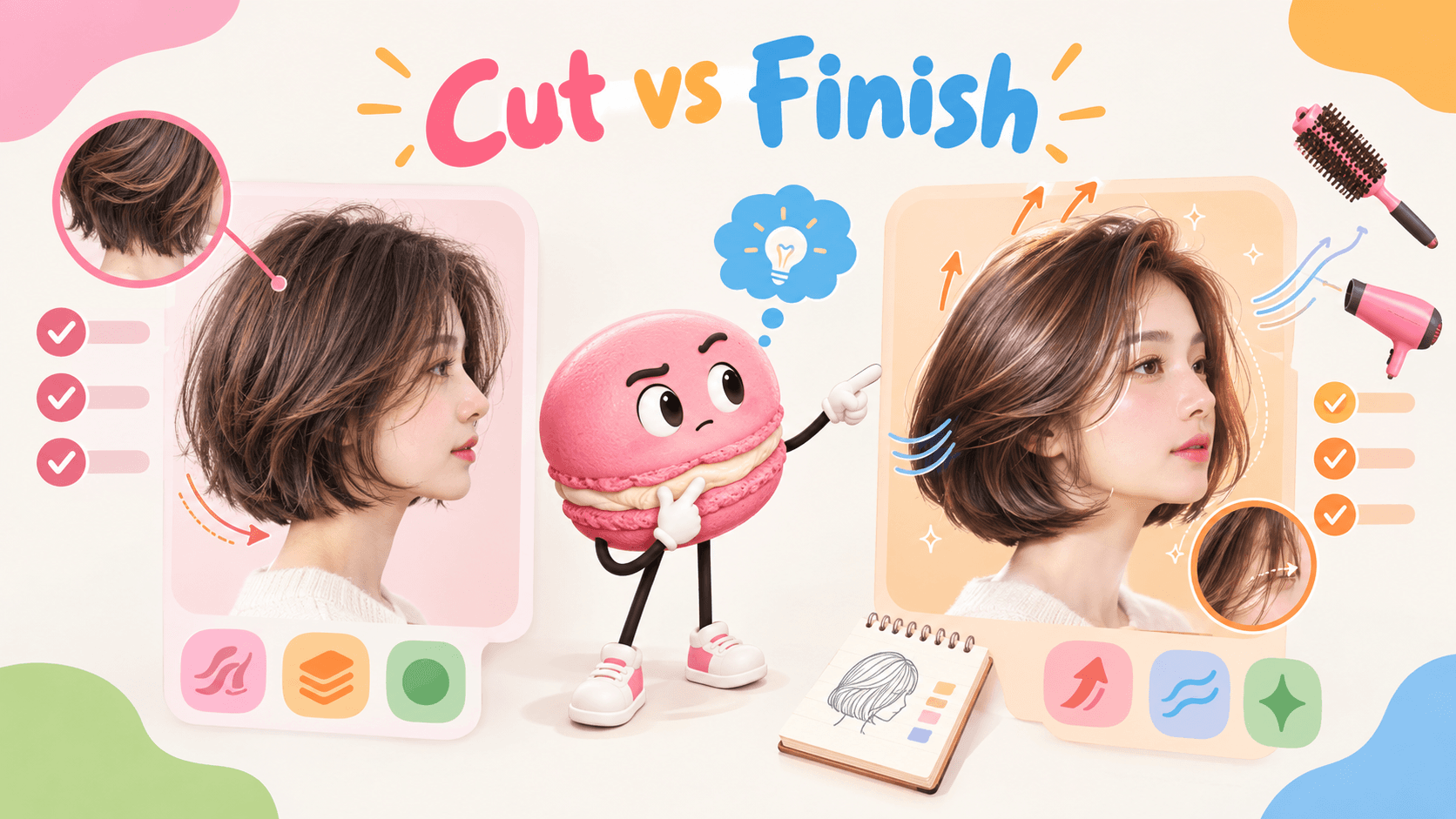
Separate the Cut From the Styled Finish
Show the stylist how your hair sits after your normal drying routine. Check whether the reference depends on a rounded brush finish, a lifted crown or carefully directed front pieces. For a compact perimeter with movement inside it, examine a short layered bob. Find out which parts of the image come from the cut and which from styling before choosing the daily effort.
Bring Two References With Different Jobs
Give the two pictures different jobs. One can show the overall shape; the other can show an ear section or neckline you want to change. Macaron can arrange your own observations into a short appointment note: "Keep the right side easy to tuck. I like the soft nape in the second photo and prefer a relaxed crown." Bring the note with the pictures so the stylist can discuss the cut as a whole.
Frequently Asked Questions
It depends on the perimeter and how you wear the sides. Include tucked and untucked views in your reference set.
Yes, movement is one option to discuss alongside a clearer outline. Ask where the shorter sections would sit when dry.
Compare ear coverage, neckline and the front section first. Those visible differences are more useful than deciding from the names alone.
Read & discover
Explore Playbooks
AI Personal Assistant
Free calculators


