What To Wear In Europe
Europe is too varied for one weather-based packing rule. Put your dates, cities, and activities on the same list before choosing clothes. A museum day, a coastal stop, and a mountain visit may need different layers even within one trip. Macaron's AI wardrobe assistant can organize outfit combinations across that route using the preferences you share.
Write the route beside the conditions
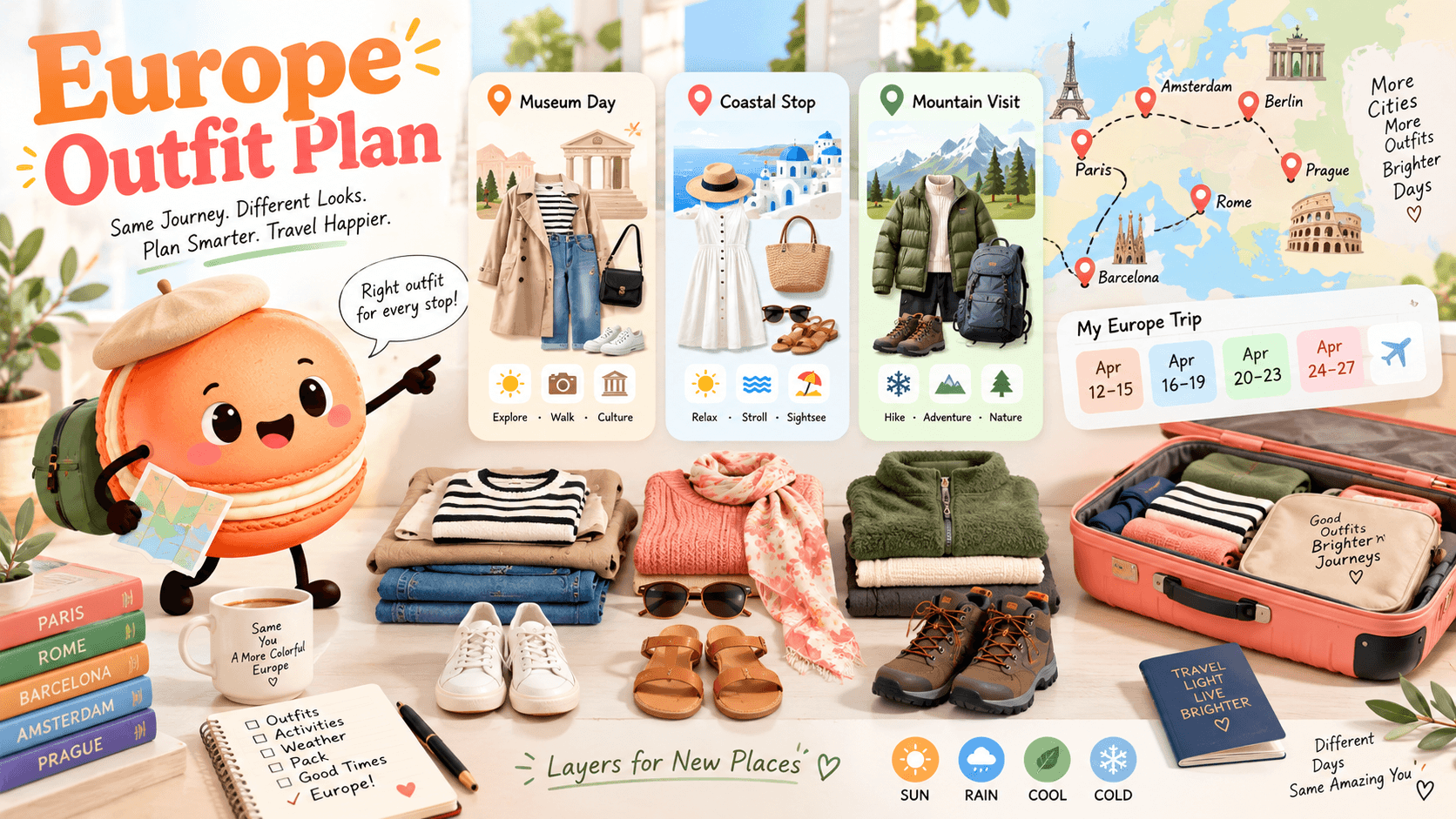
Write the route beside the conditions
Beside each stop, note the conditions you expect and how much walking you have planned. Use forecasts for your actual dates as departure approaches. Avoid deciding the whole wardrobe from a broad north-versus-south assumption. The route should explain why each layer is coming.
Choose clothes that travel between stops
A city-focused starting capsule might contain two bottoms, three tops, tested walking shoes, and a useful outer layer. Lay it out as combinations:
| Garment | Give it a job |
|---|---|
| First bottom | Pair with all three tops |
| Second bottom | Cover another activity or fit preference |
| Outer layer | Work over both bases |
| Walking shoes | Fit the planned walking outfits |
Change this example when your activities require something else.
Give each garment a named outfit
Name the outfit for each day before finalizing the bag. Macaron's personal AI can organize a wardrobe across your route using your clothes, preferred combinations, and laundry plans. For more detail on skirts, trousers, and venue coverage, use the women’s Europe travel outfit grid.
More About What To Wear In Europe

Add only the destination-specific changes
A mainly warm itinerary can start from a summer travel capsule; a cooler route may suit a fall travel capsule. Compare those ideas with the activities you booked. A special dinner may need a different top, while an outdoor day may justify another layer. Keep those changes tied to a specific stop.
Check the clothes that have no job yet
Review any garment that still has no named outfit. Test it with the shoes and layers already selected, or leave it out. Then check the laundry gaps: a combination that works on the floor may need a spare top to work across several days. This list covers clothes; keep travel documents and other essentials on their own checklist.
Frequently Asked Questions
No single dress rule covers a continent or every venue. Check the specific places on your itinerary, especially religious sites and formal events.
Start with the pair that covers most of your walking. Add another only for a different activity, weather condition, or venue requirement.
Often they can when your activities and conditions are similar. Change the plan when the route gives you a concrete reason.
Use the forecast and realistic activities to narrow the choices. A useful removable layer can replace several speculative outfits.
Read & discover
Explore Playbooks
AI Personal Assistant
Free calculators


