Kibbe Body Type: The 10 Image Identities Explained
Kibbe Body Type: The 10 Image Identities Explained

Dramatic, Natural, Classic, Gamine, Romantic: the names can sound like characters you are supposed to become. In David Kibbe's system, they organize ideas about personal style. You can learn what they mean without deciding which one describes you today.
Kibbe body type is the common search term for his Image Identity system, which currently includes ten identities. This guide explains their relationships, then offers two clothing observations you can try with your existing wardrobe. The useful outcome is a clearer description of what you enjoy wearing, even if your possible identity remains uncertain.
What Does Kibbe Body Type Mean?
Kibbe body type refers to an approach to image and style developed by David Kibbe. His ten-archetype Image Identity system considers an overall visual impression within a broader approach to personal presentation.
It is a style framework, with its own vocabulary and aesthetic ideas. It cannot establish a medical diagnosis, measure health, or tell you what your body ought to look like. Clothing size, weight, or a single photograph cannot automatically establish an identity.
Two recurring terms are yin and yang. In this context, they describe design qualities: softness and rounding, sharpness and elongation, and combinations between them. Treat these as vocabulary for understanding the system. They do not measure femininity, masculinity, confidence, or personality.
The current starting reference is David Kibbe's 2025 book, Power of Style. Its publisher describes updates to both Image Identity and color. Older online summaries may use different terminology, so check which version a guide discusses before combining its advice with another.

How Are the 10 Image Identities Organized?
The ten identities sit within five families: Dramatic, Natural, Classic, Gamine, and Romantic. Each family has two current identities. The short cues below explain their relationships; they leave out the detailed descriptions needed for personal exploration.
This simplified Kibbe body type chart summarizes the relationships described in the 2025 system. It does not reproduce the book's illustrations or provide a scoring method. Reading across the rows won't turn a shoulder measurement into an answer.

Dramatic and Natural Identities
Dramatic and Natural families both emphasize yang, with different qualities. Dramatic centers sharper elongation; Natural centers a blunter expression. Their Soft variations introduce yin within their respective families.
That distinction is easy to lose when an online guide reduces both families to “broad” or “tall.” A shared adjective cannot explain the complete identity. Neither family name requires a severe wardrobe, outdoorsy clothes, or a particular lifestyle.
Classic, Gamine, and Romantic Identities
Classic identities emphasize balance, Gamine identities combine contrasting qualities, and Romantic identities emphasize yin. Their variations describe different relationships within those families.
“Soft” does not mean a clothing size or body-fat level. “Flamboyant” does not require loud colors, and “Romantic” does not require floral dresses. If the name makes you dismiss an identity because it sounds unlike your personality, return to the visual concepts before judging the label.
How Can You Explore Your Personal Line?
You can begin by observing how complete outfits hang and come together, while learning Kibbe's own descriptions. His Personal Line terminology belongs to the system; the clothing comparisons below are practical editorial exercises, not his official assessment method.
If you are wondering how to find your Kibbe body type, allow some time between learning a term and applying it to yourself. One outfit can reveal a preference. It cannot settle every question about your identity.
Compare Whole Outfits Rather Than Isolated Features
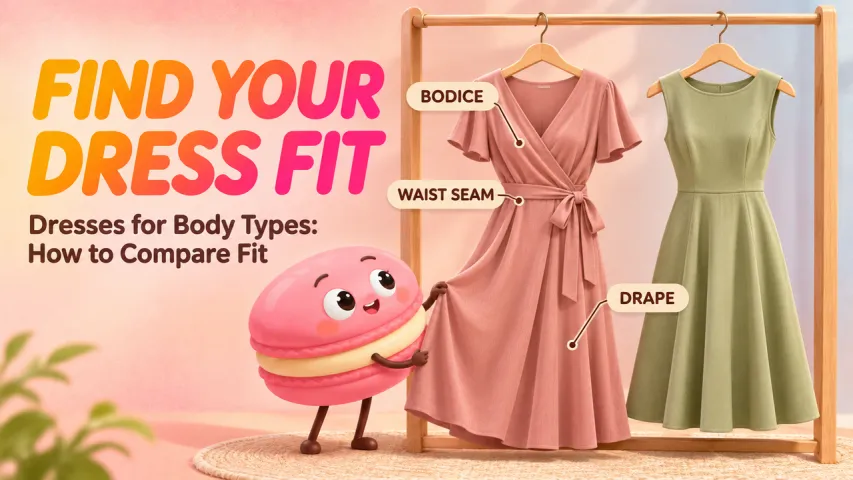
A sleeve, neckline, or trouser leg changes once you combine it with the rest of your clothes. Include shoes and any layer you would actually wear. The relationship between pieces gives you more to describe than inspecting one feature of your body.
Use this whole-outfit checklist:
- Outline: Where does the clothing create a continuous path, and where does it divide into sections?
- Fabric: Where does it fall freely, gather, stretch, or stand away?
- Details: How do the collar, cuffs, fastening, and accessories relate to the complete outfit?
- Movement: Can you sit, reach, and walk without repeated adjustment?
- Preference: Which relationships do you enjoy, regardless of the identity you expected?
Keep fit problems separate from style impressions. A tight lining can change how a skirt hangs; a shirt caught at the waistband can interrupt its drape. Those observations call for checking the garment before drawing conclusions about your personal line.
Record What Changes Across Two Outfit Trials
Start with two familiar outfits and make one manageable change within each. The records below are hypothetical examples of useful notes. They are not reported tests or evidence that either wearer belongs to a particular identity.
Trial 1: A familiar separates outfit. Use a shirt, trousers, and your usual shoes. Compare the shirt untucked with a comfortable tuck, keeping the other pieces unchanged. Skip the tuck if the shirt's construction or your comfort makes it impractical.

Notice where the top ends and how the waistband becomes more or less visible. After sitting and standing again, check whether your preferred version stays where you want it.
Trial 2: A familiar layered outfit. Use a simple dress, a button-front cardigan, and comfortable shoes. Compare the cardigan open with it fastened as designed. Its size should allow both versions without pulling.

Notice the complete outline and how the layer rests over the dress. You can prefer an open cardigan for its appearance and still find it inconvenient for the day you have planned.
Your own record can be shorter: outfit / one change / visual observation / movement / preference / next question. A note such as “I like the waist placement but keep adjusting the shirt” preserves both findings.
If you change the shoes, fabric, and layer together, record all three changes. You can choose the resulting outfit, but you cannot confidently credit one feature for the difference. There is no need to buy matching alternatives just to make the comparison tidier.

How Is Kibbe Different From a Body Shape Calculator?
Kibbe explores Image Identity through its own style concepts; a body shape calculator applies measurement-based categories such as pear or hourglass. The two systems answer different questions, and their labels have no automatic conversion.
Someone's calculator result cannot establish Soft Classic, Natural, or another Kibbe identity. Likewise, an Image Identity does not tell you which size to order from a retailer.
For the measurement-based approach, use the body type calculator guide. Keep its measurement task separate from your Image Identity exploration. Actual clothing size still depends on the seller's chart, garment construction, and fit.
Where Should You Go After a Possible Match?
Follow a possible match into one focused description, then return to your clothes with a specific question. You do not need to replace everything you own or collect agreement from strangers before continuing.
These pages take the clothing experiments further:
- Soft Classic and Soft Natural: explore balance, ease, fabric, and shaping in their respective contexts.
- Romantic and Theatrical Romantic: continue into those individual identities.
- Soft Dramatic and Soft Gamine: explore continuous lines or detail and contrast through separate clothing trials.
Dramatic, Flamboyant Natural, Dramatic Classic, and Flamboyant Gamine remain overview entries here. For their full descriptions, return to Kibbe's book. For broader wardrobe comparisons outside this system, see outfits for your body type.
FAQ
Are online Kibbe quizzes official?
An online quiz is not official simply because it uses Kibbe's name. Check who created it and whether Kibbe's own channels identify it as his resource. Treat an unattributed result as a suggestion to investigate. It cannot replace the author's descriptions or determine an identity from a few selected features.
Why do some websites list 13 types instead of 10?
Older versions include standalone Natural, Classic, and Gamine alongside their variations. The current ten-identity map omits those three standalone entries. The five family names remain useful, so seeing “Classic family” does not mean an eleventh identity has returned. Dramatic and Romantic still appear as standalone identities.
Where can I read David Kibbe's current type descriptions?
Start with David Kibbe's Power of Style, published in January 2025, and follow updates through his website. The publisher's description and public excerpt introduce the book; they do not contain every identity chapter. A library copy can let you read the full descriptions before deciding whether to buy it.
Is Kibbe Color the same as an Image Identity?
No. Kibbe Color addresses seasonal color, while Image Identity addresses another part of his style system. Knowing a color season does not establish an identity. You can explore an outfit's outline while keeping colors familiar, then consider color separately rather than changing everything at once.
Can men explore Kibbe's Image Identity system?
Yes. Kibbe's website explicitly mentions working with men as well as women. That does not make every online chart written for women a guide for men. Look for material that addresses your clothing context, and avoid transferring someone else's measurement rules or celebrity comparisons into a personal verdict.
Conclusion
You can leave an Image Identity undecided and still leave this exercise with something useful. Perhaps you found a waistband placement you enjoy, a comfortable layer, or clearer words for why you keep choosing an outfit.
Let that observation guide the next thing you try. The clothes you already reach for deserve a place in the conversation, including the ones a simplified chart would have told you to rule out.





Apply to become Macaron's first friends
Read & discover
Explore Playbooks
AI Personal Assistant
Free calculators


