Fitbod Review: Strength Workouts and Pricing
Fitbod can reduce workout-planning friction by using your equipment, goals and logged sessions to suggest strength work. Check whether its exercise choices fit your available equipment and abilities, and record the sets, reps and weights actually completed. A recovery estimate or suggested load is not a safety clearance.
How Does Fitbod Build Your Workouts?
Fitbod is a strength-training planner built around logged performance, goals, fitness experience, muscle-recovery estimates and available equipment. It makes sense when those inputs reflect the sessions you actually perform. Someone following a fixed coach-written program should assess whether generated sessions and substitutions fit that program rather than treating any algorithmic recommendation as an instruction.
Public website check. Fitbod's homepage mockup shows target-muscle coverage beside an exercise list; the workout algorithm was not run here. Official source.

Equipment, Recovery and Progress Tracking Reviewed
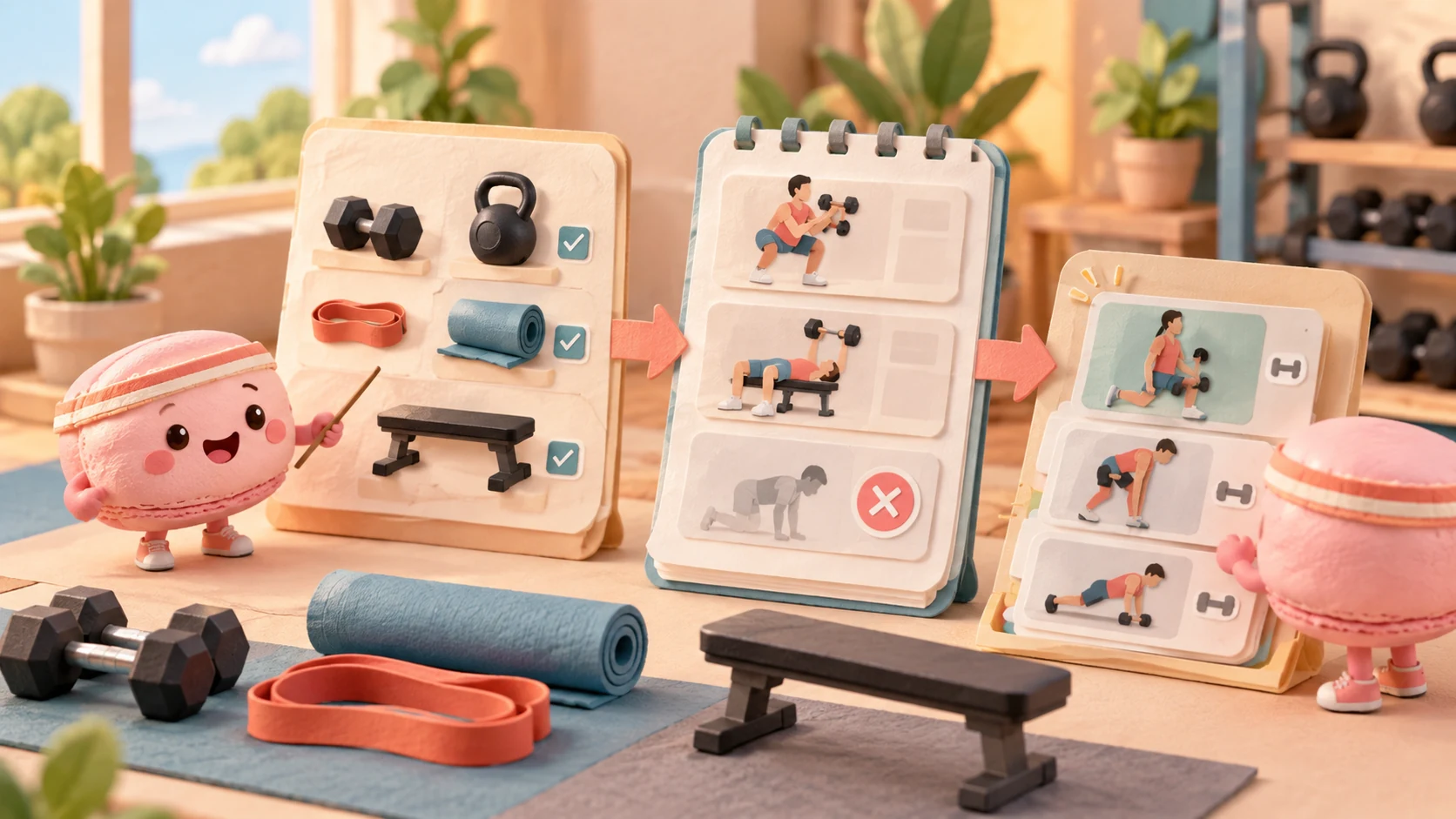
For a limited-equipment setup, Fitbod's algorithm help directs users to Gym Profile → Available Equipment. Check the selected gear before evaluating the proposed workout. The editing guide then gives a concrete correction route: in the Workout tab, add an exercise or swipe an exercise and choose Replace; filters can restrict replacements to the available equipment.
Record the sets, reps and weight actually completed. The Log tab also allows edits to past workouts, so an inaccurate session need not remain the input for later recommendations. These controls are a practical benefit when equipment or execution changes. They also create ongoing work: wrong equipment settings, exclusions or historical weights can affect later suggestions. This review did not test the quality of those suggestions.
Correct the input before judging the generated workout
Fitbod's exercise-selection help names five factors: exercise effectiveness for the stated goal, available equipment, estimated muscle recovery, requested variety and exercise feedback. It describes available equipment as a hard filter. A useful evaluation therefore starts with a specific gear list rather than a generic screenshot of a suggested session.
| If the proposal is wrong | Documented control | What to inspect afterward |
|---|---|---|
| The exercise needs gear you do not have | Correct My Plan's available equipment, then regenerate or replace it. | Whether the next option respects that equipment filter. |
| The movement is possible but unwanted | Use Recommend Less Often or replace it. | Whether later suggestions change without deleting all alternatives. |
| A past load or completed set is wrong | Edit the logged workout in Log. | Whether the recorded history now matches the session actually done. |
The provider says skips, replacements and manual additions can influence later suggestions. That is a reason to record what you changed before judging adaptation; it is not proof that a particular replacement is safe or effective. We did not run the app or compare generated workouts over time.
What the public equipment filter changed
We opened Fitbod's public Push Day workout catalog and selected its Bodyweight equipment filter. The general route displayed three example workouts and 15 ranked exercises, including a Barbell Bench Press in Workout 1. The Bodyweight route displayed three example workouts and 10 ranked exercises; its first workout began with Hand Release Push Up, Pike Push Up and Cobra Triceps Extension. This is a public catalog filter and a visible equipment difference, not a personalized plan produced from our logged history. The example sets, loads and rankings are not prescriptions for a reader. The app's actual substitution behavior, recovery estimate and logged-session adaptation still require an account-level test.
What the large app-record study says about consistency
A 2026 observational study analyzed 389,481 adult Fitbod users over 12 months of logged workouts. Among beginners, 10.1% met the study's definition of continuing at least one workout per week at month 12, with up to six missed weeks allowed; the median dropout time was 19 weeks. Early consistency during the first 28 days was associated with later adherence. This is a record-based association, not a randomized test of whether Fitbod caused people to exercise more or gain strength. One author worked for Fitbod, though the paper reports no external funding. A new user can set a modest weekly schedule and inspect whether the app's substitutions make that schedule practical, rather than assuming an adaptive plan guarantees a long-term habit.
Subscription Cost and Fit With an Existing Training Plan
The official subscription information lists US$15.99 monthly or US$95.99 billed annually for the stated web offer. Its trial documentation describes seven days, with conversion to a paid plan unless canceled before the deadline. Region, store and promotion can change the offer; manage cancellation through the purchase channel.
Recovery freshness is an algorithmic estimate, not an explanation for pain or proof that an exercise is appropriate. Review suggested movements and loads yourself and seek qualified guidance when needed. A manual log can preserve your own fields but does not reproduce Fitbod's workout generation or validate recovery estimates.
Fitbod is the more relevant candidate when you want generated sessions that adapt to logged history and selected equipment. Someone already following a fixed coach-written progression should first decide whether substitutions and generated sessions preserve that plan. At the stated US offer, six monthly payments are $95.94, just below the $95.99 annual payment; seven are $111.93. That billing comparison says nothing about exercise suitability or results.
Compare with Tonal:Tonal 2 requires installed resistance hardware and a separate membership commitment; Fitbod plans workouts around equipment you already have or enter. If space, installation or upfront hardware cost is the blocker, assess the app workflow first. If you need the physical resistance system, a planning app is not a substitute for the equipment.
Build a Custom Strength Log in Macaron

Open Macaron chat to adapt the request below. Review account access and plan conditions before creating a tool.
Compare sessions with consistent units
A strength log is useful when the same exercise, load unit and recording method can be compared. More logged volume is not automatically more strength: changed technique, exercise or range of motion changes the meaning of the comparison.
Sample request
"Build a weekly strength log with effort and available-equipment notes. Record date, exercise, sets, repetitions and load with kg or lb explicitly chosen. Calculate volume only within the same unit; do not prescribe an automatic load increase."
Suggested fields: Date; exercise; load and unit; sets; repetitions; perceived effort; equipment note.
Proposed checks with fictional data:
- Adapt the sample request in Macaron and try the fictional inputs below.
- For a fictional exercise, enter 3 sets of 8 repetitions at 20 kg. If you request a volume calculation, it should show 480 kg of repeated load, with the unit retained and no automatic weight increase.
- If pounds and kilograms are added or the result becomes a prescription, remove that comparison and review the fields with a qualified trainer.
Illustrative progress preview: record two sessions of the same exercise with the same load unit, then compare repetitions and effort.
The 480 kg figure is 3 × 8 × 20 kg for one recorded exercise. It is a bookkeeping measure of repeated load, not a strength score; comparing it across different exercises, techniques or load units would change the question.
Which workflow fits your needs?
| Need | Fitbod | Macaron example |
|---|---|---|
| Main purpose | Strength workout recommendations and performance tracking | A custom strength-session record |
| What you work with | Exercise selection informed by equipment and history | User-entered sets, load, effort and contextual notes |
A log cannot assess technique, injury or safe loading. Use a qualified professional for pain or uncertain exercise suitability.
Next step
Explore Macaron for a personal tool you can adapt to this task.
Scope and source notes
How this review was checked: Review prepared with AI for Macaron. This article evaluates cited sources and any limited public-site checks stated in the text; no core in-app task or proposed Macaron mini-app was tested.
Review scope: Fitbod’s vendor-described exercise planning and workout logging. The Macaron example is a manual strength log, not a validated training prescription.
Sources reviewed: last updated November 5, 2026. Product details may change; confirm current information with the provider.
| Source | Supported scope and limitation |
|---|---|
| FAQs – Fitbod | Provider FAQ on training setup, equipment and subscription; no workout completed |
| Editing Workouts in Fitbod | Documented workflow or access conditions; not results from this review’s own test |
| Fitbod's Algorithm - Q&A | Provider explanation of workout-generation inputs; recommendations were not accuracy-tested |
| Subscriptions – Fitbod's Help Center | Published plan, feature or billing conditions; account offer and region may differ |
| How Fitbod chooses exercises — Fitbod Help | Provider description of exercise-selection inputs, equipment filter and feedback controls; no generated workout tested |
| Push Day Workouts — Fitbod public workout catalog | Public catalog listed three example workouts and 15 ranked exercises; this is not the logged-in adaptive training plan |
| Push Day Workouts With Bodyweight — Fitbod public workout catalog | Public Bodyweight filter route listed three example workouts and 10 ranked exercises; no app workout or exercise was completed |
| Long-term exercise adherence in Fitbod app logs — Frontiers in Sports and Active Living | Observational 389,481-user app-log study, not randomized efficacy or strength-outcome evidence; one author was employed by Fitbod |
Corrections: contact@macaron.im.
FAQ
Can Fitbod account for limited home equipment?
Its documented workout planning includes equipment preferences, so the available setup is a useful first input. Check the specific workout it generates and replace an unsuitable exercise; this review did not complete an in-app equipment-and-substitution test.
Is a planned set the same as a completed set?
No. A prescription records what you intended to do, while a completed set records actual repetitions and load. Keep those separate so the next workout is not based on work you did not perform.
How can I change a Fitbod exercise when the equipment is unavailable?
First check the equipment selected in the Gym Profile. Use the documented Replace route for the exercise and review the replacement before training; edit the workout history if the recorded work differs from what you actually completed.
Can I compare kilograms directly with pounds?
No. Convert explicitly or keep a consistent unit before comparing loads across sessions. A number without its unit can make a later lift appear stronger or weaker for the wrong reason.
What would the Macaron strength log record beside Fitbod?
The proposed log records available equipment, an exercise, sets, repetitions and load for a dated session. It lets you inspect what you actually entered, while Fitbod's generated workout and exercise substitutions remain separate features that were not reproduced.
Can the Macaron example choose safe weights or sync Fitbod workouts?
No Fitbod connection or adaptive recommendation was tested. Try a fictional set of 3 by 8 at 20 kg and check that the entry stays attached to the correct exercise; do not treat the log as coaching or injury guidance.
Related
Read & discover
Explore Playbooks
AI Personal Assistant
Free calculators


