Fall Travel Capsule Wardrobe
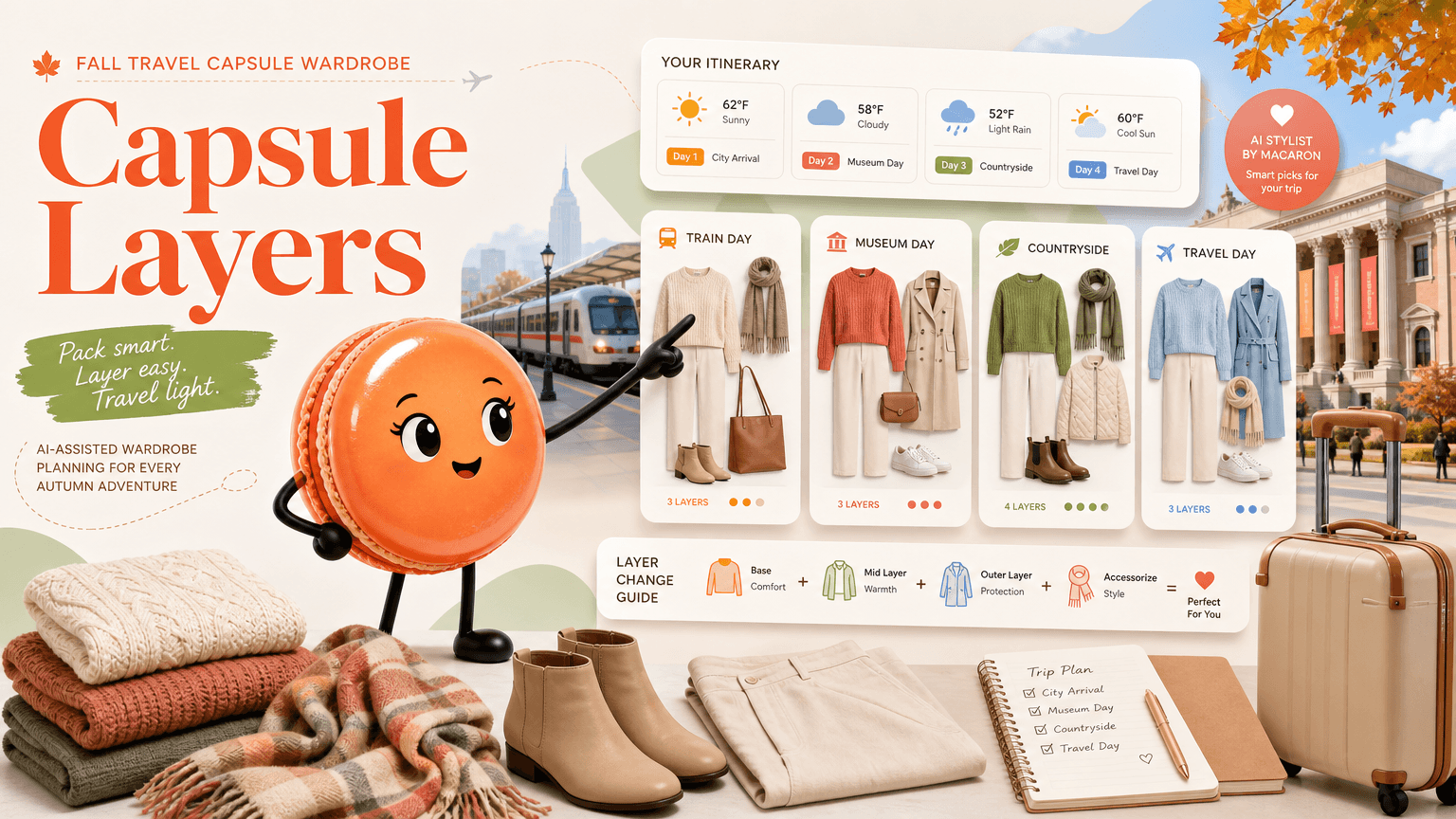
A fall travel capsule wardrobe needs layers that work on a cold platform and inside a warmer museum. Keep the trousers and shoes in use while the layers change. Macaron's AI can organize that clothing plan around the itinerary you provide.
Map the Coldest and Warmest Stops
Map the Coldest and Warmest Stops
Write the coolest outdoor stretch and warmest indoor stop beside each travel day. Heating, walking and long waits can matter as much as the forecast. For example: station wait, warm train, afternoon walk and indoor dinner. Map those layer changes in Macaron with your coat, shoe choices and laundry access.
Test One Coat With Both Outfits
Try your coat over the thickest combination, then over the dinner outfit. Check sleeve room, hem length and how you will carry it indoors. Choose rain protection for the forecast you have checked. The March Paris outfit examples offer another coat-and-layer comparison; adapt the clothing to your own travel conditions.
More About Fall Travel Capsule Wardrobe

A Station-to-Dinner Layer Plan
Test a thin base, overshirt and compact knit together. Bend your arms and sit down before packing them.
| Transition | Keep | Change |
|---|---|---|
| Station to train | Base, trousers, shoes | Remove coat and loosen the overshirt |
| Museum to evening walk | Same base and trousers | Add knit and coat |
| Walk to dinner | Trousers and comfortable shoes | Remove outerwear; reveal the neater top |
Carry removed layers where you can reach them again. For a long flight, use the seated travel checks as well.
Keep the Weather Backup Specific
After a route change, revise the affected day's outfit. A spare pair of shoes may have a clear job if wet footwear would disrupt the trip; an unrelated extra outfit may not. Color stays a separate choice. Use the Warm Autumn outfit inventory if you enjoy those colors, then select garment weights for the forecast.
Frequently Asked Questions
Try both against the actual forecast and your coat. Light layers give more combinations, but colder conditions may still require substantial insulation.
Test one coat with both your daytime and evening outfits. Bring another only when a specific activity or condition gives it a separate job.
No. Fall here describes travel conditions. Wear the colors you prefer and choose garments for the expected weather.
Recheck outerwear, footwear and the coldest part of the itinerary first. Then adjust the affected daily outfits instead of adding unrelated spare clothes.
Read & discover
Explore Playbooks
AI Personal Assistant
Free calculators


