Hair Cuts With Layers And Bangs
Layers and bangs look different across haircut lengths. A cropped outline, shoulder-length shape and long cut need different reference sets. Macaron's personal AI can organize your choices around the length you intend to keep.
Choose the Length Family First
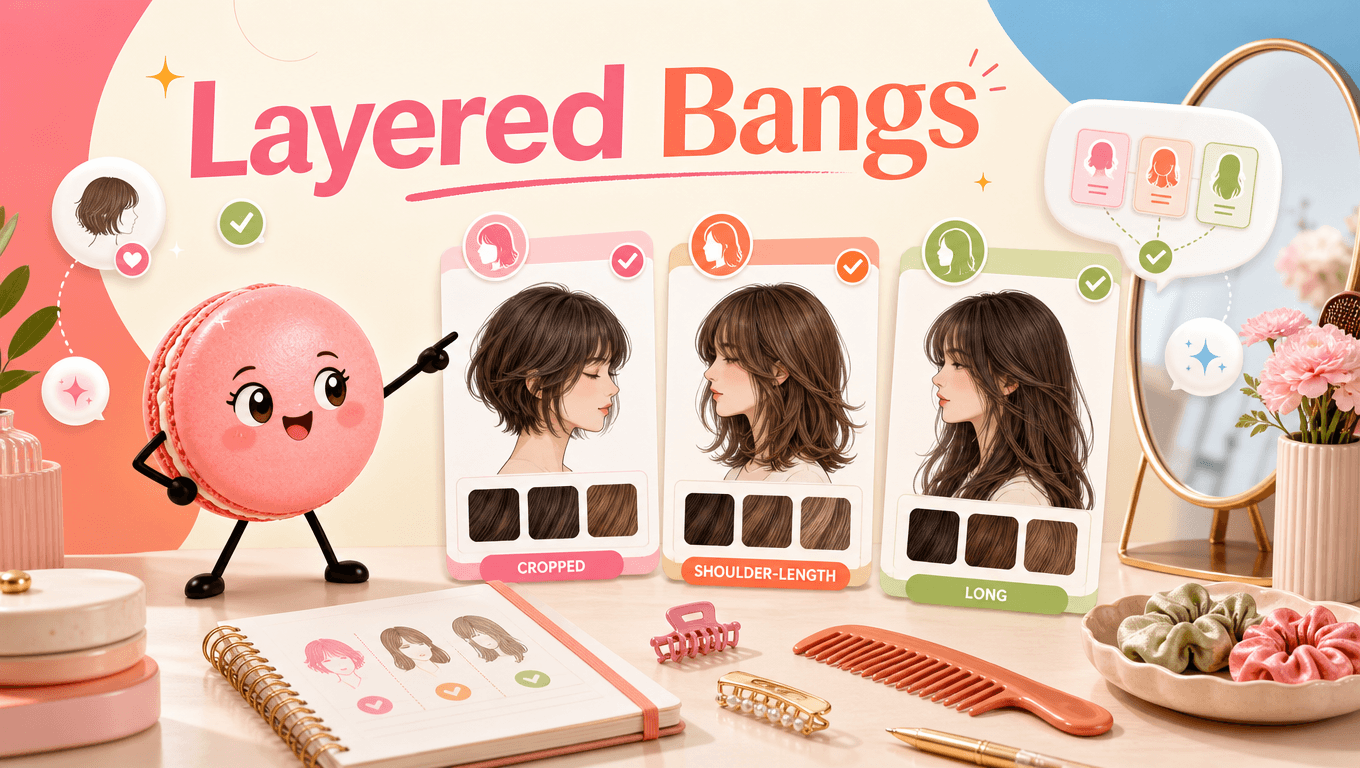
Choose the Length Family First
| Length family | Main decision |
|---|---|
| Short | Neckline, ear coverage and fringe balance |
| Shoulder | Front connection and tie-back room |
| Long | Movement while retaining the longest ends |
Compare a short layered bob with shoulder-length layers and a fringe if those are your two realistic options. Keep the reference endpoints clear; they describe different cuts.
Show What You Mean by Texture
Describe density and strand feel separately when you can. Fine strands and the amount of hair are different details. Tell the stylist where you notice weight, sparse-looking ends or sections that resist your preferred direction. Words such as textured and choppy need a visual example. Point to separated ends, a shorter crown or the fringe edge you mean. Pair a liked image with one detail you would leave out.
More About Hair Cuts With Layers And Bangs
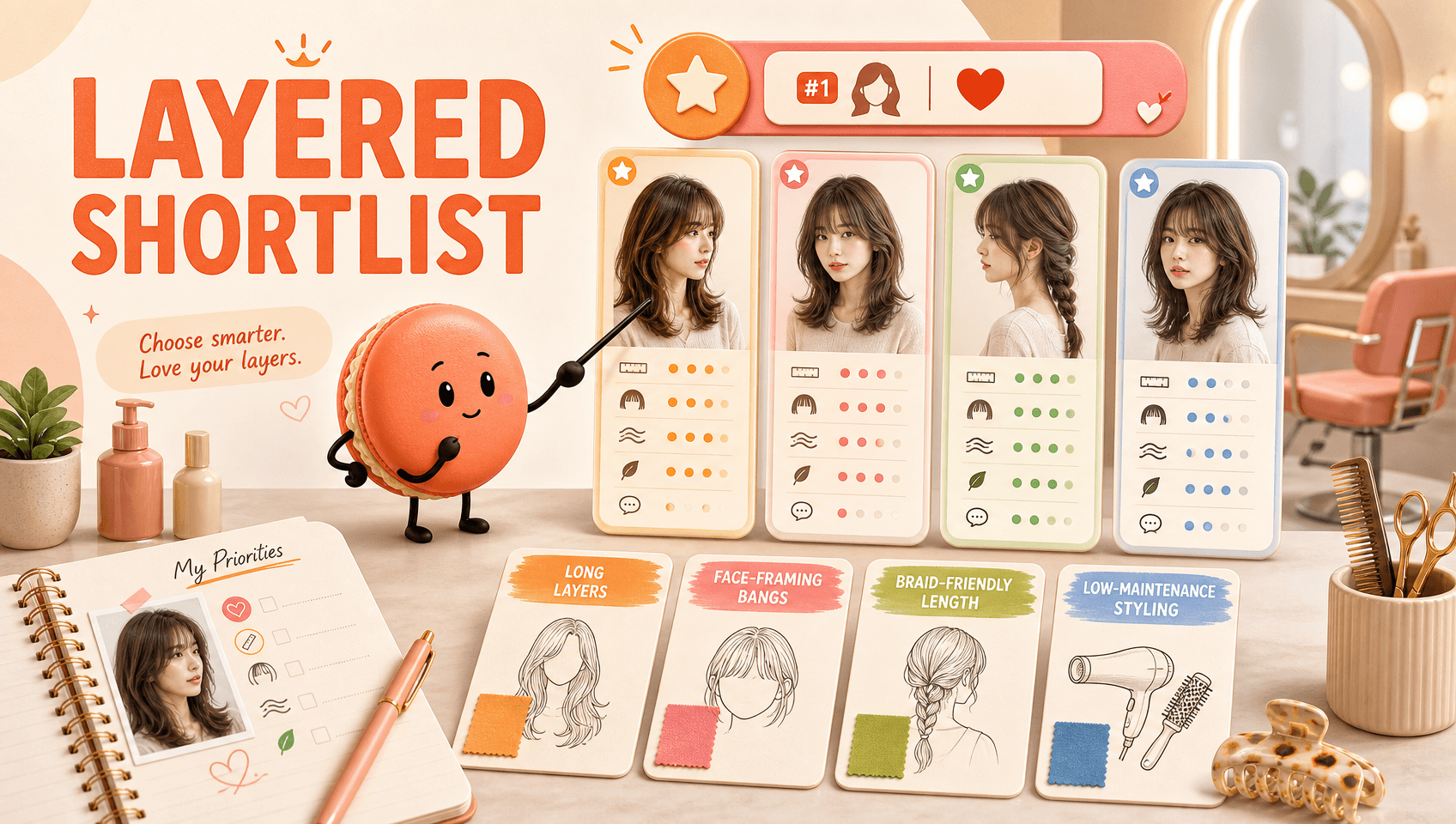
Build a Shortlist Around One Priority
Build a layered-haircut comparison with Macaron's AI with one priority at the top. For example: "Keep enough length for braids. I want movement near the front but no short crown." That request separates length, fringe and maintenance choices. Use the long-hair fringe guide for round faces if braids or long tie-back styles are the requirement you will not change. Bring the shortlist to the stylist and explain why each feature is there. If two references conflict, keep the practical requirement and discuss which optional detail can change. A clear priority makes the appointment more useful than a folder of unrelated cuts.
Frequently Asked Questions
Yes, you can ask to compare subtle transitions with stronger separation. Show which version feels closest to your usual style.
Start with the requirement you are least willing to change. If keeping a braid is essential, make the length constraint clear before choosing the fringe.
Name each feature and why you like it. Ask the stylist whether those features can work together in one cut.
Read & discover
Explore Playbooks
AI Personal Assistant
Free calculators


