Wavy Lob Haircut
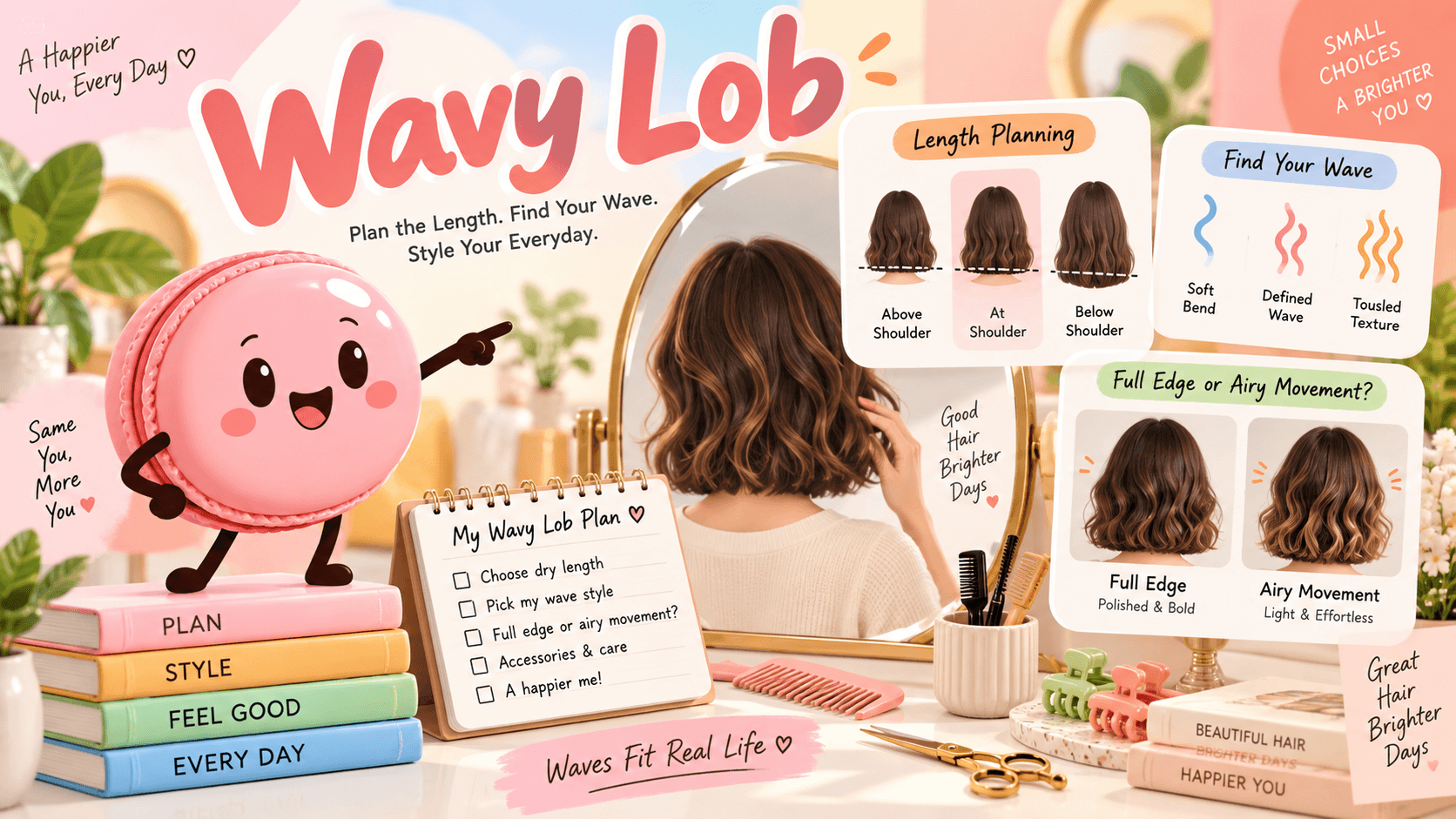
A wavy lob haircut combines a long-bob outline with visible bends. Choose the finished length while your hair is dry, then decide whether you prefer a full edge or lighter movement.
Mark the Finished Length
Mark the Finished Length
A lob is a long bob, but it has no single exact length. Mark where the ends should sit on you: above the shoulder, touching it or slightly below. Include any length you need for tying back. A front photo can hide extra length toward the face, so bring a side view too. Keep those lob references in Macaron with a note about what you like in each. Your own preferences give its personal AI context for later planning.
Choose the Edge and Wave Placement
Pick the feature you want to notice first: a defined edge, waves near the cheeks or movement through the lower lengths. Compare those details on similar-length references. The shoulder-length wave comparison includes lightly layered and shag options if the long-bob perimeter feels too defined. Keep that separate from deciding how tightly to style the waves.
More About Wavy Lob Haircut

Try Your Everyday Styling Routine
Try one change at a time:
Key points:
- Use your normal drying method as the baseline.
- Set the part and the front bends where you want them.
- Let the rest settle before adjusting the ends.
- Photograph the finish after an ordinary day.
For heated styling, follow the AAD's low- or medium-setting guidance. A softer everyday finish can be the version you prefer.
Keep a Separate Occasion Version
An occasion look may involve more directed bends than a workday routine. Give Macaron the products, tools and time you already use when requesting those two versions. After trying them, keep the useful difference: "I like the front bend but prefer the ends less curled." The next plan can build on that detail without changing the whole haircut.
Frequently Asked Questions
Bring examples of both a stronger-wave and a flatter day. Ask which outline you would enjoy in either state.
That is a choice to compare with your stylist. Point out whether you want a clear perimeter or more separation at the bottom.
It depends on the chosen length and front pieces. Test the tie-back requirement during the consultation instead of relying on the word lob.
Name their placement or finish, such as a bend that turns out at the shoulder. A specific observation is easier to discuss than saying the whole cut looks wrong.
Read & discover
Explore Playbooks
AI Personal Assistant
Free calculators


