Women's Travel Clothes For Europe
Start with combinations you can wear more than once: navy trousers, a striped tee, a cream blouse, a midi skirt, and a cardigan. Change this example to fit your preferences, then check the activities and laundry gaps on your route.
Make an outfit grid before a packing list

Make an outfit grid before a packing list
| Occasion | Bottom | Top and layer |
|---|---|---|
| Walking day | Navy trousers | Striped tee, cardigan if needed |
| Dinner | Navy trousers | Cream blouse |
| Another day out | Midi skirt | Striped tee and the same cardigan |
Bring this grid and your route to Macaron's personal AI to organize clothes you can rewear across Europe. The route-based Europe wardrobe guide helps separate shared pieces from destination-specific additions.
Check fit and laundry needs
Wear the combinations before packing. Sit in the skirt and trousers, check the blouse at the buttons, and walk in the shoes. Read care labels and think about drying time if you plan to wash clothes during the trip. Six city days without laundry need a different repeat plan from a stay with washing facilities.
Plan coverage for the venues you booked
Read the rules for the places you have booked. For example, the Vatican Museums visitor guidance excludes sleeveless or low-cut garments, miniskirts, and shorts above the knee. That requirement belongs to this venue, not to every place in Europe. A sleeved blouse and midi skirt can be a starting combination to check against the visit's rules. Accessories can change later for dinner.
More About Women's Travel Clothes For Europe
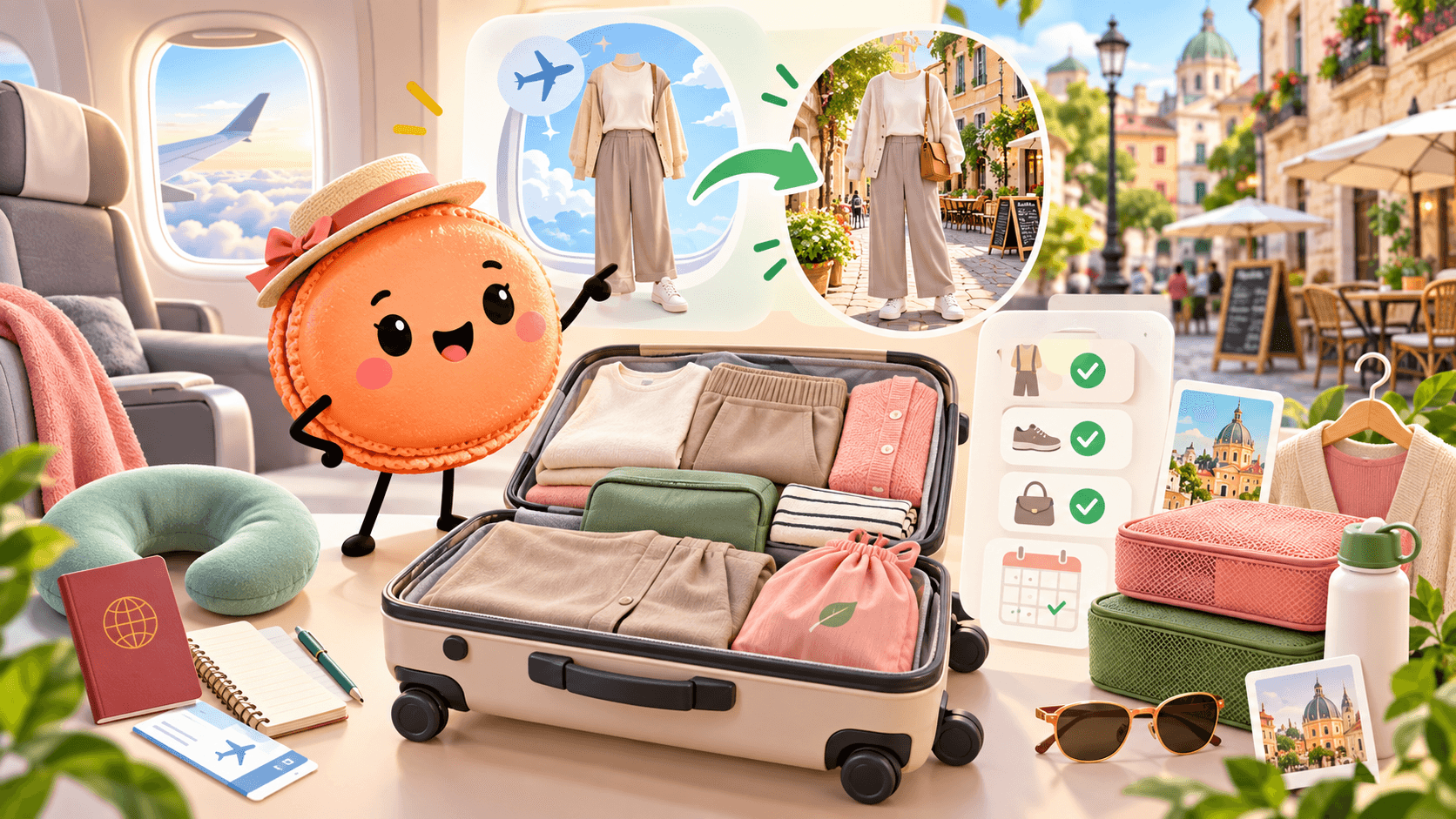
Use the flight clothes again
Choose an airport outfit you can wear after landing from the same clothes. Reusing the trousers or a top keeps the flight outfit connected to the suitcase. Keep enough clean pieces available for the days after arrival.
Revise the list when a piece has no partner
Lay any unpaired garment beside the grid. If it needs different shoes and another top, decide whether the occasion justifies those additions. Keep the clothes you enjoy wearing, but give each one a place in the route before closing the bag.
Frequently Asked Questions
No, trousers and tops can cover many itineraries. Choose dresses only if you enjoy wearing them or they suit a particular plan.
Try each with your tops and walking shoes. Choose the one that gives you a useful combination you do not already have.
Do not assume it will meet the rules everywhere. Read the specific venue guidance and choose clothes that clearly comply.
Count wearable outfits between washing opportunities. Allow time for clothes to dry, and avoid relying on one item being ready immediately.
Read & discover
Explore Playbooks
AI Personal Assistant
Free calculators


