Shoulder-Length Shaggy Bob Haircuts
A shoulder-length shaggy bob haircut combines a bob perimeter with visible layered texture. Decide how much movement you want and how much styling you will actually do before choosing a reference. The shaggy part of a bob comes from layer placement, not just a messy finish. Macaron can help you explain the outline you want.
What Makes a Bob Read as Shaggy
A shaggy outline usually emphasizes separated layers and a less uniform surface than a blunt bob. The amount of texture can vary. Compare two references with similar hair texture to yours rather than treating the name as one fixed cutting pattern. For a simpler comparison, use medium haircut options.
Where the Layers Should Actually Fall
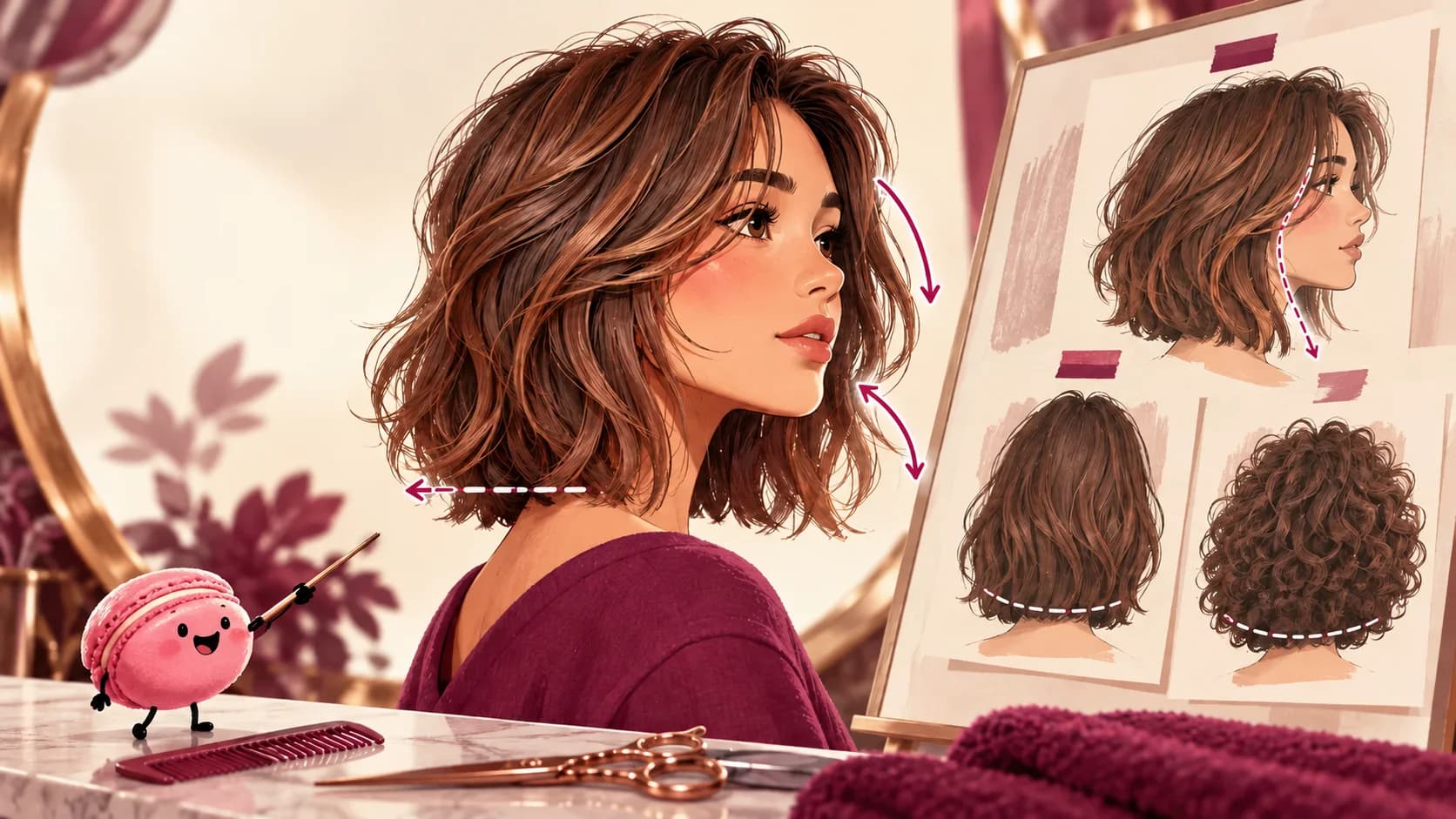
Show where you want the perimeter to rest and which face-framing pieces you want to keep longer. Ask how shorter layers will sit with your texture and density. Do not choose layer positions from a diagram without an in-person assessment.
If your curls change the dry outline, review a curly lob consultation.
Place the layers before choosing a reference
Describe your dry perimeter, where you want visible movement, and how much texture you will style. Ask Macaron to organize those choices for your stylist.- "Compare a shoulder-length blunt bob and shaggy bob for my wavy hair. I can spend ten minutes styling."
- "Make consultation notes for a shaggy bob with longer face-framing pieces and a shoulder-level perimeter."
- "Prepare questions about growing out short layers without taking unnecessary length off the perimeter."
Styling for Your Preferred Texture

Try the proposed routine with the stylist: a natural dry, a light blow-dry, or a small amount of a product used as directed. Ask which result depends on styling rather than the cut alone. Effortless-looking texture can still take work.
If you want a fringe too, compare the upkeep in lower-effort medium cuts with bangs.
What should you prepare for Styling for Your Preferred Texture?
- Choose references showing both the perimeter and texture.
- Describe your normal routine and preferred movement to Macaron.
- Request a cut comparison and upkeep questions.
- Confirm layer placement and a realistic demonstration with the stylist.
Managing the Outline as It Grows
Keep a photo of the agreed outline and note which areas lose the shape as the hair grows. A follow-up can adjust the perimeter or face frame selectively. Agree the timing based on observed growth and your tolerance, not a mandatory universal schedule.
Place the layers with purpose
Ask the stylist to point out the intended shortest layer, the shoulder-length perimeter, and the face-framing pieces on a reference image. A shaggy bob can become difficult to tie back if the front layers are too short for your routine. Show how your hair falls when air-dried and say whether you prefer piecey texture or a softer outline. This turns 'shaggy' from a vague label into a cut plan.
If the cut grows unevenly
Check which part has changed: the outer length, face frame, or crown layers. A trim of the perimeter may restore balance without shortening every layer. Use your normal styling method when assessing it; a heavily textured salon finish can conceal how the cut behaves on an ordinary day. Bring photos to the next appointment and ask for only the adjustment that solves the specific problem.
FAQ
Is a shaggy bob automatically low-maintenance?
Can straight hair have a shaggy outline?
Must the shortest layer be at cheek level?
What if I want less daily styling?
Sources and editorial note
By Macaron. Content owner: Macaron, operated by MINDAI PTE. LTD.. Contact: contact@macaron.im. Last reviewed: October 16, 2026.
This guide was prepared from an approved editorial brief and checked for heading structure, link integrity, image relevance, and source-to-claim fit. The illustrations on this page were created for this guide and visually reviewed for topic fit. They are illustrative, not evidence of a try-on, salon result, product test, or real-world outcome.
- American Academy of Dermatology: Tips for healthy hair — The American Academy of Dermatology reference supports only the general hair-care boundary used here. Haircut shape, fringe placement, and face-framing preferences remain editorial choices to confirm with a qualified stylist.
Macaron can organize consultation options; it does not diagnose hair or scalp conditions, replace a professional consultation, or guarantee a haircut result.
Related
Plan Your Next Haircut With Macaron
Share the bob perimeter and the layers you want to see. Ask Macaron for a salon brief you can check against reference photos.
Read & discover
Explore Playbooks
AI Personal Assistant
Free calculators


