AI Meal Plan Generator
Most meal plan generators ask for a calorie target and hand back a fixed weekly menu. That works until real life shows up: you skip breakfast, get invited out, run out of groceries, or realize the plan ignores what you actually like to eat. Macaron is a personal AI agent that can help you build a meal planning mini-app around your calories, tastes, schedule, and food preferences. Tell it what you want in one sentence, then refine the plan instead of starting over with another generic template.
Why '1,500-Calorie Meal Plan' Templates Don't Fit Real Appetites
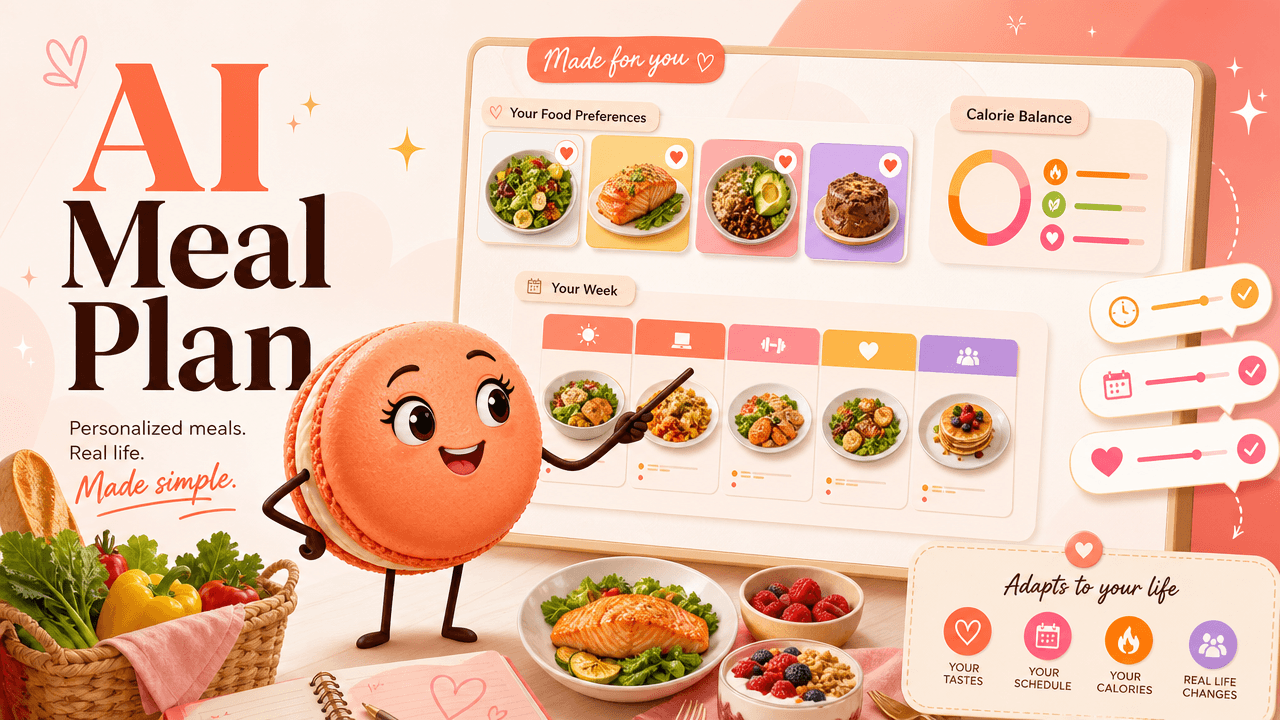
Why '1,500-Calorie Meal Plan' Templates Don't Fit Real Appetites
A fixed 1,500-calorie template assumes the hardest part is math. For many people, the harder part is following the plan for more than two days. You may need breakfast that takes five minutes, lunches that survive a commute, dinners that use what you already bought, and backup meals for the days you don't cook. A static template doesn't remember that you dislike cottage cheese, prefer warm lunches, or need grocery overlap so food doesn't go to waste. Macaron approaches meal planning as a personal workflow instead of a printable chart. With Deep Memory, it can remember preferences and context across conversations, so you don't have to explain your diet, routines, and dislikes every time you adjust the plan. Key comparisons:
- Personal tastes: templates are usually fixed after download, while Macaron can use stated tastes and remembered preferences.
- Schedule changes: templates leave edits to you, while Macaron can help adjust the week when plans change.
- Grocery lists: templates may include a basic list, while Macaron can make groceries part of the planning workflow.
- Meal swaps: templates offer generic substitutions, while Macaron can suggest swaps based on calories, ingredients, and preferences.
Tell Macaron Your Calories and Tastes — Get a Meal Plan You'll Eat
Start with one clear request: Create a 1,800-calorie meal planner for weekdays. I prefer high-protein breakfasts, quick lunches, no shellfish, and dinners that can become leftovers. Macaron can turn that request into a personalized mini-app. The goal is not to produce a perfect menu on the first pass. The goal is to create a meal planning tool that you can refine: add foods you like, remove meals you never cook, change the calorie target, or ask for lower-prep days. Useful first inputs include your daily calorie target, foods you avoid, cooking time, number of planned days, grocery budget, and whether you want leftovers or fresh meals each day.
More About AI Meal Plan Generator
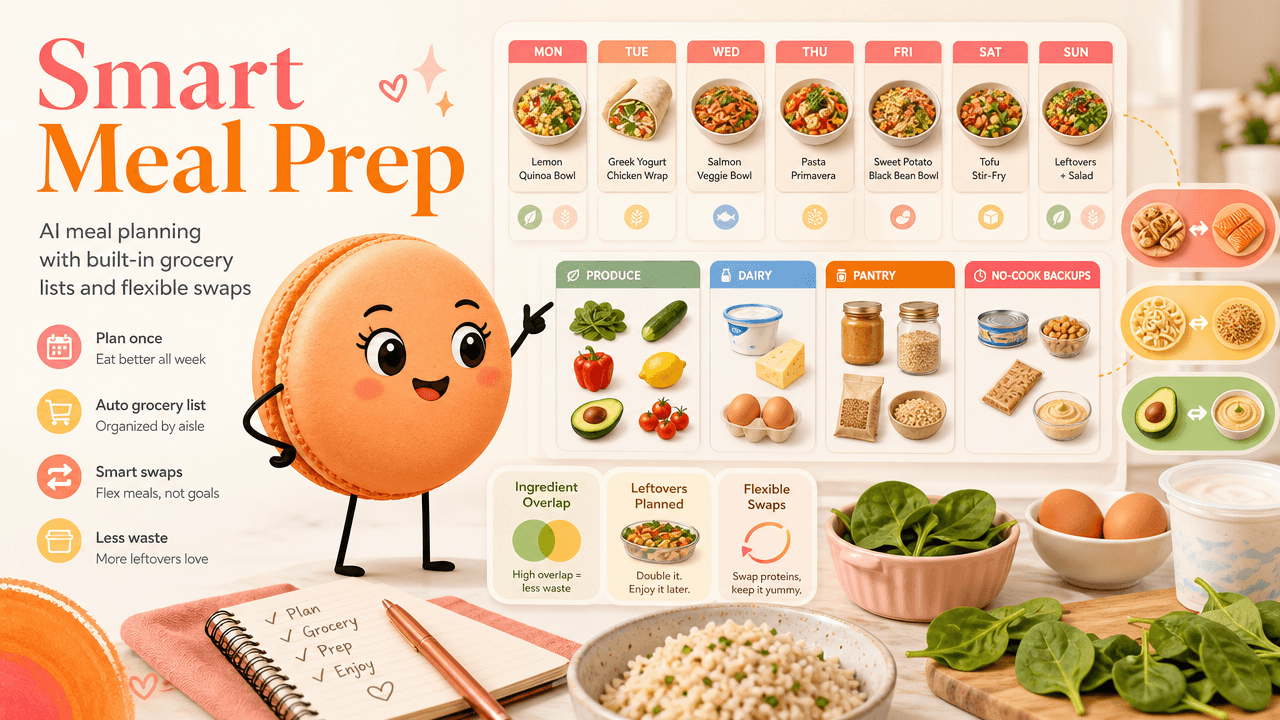
Built-In Grocery List and Swaps for the Days You Don't Cook
A meal plan is only useful if it helps with the next action: know what to buy, know what to cook, and know what to do when the week changes. Macaron can help you design the mini-app around practical pieces: grocery lists by section, ingredient overlap, no-cook backups, taste-based swaps, and leftover logic. If you already have spinach, eggs, Greek yogurt, and rice at home, ask Macaron to start from those ingredients before adding anything new.
Adjusting Your Meal Plan as Your Goal or Schedule Changes
Meal planning changes when your week changes. A good AI meal plan generator can make edits feel normal, not like a failure. When you create or modify a meal planning project, focused change requests usually work best. Ask for concrete edits: lower weekday dinners by 150 calories, replace seafood with tofu, add two restaurant days, or keep the same calories while making the grocery list cheaper. Example workflow: Imagine someone wants a weekday plan that fits a busy schedule. They ask Macaron for a 1,700-calorie plan with high-protein breakfasts, vegetarian lunches, and dinners that use leftovers. When Thursday is too cooking-heavy, they ask for one change: make Thursday a no-cook dinner and move the ingredients into Friday lunch. The result is a meal planning workflow that fits the week they are actually living.
Frequently Asked Questions
An AI meal plan generator helps create meal ideas, schedules, and grocery lists from inputs such as calories, taste preferences, dietary limits, and cooking time. With Macaron, the output can become a personal mini-app that you continue adjusting instead of a one-time template.
Yes. You can describe your calorie target, foods you like, foods you avoid, schedule, and cooking style in plain language. Macaron can use that request to build a meal planning project and refine it with your feedback.
You can ask Macaron to include grocery lists, ingredient overlap, leftovers, and swap rules in the project. The clearer your request is, the easier it is for Macaron to build a meal planner that matches how you shop and cook.
No. Macaron can help organize meal ideas and personal planning workflows, but it should not replace advice from a qualified clinician or registered dietitian, especially for medical conditions, eating disorders, pregnancy, children, allergies, or prescribed diets.
Read & discover
Explore Playbooks
AI Personal Assistant
Free calculators


