Personalized Gifts for Her
Generic 'for her' lists flatten very different people into one shopping category. A partner, sister, friend, mom, coworker, or daughter may need completely different signals. Macaron works best here as a personal gift-planning project. Describe the person, the relationship, the occasion, budget, timing, and any details that would make the gift feel specific rather than generic.
What Makes a Gift Feel Personal (and Why 'For Her' Lists Miss It)
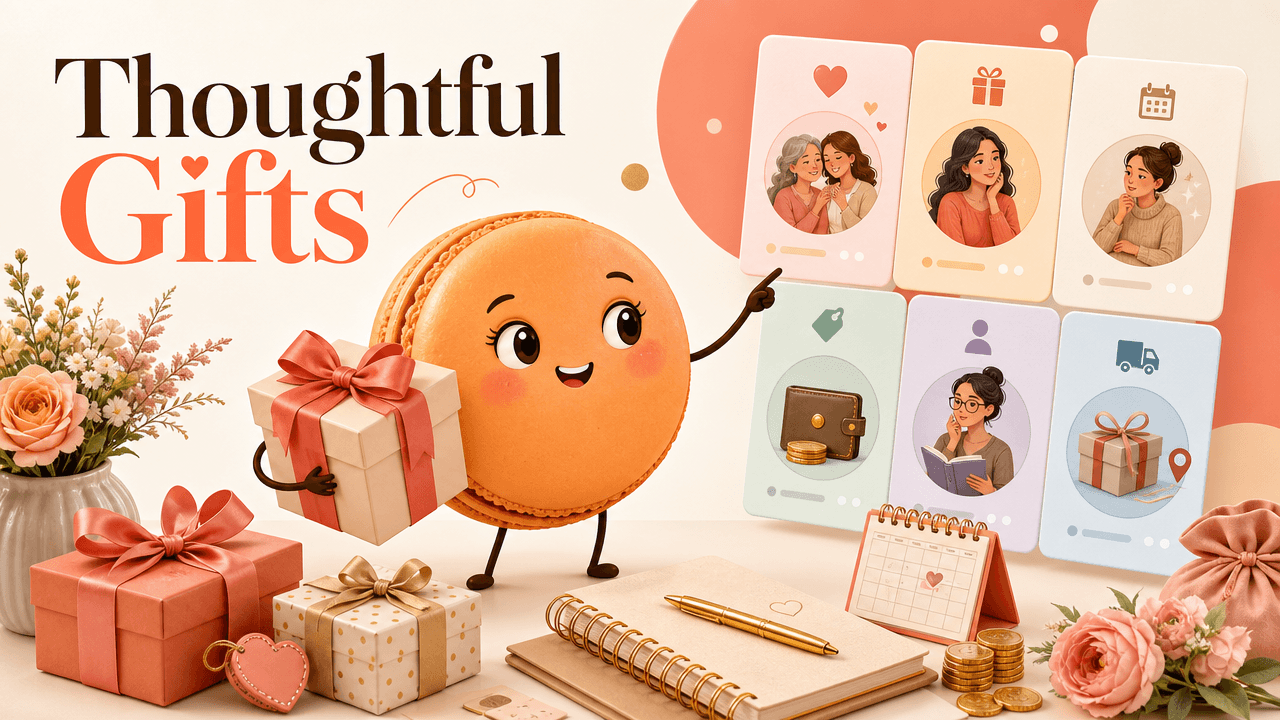
What Makes a Gift Feel Personal (and Why 'For Her' Lists Miss It)
The weakness of most gift lists is that they start with gender and category instead of context. A gift feels personal when it reflects a real detail: a hobby, a shared memory, a constraint, a practical need, or a small preference the person would not expect you to remember.
Tell Macaron Who She Is — Get Personalized Ideas, Not Generic Picks
Start with one plain-language request: Find personalized gifts for her: she loves ceramics and quiet weekends, budget $80, birthday, practical but still thoughtful. Macaron can turn that context into a shortlist, then help you compare the ideas by meaning, practicality, timing, and budget. The final purchase stays with you.
More About Personalized Gifts for Her
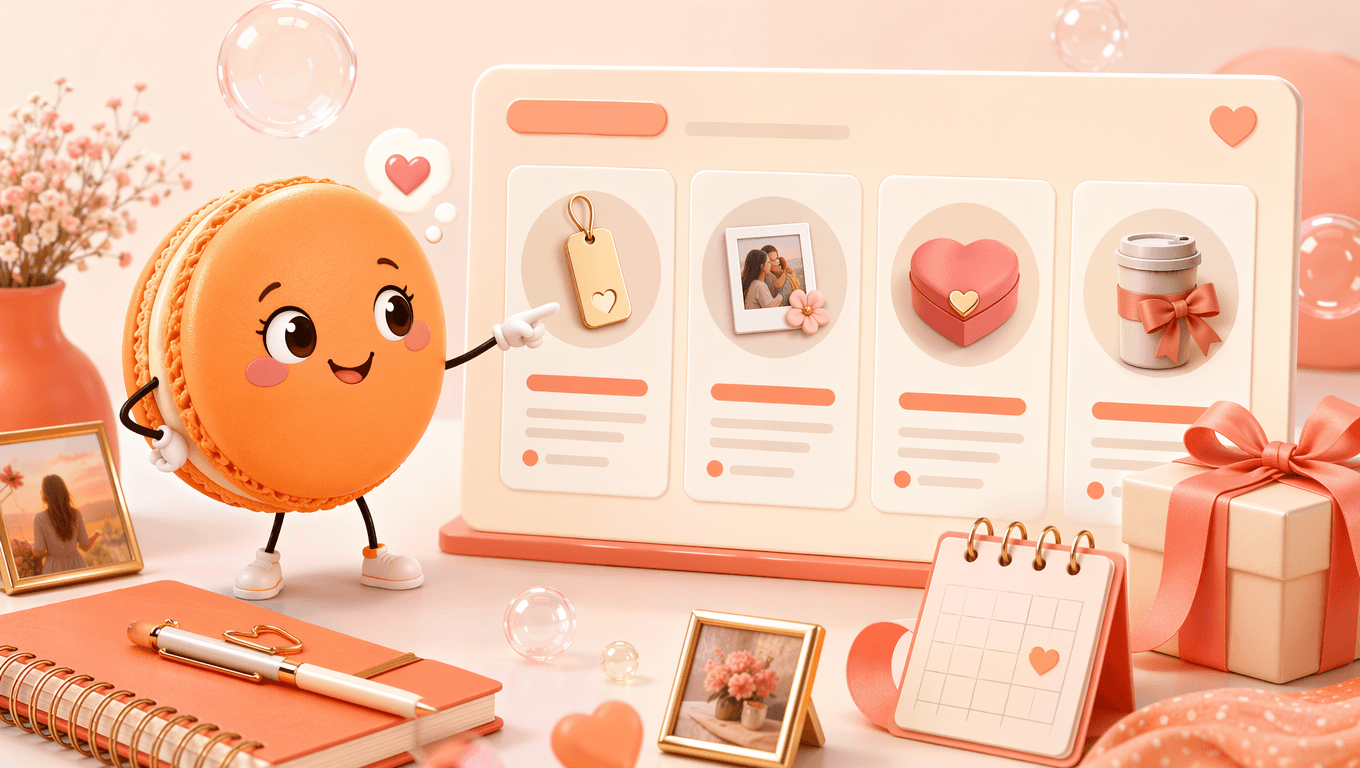
Personalized vs Custom vs Sentimental: Choosing the Right Kind
Not every personalized gift needs engraving. Sometimes custom is right, sometimes sentimental is better, and sometimes the best answer is a practical item chosen with unusually good context. Key comparisons:
- Custom gifts work well when names, dates, or photos matter. Allow extra production time.
- Sentimental gifts work well when the relationship has a story. Keep the setting and privacy level in mind.
- Practical gifts work well when the person has a real need. Add one personal detail so it feels specific.
- Experience gifts work well when time together matters most. Check schedule and comfort level first.
Gifts for Her by Occasion, Budget, and the Relationship You Have
Occasion and relationship change the right level of intimacy. A romantic anniversary gift can be personal in a way a coworker gift should not be. Example workflow: A user describes her partner as a plant lover who dislikes clutter. Macaron helps sort ideas into practical, sentimental, and experience-based options, then removes anything that needs too much space.
Frequently Asked Questions
Style, hobbies, routine, relationship, budget, occasion, avoid-list, and one personal memory usually matter more than a generic category.
No. A gift can feel personal because it fits her life, not because it has a name or date on it.
Yes. Add the deadline and whether digital, local, or experience-based gifts are acceptable.
No purchase action is claimed. Macaron helps with ideas and comparison; you choose and buy from the retailer.
Read & discover
Explore Playbooks
AI Personal Assistant
Free calculators


