Shoulder-Length Haircuts for Wavy Hair
Shoulder-length waves can sit inside a clear long-bob edge or a more visibly layered shape. Macaron's AI can organize your shortlist by the movement you want around the crown and ends, alongside the upkeep.
Compare Three Shoulder-Length Shapes
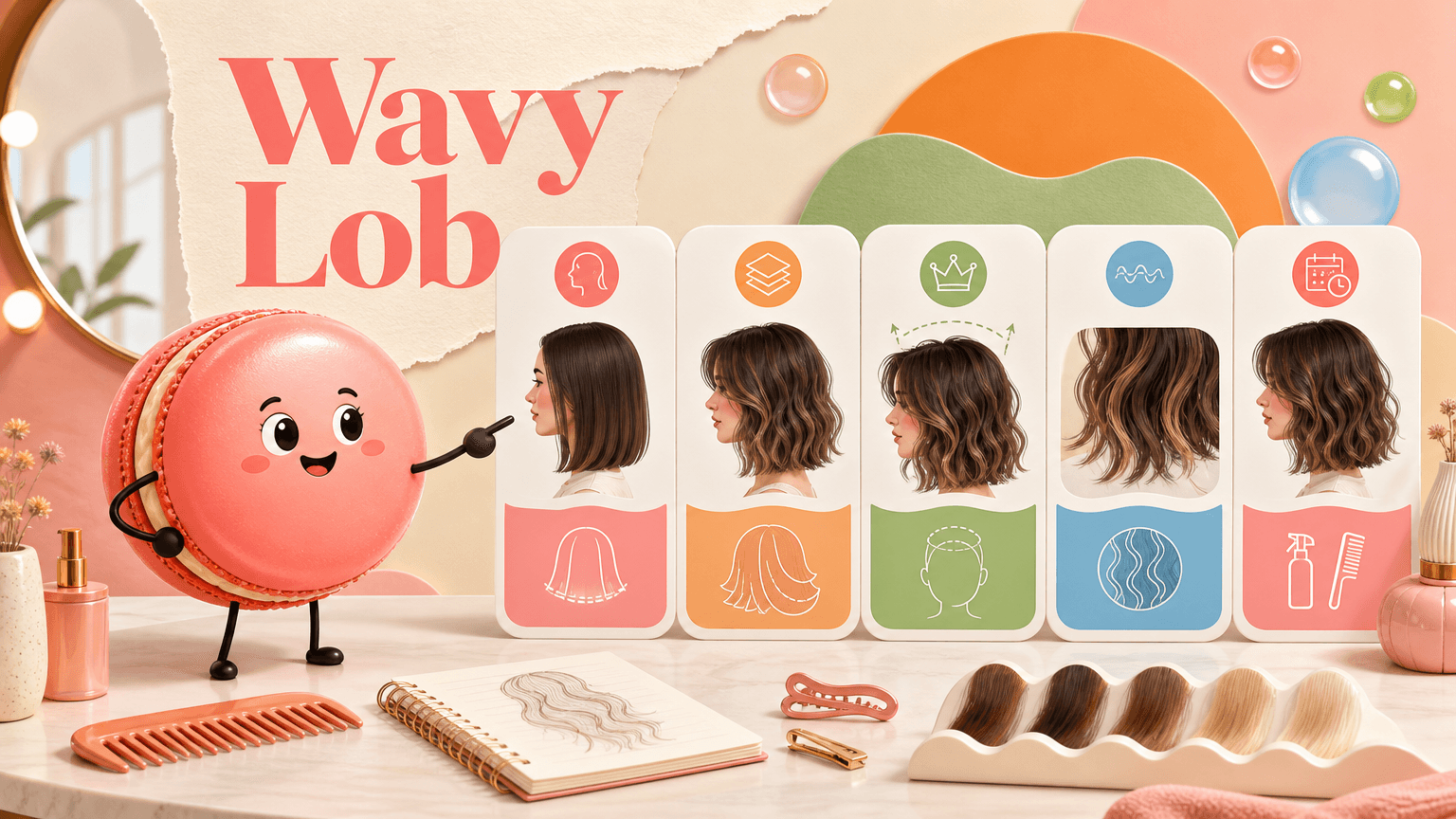
Compare Three Shoulder-Length Shapes
| Starting shape | What to look for in a reference |
|---|---|
| Long bob | A recognizable perimeter with waves inside it |
| Lightly layered cut | Movement without a strongly separated crown |
| Shag | More visible changes in length and outline |
Explore the wavy long-bob outline in detail. If retaining length matters more than a particular wave pattern, use the medium-length haircut shortlist to compare practical requirements.
Show Your Waves as They Usually Dry
Bring a photo of your hair in its ordinary dry state. Point out the shoulder contact point and whether the ends turn in, out or both. A fuller perimeter and visible layers are different starting shapes, not predictions of how your waves will settle. You can sort your wave-and-layer preferences in Macaron's AI with notes about drying habits and previous layers you disliked. Keep those observations beside the cut references.
More About Shoulder-Length Haircuts for Wavy Hair

Choose One Styling Product to Test
Choose one product category to test. A light mousse is an option for a less creamy feel; a gel for defined sections; a styling cream for a softer finish. Ouidad's cream-and-gel guidance gives examples of the latter two finishes. For example, try mousse with your familiar drying method before adding another product. Follow its label, start with a small amount and compare hold, weight and separation. Products vary, so change one part of the routine at a time.
Take a Specific Question to the Salon
I am comparing light layers with a shag. I need the front to tie back and prefer movement near the ends. Which shorter sections would stay loose? Take that question and your dry-hair photo to the appointment. The stylist can assess the cutting plan after seeing your hair, while your note keeps the tie-back requirement clear.
Frequently Asked Questions
No single outline is compulsory. Compare how fuller ends and layered references look, then discuss which result fits your routine.
Bring your natural hair and a small selection of desired shapes. Explain which part of each reference matters instead of asking for the whole image to be copied.
Start by seeing how your familiar routine behaves. Adjust one product or styling step only when you can name what you want to change.
Read & discover
Explore Playbooks
AI Personal Assistant
Free calculators


