Business Smart Attire
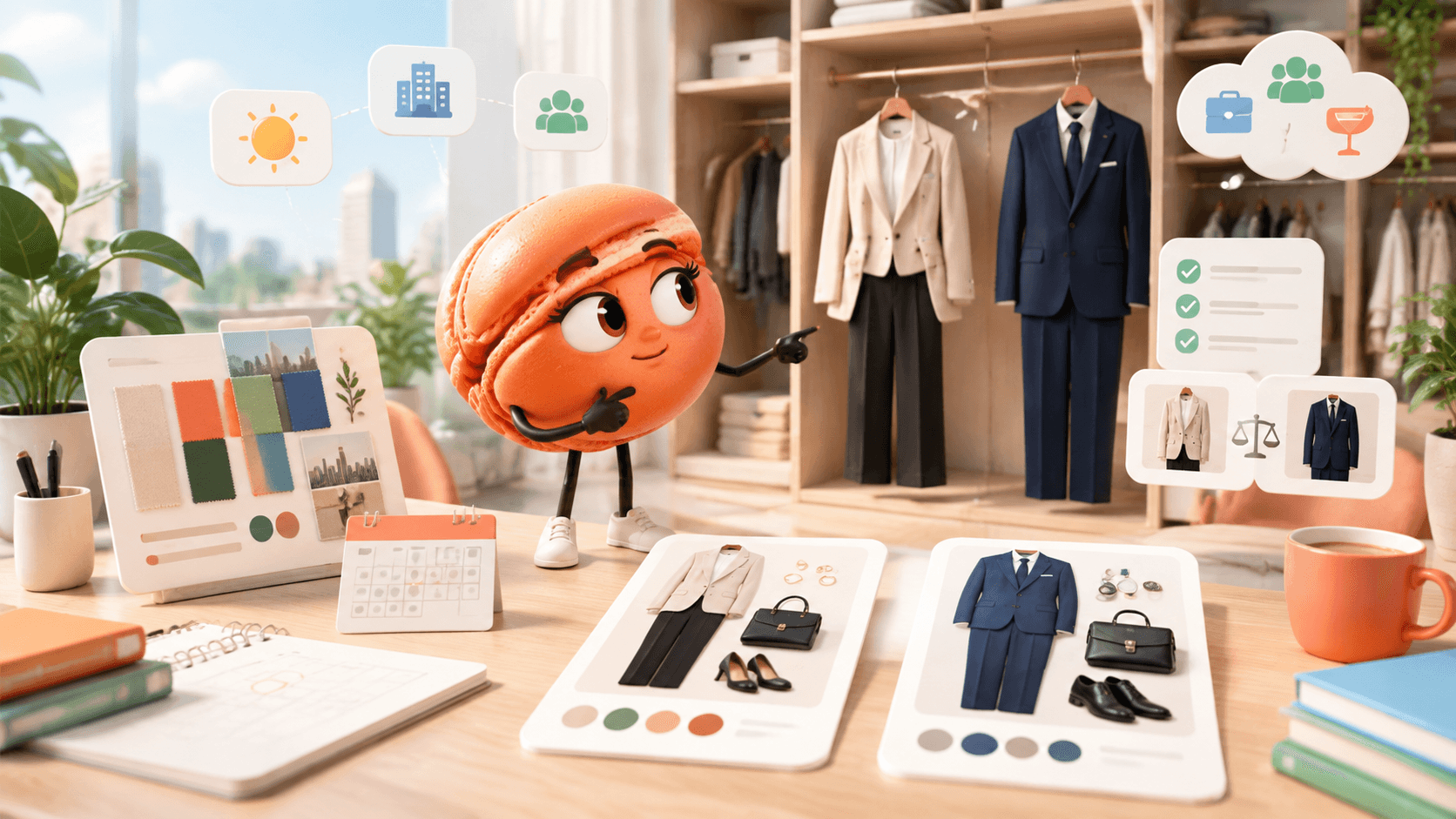
Business smart is an imprecise invitation. A blazer and tailored trousers may fit the setting, but a formal workplace may expect a suit. Clarify the occasion before building an outfit around the phrase.
Clarify the invitation with one question
Clarify the invitation with one question
Send the host a concrete question: "Would a blazer with tailored trousers work, or do you expect a suit?" This gives them something specific to confirm. Mention the event if the invitation covers several activities, such as a daytime meeting followed by dinner.
Choose a level of formality
Use the answer to choose your starting point:
Key points:
- If a coordinated suit is expected, follow the business-professional suit guide.
- If a blazer is enough, pair it with tailored trousers and a plain top.
- If the setting is more relaxed, consider a blouse and midi skirt with a cardigan.
These are outfit examples, not a universal dress-code scale. The host's answer settles the choice.
More About Business Smart Attire
A flexible outfit for an uncertain setting
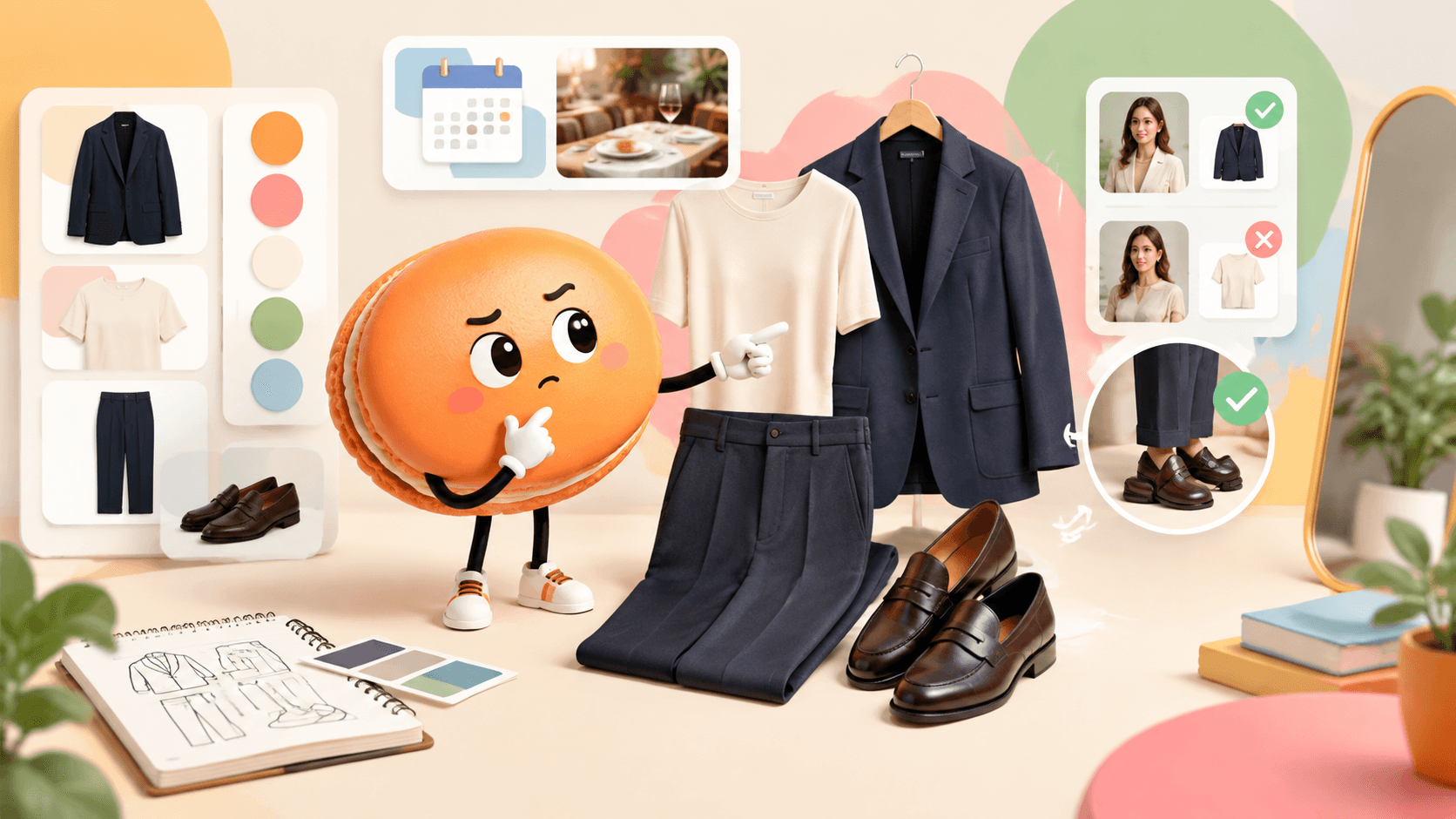
Dark trousers, a plain top, loafers, and an unstructured blazer give you a simple combination to test. Remove the blazer only if the room and dress code suit that change. Macaron's personal AI can shape an outfit around the host’s answer using your own wardrobe. Include the exact wording, clothes you already own, and any fit preferences. A request about a client lunch should carry different context from one about a relaxed team dinner. Try the shoes with the trouser length before deciding that the outfit is ready.
Check the details at home
Check the shirt in daylight for transparency, press the trousers if needed, and clean the shoes. A familiar pair is usually a more comfortable choice than stiff shoes bought for the occasion. Sit in the full outfit and lift your arms once. If you keep adjusting the collar or waistband at home, change that piece before the event. Keep a second suitable top ready if the first is in the laundry.
Frequently Asked Questions
Sometimes the host may use it that way, but the phrase is not precise enough to assume. Describe a concrete outfit so the host can confirm whether it fits.
That depends on the organization and event. When you cannot confirm, tailored trousers avoid relying on denim being accepted.
Choose one structured element, such as a blazer, while keeping the rest straightforward. Bring a layer you can remove if the setting proves more relaxed.
Read & discover
Explore Playbooks
AI Personal Assistant
Free calculators


