How to Make a Study Schedule
A useful study schedule begins with the exam date, real weekly capacity, and the topics that must be retrieved without notes. The component counts the weeks left, distributes every topic, and adds cumulative review. Start with Syllabus order beside Equal hours. Add the assessment date and weak topics under Evidence-led schedule so Macaron can use Equal hours to shape the next review. You can create a study schedule project that fits your real week.
Turning a Syllabus Into a Week-by-Week Study Schedule

Turning a Syllabus Into a Week-by-Week Study Schedule
A syllabus becomes manageable when assessment dates and topic weights are visible. Count backward, reserve recovery space, and schedule active tasks such as practice questions, explanation, or recall rather than vague blocks labeled ‘study.’ IES study organization practice guide supports the guidance behind Syllabus order. Adjust Evidence-led schedule when new practice evidence appears.
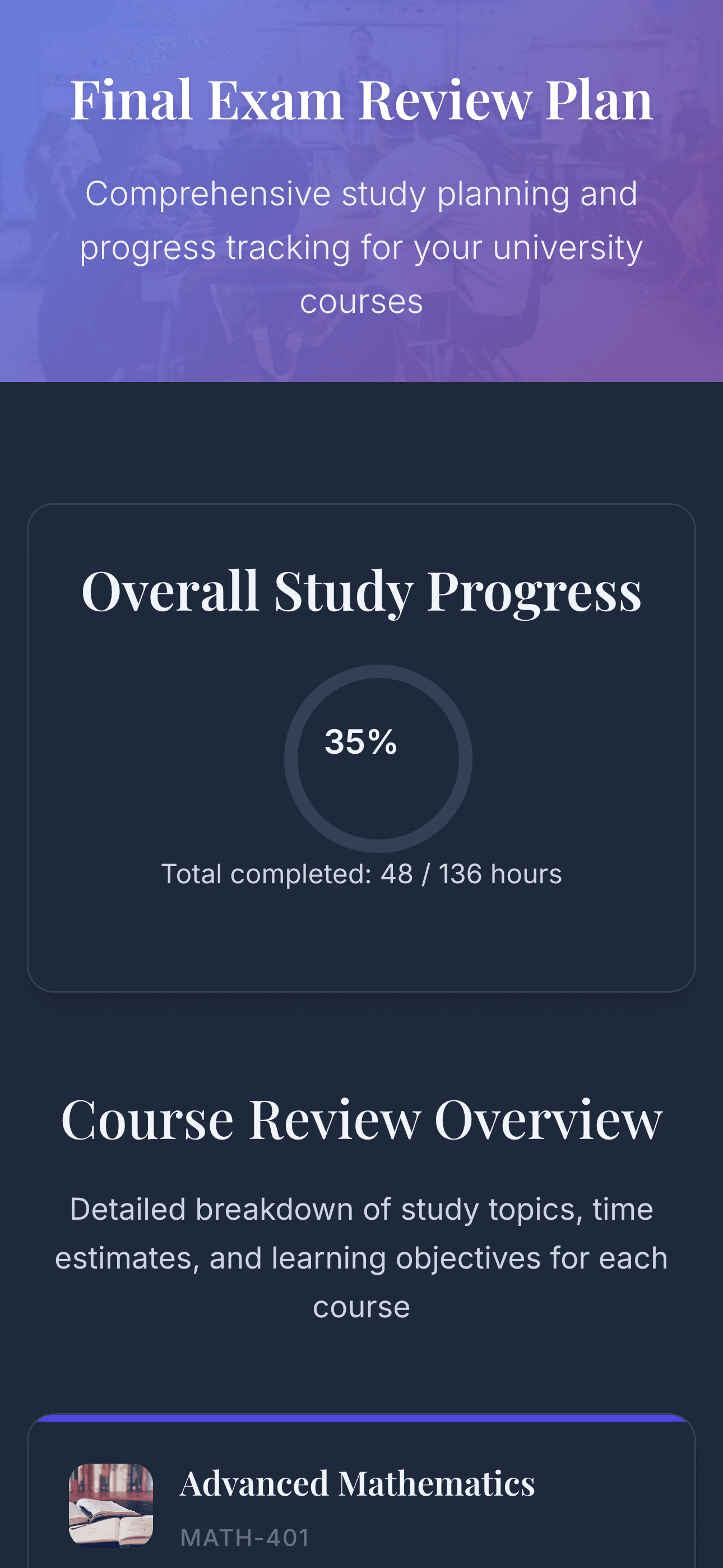
Macaron Builds Your Timetable Around Classes, Work, and Sleep
Enter the course, date, weekly hours, and topic list. The tool makes a week-by-week draft. Give the first version these details: Key points:
- "Count backward from my exam and distribute these topics."
- "Replace vague study blocks with retrieval and practice tasks."
Carry Syllabus order into the next review: Start with Syllabus order and put weak topics beside Equal hours. Define the recall evidence under Evidence-led schedule, then add the assessment date. Enter missed work under Evidence-led schedule yourself. Use Syllabus order to revise Equal hours; no automatic grade tracking is claimed.
Image description: Study Schedule Organizer weekly view
Interface reference from IES study organization practice guide
How Much to Study Per Subject (and When to Stop for the Night)
There is no universal number of hours per subject. Allocate time from importance, current understanding, task difficulty, and feedback. Key comparisons:
- Study demand: Syllabus order; Study action: Easy to follow; Review signal: May ignore weak areas
- Study demand: Equal hours; Study action: Simple allocation; Review signal: Topics differ in weight
- Study demand: Evidence-led schedule; Study action: Responds to errors; Review signal: Needs weekly review
How to use the table: Start with Syllabus order, choose the study action under Equal hours, and use Evidence-led schedule to decide what the next review should cover.
Adjusting the Schedule as Exam Week Gets Closer
As the exam approaches, replace broad coverage with timed work, error correction, and targeted retrieval. When a week changes, move the smallest number of high-value blocks and preserve the final cumulative review. Example: A biology final is four weeks away. Genetics receives two blocks after a weak quiz, while familiar ecology material stays in cumulative retrieval. A later update starts from Equal hours rather than rebuilding Evidence-led schedule from memory.
Related next steps
build an exam countdown, choose active session methods, track one repeatable routine.
Frequently Asked Questions
Study the number of hours you can realistically repeat each week while still covering the exam demands. In the schedule workflow, enter your assessment date, weekly availability, syllabus order, and weak topics so Macaron can distribute work across the time left. Treat the result as a plan to adjust, not a universal rule.
Not always; subjects should get time based on exam weight, difficulty, and how well you can recall the material without notes. Use Equal hours when topics are similar in importance, or choose an evidence-led schedule when weak areas need more review. Confirm any weighting against your syllabus or teacher guidance.
No, Macaron does not add events to your calendar for you. After generating the study schedule, read through the blocks, adjust anything that conflicts with your real week, and then copy the final plan into your preferred calendar or planner. You remain responsible for calendar setup and changes.
If you miss a block, move the highest-value task to the next realistic opening instead of trying to double every later session. Use the remaining weeks, weak topics, and exam date to rebalance the plan so cumulative review still appears before the assessment. Macaron can help reshape the schedule, but it cannot know missed work unless you update it.
Read & discover
Explore Playbooks
AI Personal Assistant
Free calculators


