Exam Study Plan
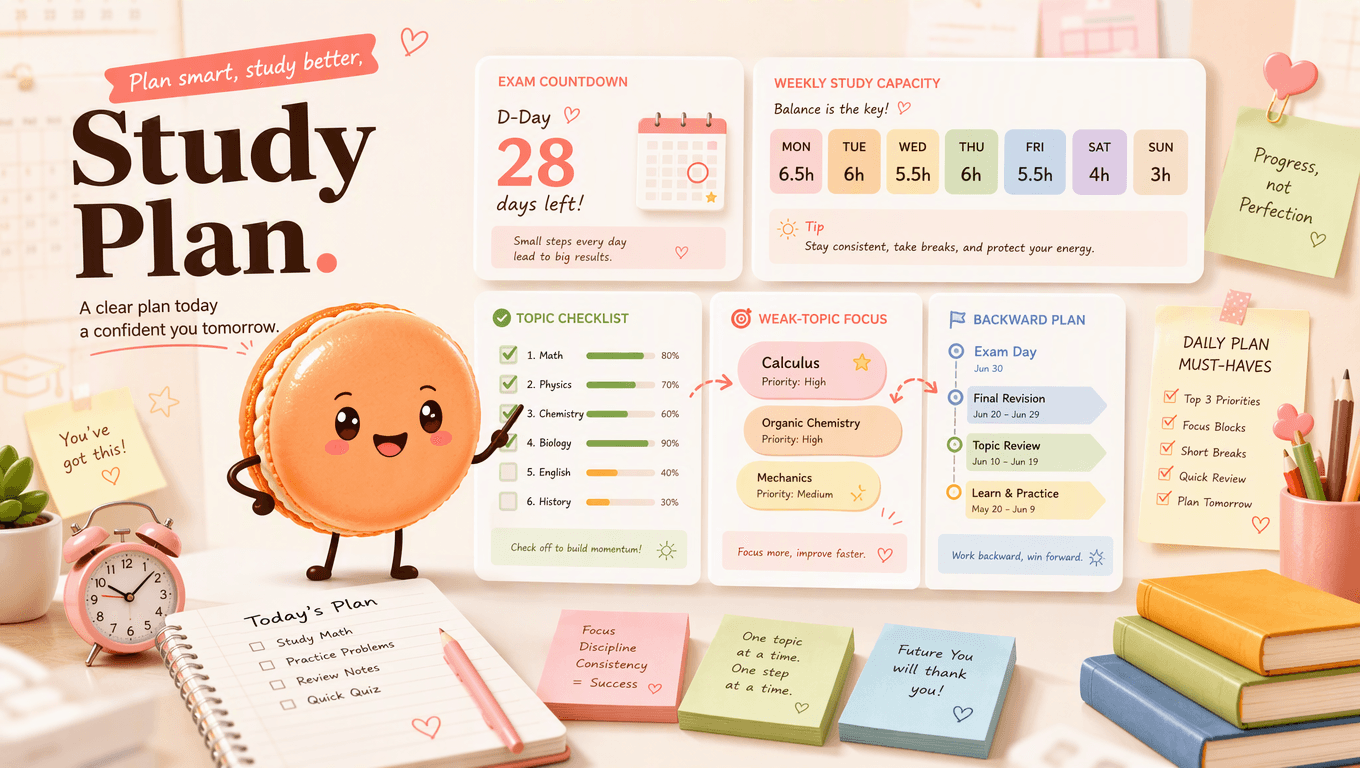
An exam study plan should make the remaining time visible without turning every evening into a marathon. Enter the assessment, date, weekly capacity, and topics. Start with Topic checklist beside Daily marathon. Add the assessment date and weak topics under Backward plan so Macaron can use Daily marathon to shape the next review. You can create an exam project that carries the planning load.
Counting Back From the Exam Date: A Plan That Fits the Time Left
Counting Back From the Exam Date: A Plan That Fits the Time Left
Start with the exam format and topic weight where known. Then use recent quizzes, practice work, or self-testing to identify weak areas. IES study practice guide supports the guidance behind Topic checklist. Adjust Backward plan when new practice evidence appears.
Macaron Prioritizes Topics by Weight and Your Weak Spots
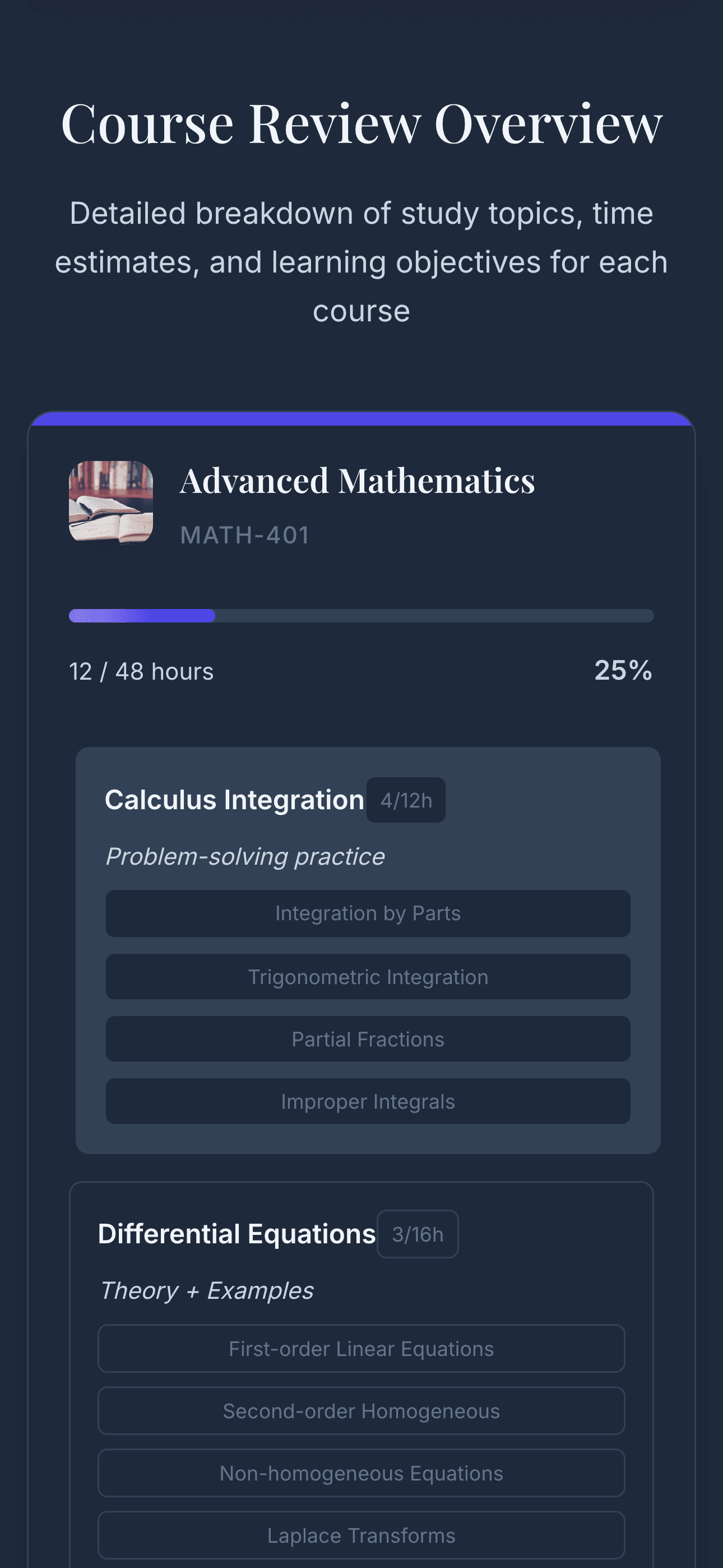
The page tool distributes topics across the available weeks. Macaron can create a continuing exam project, and the Study Schedule Organizer shows how preparation blocks can stay visible. Describe the job in plain language: Key points:
- "Prioritize these topics from exam weight and my recent errors."
- "Count backward and reserve the final two days for review and logistics."
Carry Topic checklist into the next review: Start with Topic checklist and put weak topics beside Daily marathon. Define the recall evidence under Backward plan, then add the assessment date. Enter missed work under Backward plan yourself. Use Topic checklist to revise Daily marathon; no automatic grade tracking is claimed.
Image description: Study Schedule Organizer countdown view
Interface reference from IES study practice guide
Past Papers, Active Recall, and the Final-Week Review
Past papers are useful when they match the current assessment and are used ethically. Complete them under appropriate constraints, mark errors by type, and schedule retries. Key comparisons:
- Study demand: Topic checklist; Study action: Clear coverage; Review signal: No timing or feedback
- Study demand: Daily marathon; Study action: Feels intensive; Review signal: Hard to sustain
- Study demand: Backward plan; Study action: Time and priorities visible; Review signal: Needs revision after practice
How to use the table: Start with Topic checklist, choose the study action under Daily marathon, and use Backward plan to decide what the next review should cover.
Walking Into the Exam Calm Because the Plan Did the Worrying
The final week is for timed practice, error repair, and logistics, not panic-driven expansion. Protect sleep, confirm exam rules and materials, and follow documented accommodations or instructor guidance. Example: A four-week exam plan gives two retrieval blocks to weak, heavily weighted topics and one block to stronger material, then updates after each cumulative quiz. Before using the result, they review Topic checklist and note what changed under Backward plan.
Related next steps
build the weekly timetable, choose active study tasks, extract a printed note page.
Frequently Asked Questions
No, Macaron does not automatically know how much each topic counts toward your exam. Add weights or priority notes directly in the topic labels, then adjust the generated schedule so high-value or weak areas receive more review time. Confirm any weighting against your syllabus, rubric, or instructor guidance.
In the final days, focus first on the stated syllabus, past errors, and instructor guidance instead of adding unfamiliar material without a reason. Use Daily marathon for short, targeted review blocks, practice questions, and corrections. Only add new content if it is clearly examinable and you can review it without crowding out consolidation.
No, Macaron cannot predict your grade or guarantee an exam outcome. It helps organize topics, practice time, and review priorities so you can use the remaining days more deliberately. Treat the plan as a study structure, not as an assessment of your future performance.
The final checklist should cover error review, sleep, required materials, exam timing, location, and any approved accommodations. Add these items near the end of the plan so your last sessions are not only about content but also about exam readiness. Confirm logistics with official exam instructions or your institution.
Read & discover
Explore Playbooks
AI Personal Assistant
Free calculators


