Follow Up Interview Questions
This phrase can mean second-round questions you may face or questions you want to ask. Prepare both before writing a thank-you or status check. Give Macaron Second round beside Questions to ask. Add the role or stage under Post-interview note; Deep Memory can keep that verified story context with Post-interview note for the next practice round. You can prepare second-round questions and a concise follow-up.
What Follow-Up Interview Questions Usually Mean
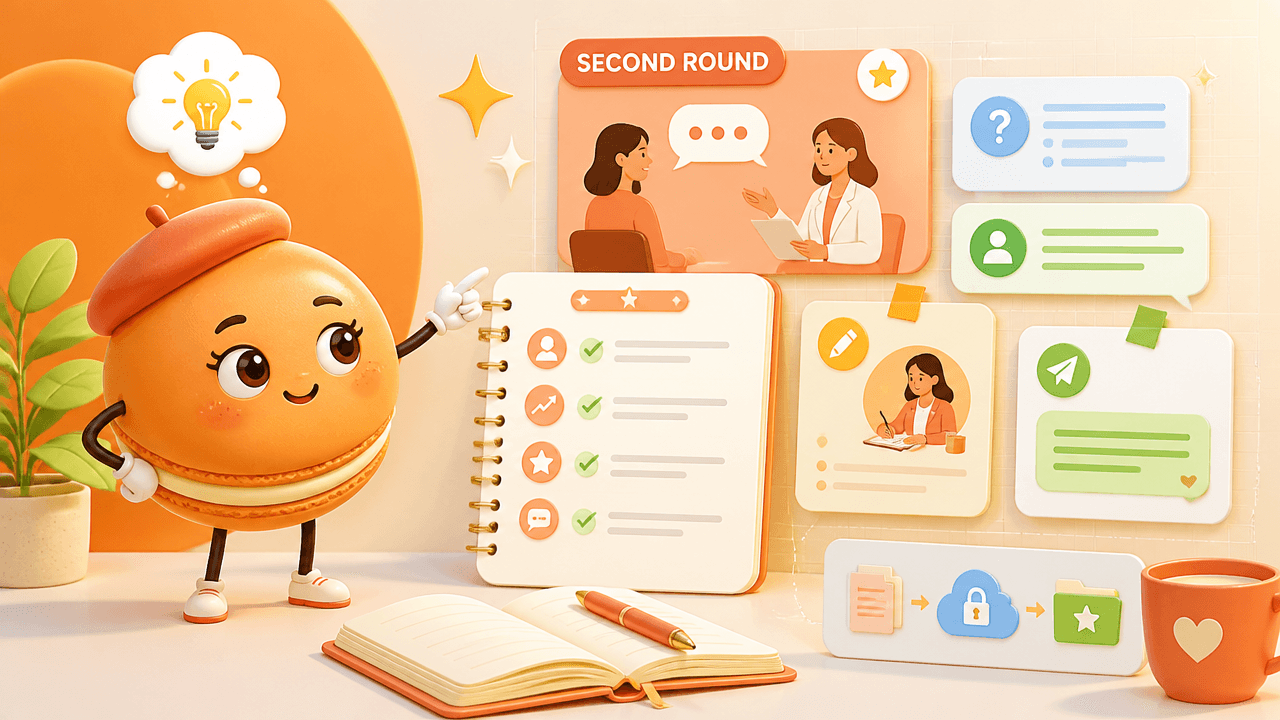
What Follow-Up Interview Questions Usually Mean
Search intent is mixed. Some people mean a second interview; others mean questions to ask or a message after the interview. CareerOneStop interview tips helps frame Second round for interview practice. Your own evidence still belongs under Post-interview note.
Prepare for Deeper Second-Round Questions
Prepare deeper examples about decisions, tradeoffs, collaboration, and results. Use the job description and what the first interviewer emphasized. Start with a message like this: Key points:
- "Build second-round questions from this role and first interview."
- "Give me five useful questions to ask the interviewer."
Turn Second round into a practice prompt: Name the role under Second round and place one truthful experience beside Questions to ask. Let Deep Memory retain only the context needed for Post-interview note. The component does not know a private hiring rubric. Review Second round before rehearsing, connect Questions to ask to a real decision, and never treat Post-interview note as an outcome prediction.

Choose Useful Questions to Ask the Interviewer
Choose questions that clarify priorities, success measures, team decisions, and the remaining process. Skip questions already answered clearly. Key comparisons:
- Evidence or practice: Second round; Role relevance: Deeper proof and tradeoffs; Next check: Invented company questions
- Evidence or practice: Questions to ask; Role relevance: Priorities and success measures; Next check: Answered basics
- Evidence or practice: Post-interview note; Role relevance: One specific detail; Next check: Daily check-ins
How to use the table: Ground Second round in a real experience, connect Questions to ask to the role, and use Post-interview note as the next practice check.
Send a Short Thank-You or Status Check Afterward
Afterward, send a short note based on the real conversation. Follow the employer's timeline before sending a status check. Example: A candidate prepares deeper examples for round two, asks about the first 90 days, then sends one short thank-you. A later update starts from Questions to ask rather than rebuilding Post-interview note from memory.
Related next steps
prepare hiring-manager answers, build phone-screen notes, practice concise video delivery.
Frequently Asked Questions
Follow-up after an interview can mean either the deeper questions you may face in a second round or the questions you plan to ask the employer afterward. In Macaron, separate “Second round” from “Questions to ask” so your practice answers and your candidate questions stay clear.
In a second interview, ask about near-term priorities, how success will be measured, how the team makes decisions, and what remains in the hiring process. Use the role, interviewer, and stage to choose questions that show judgment rather than repeating basic research.
A thank-you is usually best sent within a day of the interview, unless the employer gave a different timeline or communication preference. Draft it from your post-interview notes, then confirm the names, role details, and any specific topic you want to reference before sending it yourself.
No, Macaron does not contact the employer or send messages on your behalf. It can help you draft a concise thank-you or status-check message, but you must review the wording and send it through your own email, portal, or other approved channel.
Read & discover
Explore Playbooks
AI Personal Assistant
Free calculators


