AI Food Journal
A food journal can capture more than calories. In Macaron, you can start with your own food-and-mood record inputs. food-and-mood record: method, limits, and privacy Sources for food-and-mood record were checked on August 5, 2026. Basis for food-and-mood record: The journal records meals, hunger, mood, and notes you enter; it does not calculate a diagnosis. This educational output does not diagnose symptoms or establish cause. Read Macaron privacy guidance for food-and-mood record before keeping any meal and mood notes in the workspace.
What a Meal-and-Context Journal Reveals Beyond Calorie Counts

What a Meal-and-Context Journal Reveals Beyond Calorie Counts
Calorie counting compresses a meal into a number. CDC guidance for gradual weight loss provides general healthy-weight context. It does not validate a food-and-mood journaling method.
Create the Journal From a Plain-Language Request
Create the journal around questions you can answer quickly. Example requests: Key points:
- "Journal lunch: lentil soup, toast, and an apple. Hunger was high because breakfast was late."
The journal should return a dated entry, meal details, optional hunger or mood notes, and a clearly labeled reflection area rather than a medical conclusion. A useful weekly summary separates three things: Key points:
- observations that appear in the entries
- questions worth exploring next week
- explanations that remain uncertain
Related live Macaron tools: daily calorie tool, Healthy Weight Calculator
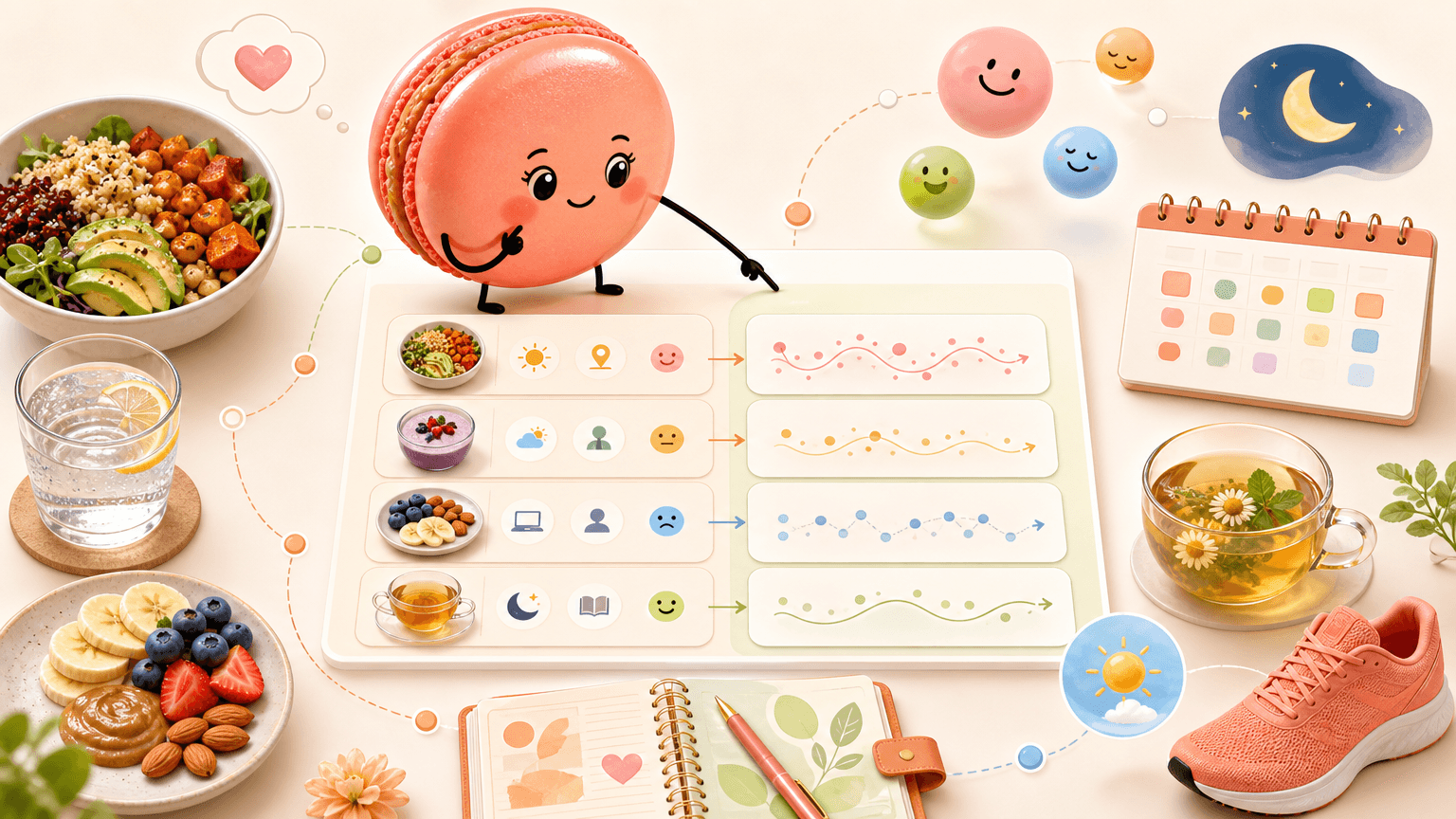
Spotting Patterns Between What You Eat and How You Feel
Patterns become more useful when they repeat. Journal prompts to keep optional: Key points:
- Flexible entries for meals, snacks, drinks, and context
- Weekly summaries that separate observations from interpretations
- Prompts that invite reflection without moral labels such as good or bad food
From Journal Entries to Gentle, Personalized Suggestions
Personalized suggestions should stay gentle and reversible. Key comparisons:
- Review dimension: Primary focus; Calorie-only log: Calories; Context-rich journal: Meals plus context
- Review dimension: Entry style; Calorie-only log: Structured fields; Context-rich journal: Short conversation
- Review dimension: Review; Calorie-only log: Daily totals; Context-rich journal: Patterns and questions to explore
Pattern-review example: Someone notices afternoon fatigue but cannot remember which days it happens. A two-week journal brings meal timing, sleep, and energy notes into one view, helping them form a better question for a clinician if needed.
Related next steps
compare eating and fasting notes, connect habits with weekly check-ins, and record meals with less detail.
Frequently Asked Questions
Write down what you ate or drank, roughly when you had it, and any hunger, mood, energy, or context notes that feel relevant. Use consistent dates and plain descriptions so Macaron can help you organize patterns from the entries you provide without turning them into a medical conclusion.
No, the journal does not need calorie counts to be useful. You can focus on meal timing, food variety, comfort, cravings, routines, or how you felt before and after eating, and add calorie estimates only when they support a specific goal you have chosen.
No, an AI food journal cannot diagnose food intolerance. It can help arrange your own meal, mood, and symptom observations so you can discuss them more clearly with a qualified clinician if needed. Macaron’s output is educational and does not establish cause or confirm a condition.
Food and mood entries can be sensitive, so treat them as personal health information before adding them to the workspace. Read Macaron’s privacy guidance and choose the level of detail you are comfortable having processed by the service. Avoid entering information you do not want included.
Read & discover
Explore Playbooks
AI Personal Assistant
Free calculators


