Teacher Interview Questions
Teacher interview questions become easier to answer when each response connects philosophy with a classroom moment and student evidence. Enter the grade, subject, school context, and portfolio stories. Give Macaron Philosophy-only answer beside Memorized model response. Add the role or stage under Evidence-backed story; Deep Memory can keep that verified story context with Evidence-backed story for the next practice round. You can create a teacher interview project linked to real classroom evidence.
The Teacher Interview Questions Districts Ask Again and Again
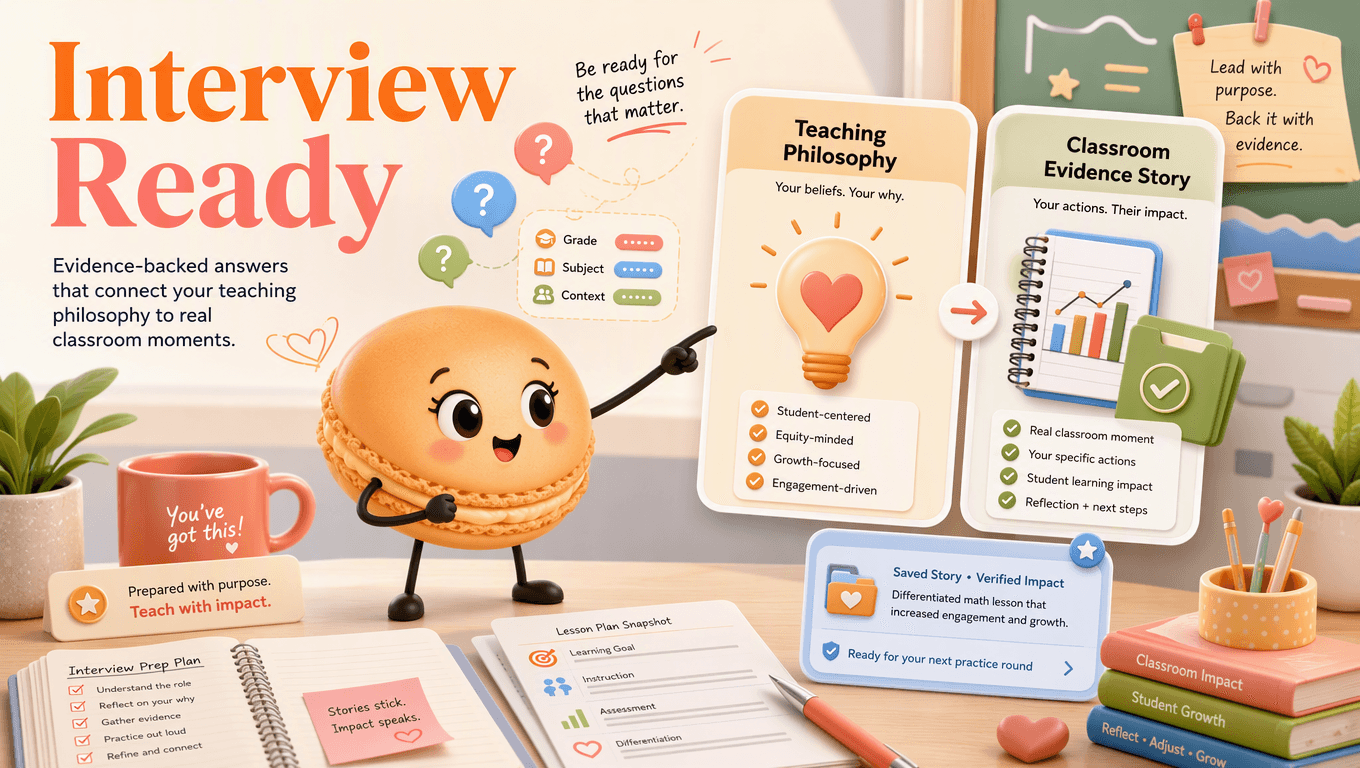
The Teacher Interview Questions Districts Ask Again and Again
Districts commonly explore instructional planning, differentiation, classroom management, assessment, family communication, and collaboration. The exact emphasis varies by role and school, so use the posting and public school information to prioritize your preparation. CareerOneStop interview tips helps frame Philosophy-only answer for interview practice. Your own evidence still belongs under Evidence-backed story.
Macaron Tailors Answers to Your Grade Level and Subject
The generator adapts questions to the grade and subject you enter. Macaron can create a larger interview project with saved portfolio moments, while this component keeps the output easy to copy or download. Begin with the situation and constraints: Key points:
- "Generate grade-specific classroom scenarios for practice."
- "Turn these portfolio examples into concise evidence bridges."
Turn Philosophy-only answer into a practice prompt: Name the role under Philosophy-only answer and place one truthful experience beside Memorized model response. Let Deep Memory retain only the context needed for Evidence-backed story. The component does not know a private hiring rubric. Review Philosophy-only answer before rehearsing, connect Memorized model response to a real decision, and never treat Evidence-backed story as an outcome prediction.
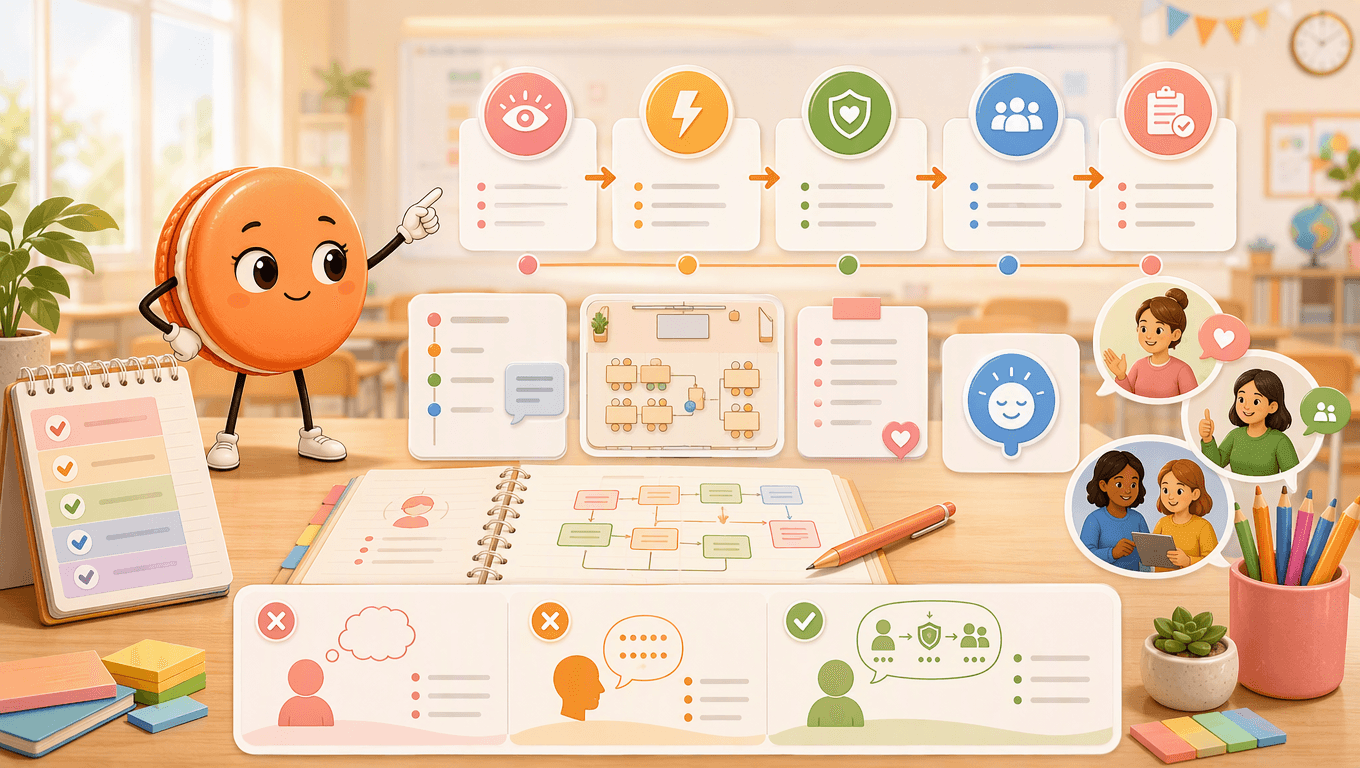
Classroom Management and Scenario Questions, Prepped
Scenario answers should make the sequence visible: what you noticed, the immediate action, how you protected learning and safety, whom you involved, and what evidence guided the next step. Avoid pretending every challenge ended perfectly. Key comparisons:
- Evidence or practice: Philosophy-only answer; Role relevance: Shows values; Next check: May lack classroom proof
- Evidence or practice: Memorized model response; Role relevance: Polished delivery; Next check: Can sound detached
- Evidence or practice: Evidence-backed story; Role relevance: Connects choice and outcome; Next check: Requires careful privacy
How to use the table: Ground Philosophy-only answer in a real experience, connect Memorized model response to the role, and use Evidence-backed story as the next practice check.
Bringing a Portfolio Moment Into Every Answer
A portfolio moment is most persuasive when it shows student work, assessment evidence, planning choices, and reflection while protecting student privacy. Prepare a brief verbal version in case materials cannot be displayed. Example: A science teacher uses a lab redesign to show formative assessment, differentiation, and reflection, while keeping student identities out of the example. Before using the result, they review Philosophy-only answer and note what changed under Evidence-backed story.
Related next steps
build STAR stories, practice a recorded response, draft the thank-you note.
Frequently Asked Questions
No, every district uses its own interview format, priorities, and wording, so treat these questions as practice rather than a fixed script. Use the posting, grade level, subject, and school context to tailor each answer, then compare a philosophy-focused version with a more polished model response.
Yes, if the interview instructions allow it, a concise portfolio can support your answers with real classroom evidence. Prepare a short verbal explanation for each artifact so you can use it naturally even if the panel does not look through the materials. Confirm privacy rules before sharing student work.
A scenario answer should be long enough to show your decision-making, classroom action, and evidence of impact without retelling every minor detail. Aim for a focused story with the situation, your response, and what students learned or what you changed afterward.
Yes, you can use student examples when they are anonymized and shared in line with school policy and legal privacy requirements. Remove names, identifying details, and sensitive information, then frame the example around your instructional choice, student need, and evidence of progress. Macaron cannot verify compliance for you.
Read & discover
Explore Playbooks
AI Personal Assistant
Free calculators


